The short version
Patagonia's best lodges are small and sell out fast for the November-to-March season, so the smart move is to book in the southern winter — now. Fly into Punta Arenas for Chilean Torres del Paine or El Calafate for Argentina's glaciers, give the region at least four nights, and let a guide-led, all-inclusive lodge do the rest.
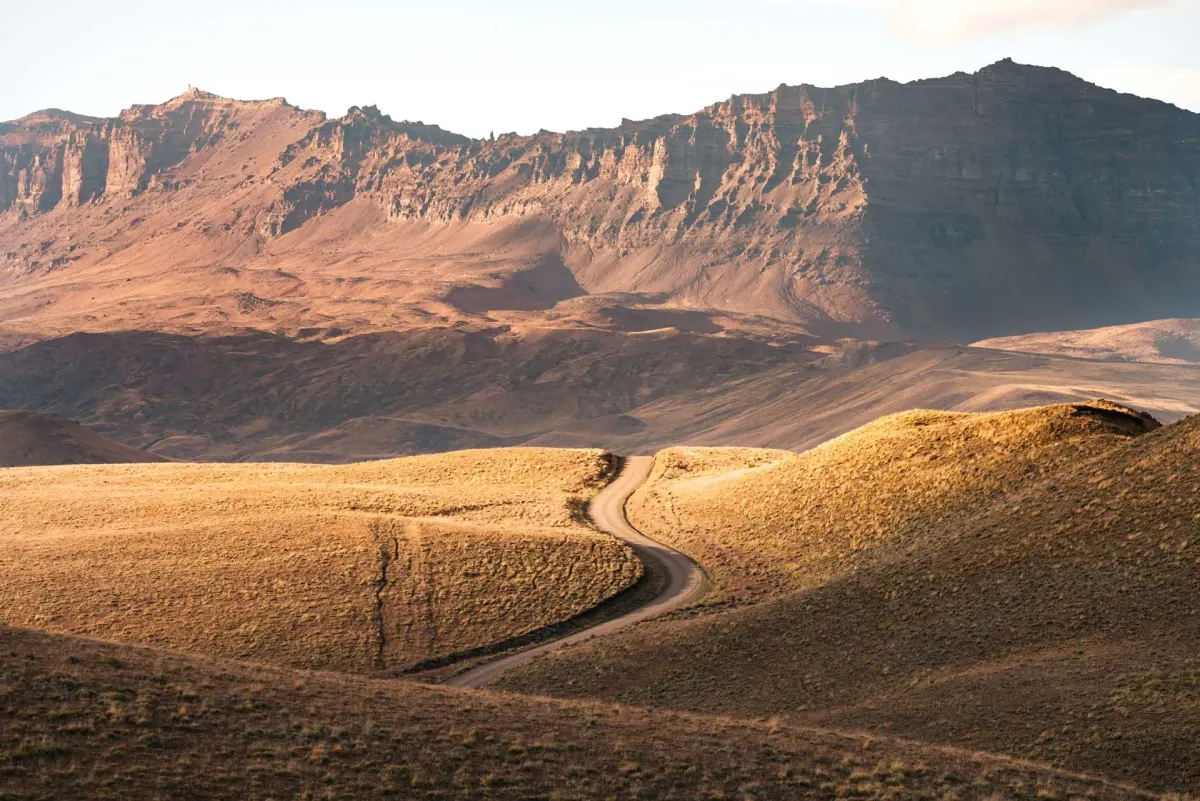
At first light the granite towers of the Paine massif turn the color of a struck match — a few minutes of orange fire before the wind picks up and the sky goes back to steel. People plan entire trips around those few minutes. What surprises them is everything around it: the guanacos on the ridgelines, the condors riding the thermals, the pumas that the best guides can read like weather, and lodges that have quietly become some of the most interesting places to stay anywhere on Earth.
Patagonia is not a beach and it is not a city break. It is a place you go to feel small, and the reward for the long flight is a version of remote-wilderness travel that has been refined over two decades into something genuinely comfortable. The catch is supply. The lodges that do it well are tiny — one has fourteen villas, another seventeen rooms — and they run a short season. Which is why, if you are reading this in the northern summer, you are reading it at exactly the right time.
When should you book Patagonia?
Now — or as close to now as you can manage. The Patagonian travel season runs from roughly November to early March, with December through February delivering the longest daylight and the most stable weather. November and March are the shoulder edges: fewer people, softer rates, spring flowers or autumn color, and the same full access to the park.
Here is the part travelers underestimate. The lodges worth flying for are small by design. Awasi Patagonia has fourteen villas. Eolo has seventeen rooms. Even the larger houses top out around fifty. That scarcity is the whole point of the experience, and it is also why the good rooms and the best dates are gone months ahead. By late winter, the peak-season inventory at the top properties is already thinning. Booking in July for a December or January trip is not early — it is on time.
Chile or Argentina — which side?
Patagonia straddles two countries, and the border is the first real decision. The Chilean side is anchored by Torres del Paine National Park, home to the towers themselves and the densest concentration of great lodges. The Argentine side is about ice: the Perito Moreno glacier near El Calafate, and the jagged spire of Mount Fitz Roy above the trekking village of El Chaltén.
The logistics follow the geography. For Chile, you fly to Punta Arenas (airport code PUQ), transfer to Puerto Natales, and continue into the park — Explora's lodge sits about 112 kilometers north of Puerto Natales, roughly a 1.5-to-2-hour drive. For Argentina, you fly into El Calafate (FTE) for the glaciers, then push on to El Chaltén for Fitz Roy. Travelers with eight nights or more often do both, crossing the border overland. Explora's cross-border Chile-and-Argentina program, for example, starts around $11,500 per person for eight nights across two lodges, fully inclusive.
Which Patagonia lodge is right for you?
There is no single best lodge — there is the one that fits how you travel. Six are worth the flight, and they split cleanly by temperament.
Explora Torres del Paine is the classic. It is the only lodge inside the national park, set on the shore of turquoise Pehoé Lake, with fifty rooms, a spa, and more than forty guided explorations included in the rate. Explora also protects a private 15,000-acre conservation reserve next door and operates as a certified B Corp. If you want to wake up already inside the park with the towers out the window, this is it.
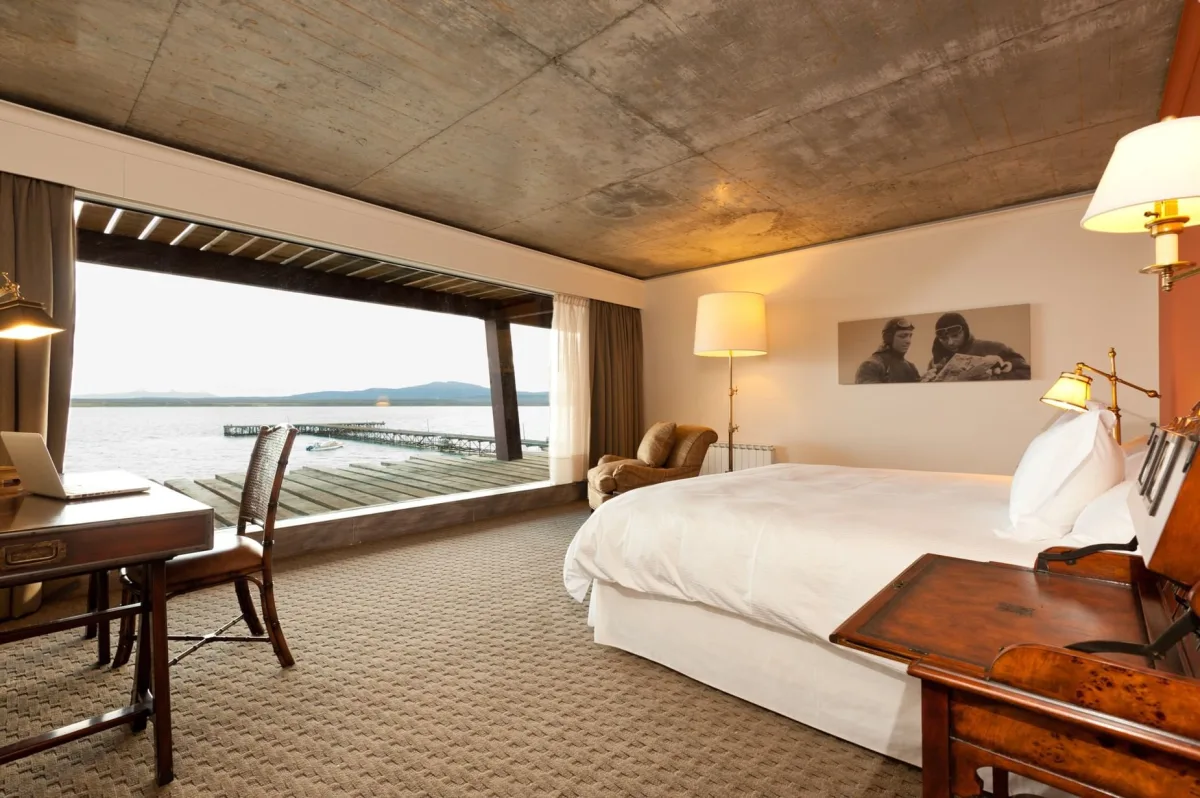
Awasi Patagonia is the opposite philosophy: fourteen stand-alone villas in a private reserve by Lake Sarmiento, and — the detail that sets it apart — a private guide and 4x4 assigned to every villa. You are never on someone else's schedule. It has been a Relais & Châteaux member since 2014, and it is the choice for travelers who want the region on their own terms.
Tierra Patagonia curves along a bluff above Lake Sarmiento in a sweep of local lenga wood, with forty rooms, an all-inclusive program, and a spa built for the end of a long day on the trail. It is the design-forward middle ground between Explora's scale and Awasi's seclusion.
The Singular Patagonia is for anyone who cares about buildings. Its fifty-seven rooms occupy a converted 1915 cold-storage plant on Last Hope Sound near Puerto Natales — a national monument since 1996, with the original steam engines and machinery preserved inside. A member of Leading Hotels of the World, it trades trailhead proximity for heritage and industrial-chic drama.
On the Argentine side, Eolo – Patagonia's Spirit is a seventeen-room Relais & Châteaux estancia on a 4,000-hectare estate near El Calafate, on the road toward Perito Moreno — deliberately TV-free, all long horizons and lake light. And Explora El Chaltén, opened in 2021, sits in the private Los Huemules reserve at the foot of Mount Fitz Roy, for travelers who want the great Argentine peaks without the crowds of the village below.
What a Patagonia lodge stay includes
Nearly all of these run on the all-inclusive, guide-led model — the same rhythm that defines a great Okavango Delta safari: your rate covers the room, every meal and drink, and daily explorations led by expert guides, matched to your fitness and interests each morning. Transfers and park fees are usually folded in too.
And no, you do not have to be a hardcore trekker. Yes, the multi-day W and O circuits are here for those who want them, but a full, varied stay can be built entirely from horseback rides across private reserves, kayak outings, wildlife tracking for pumas and condors, boat trips to the face of Grey Glacier, and gaucho afternoons. The one constant is the wind — it is a feature of Patagonia, not a bug, and the good lodges are engineered around it. This is remote-wilderness travel in the same spirit as the Kenyan safari camps worth the flight, and it rewards the same conservation-minded operators building the model that keeps these landscapes wild.
What You Actually Want to Know
When is the best time to visit Patagonia?
November to early March. December through February have the longest days and the most reliable weather; November and March bring fewer crowds and lower rates while keeping full access to the parks. The lodges largely close through the southern winter.
How many days do you need?
Plan at least four nights at a single base — Patagonian weather is fickle, and extra days buy you clear-sky odds on the towers. To combine Chilean Torres del Paine with Argentina's glaciers, give it eight to ten.
Do you have to hike?
No. The famous multi-day treks are optional. Every top lodge offers horseback riding, kayaking, wildlife tracking, and glacier boat trips, and tailors each day to your ability — non-hikers can have a rich stay without a single technical trail.
Chile or Argentina for a first trip?
If you only have time for one region, choose Chilean Torres del Paine — it has the towers and the deepest bench of lodges. Add El Calafate on the Argentine side if you want to stand in front of the Perito Moreno glacier.
Is it expensive?
These are small, all-inclusive, guide-led lodges, so nightly rates run high — but they cover almost everything. As a reference point, Explora's eight-night, two-lodge cross-border program starts around $11,500 per person, all in.
Patagonia rewards the traveler who plans it properly and punishes the one who waits. The lodges are few, the season is short, and the difference between the trip you imagined and a scramble for leftover dates is a single early phone call. Tell Noon's advisors when you want to see the towers, and we will build the trip around the lodge — and the light — that fits you.
Plan Your Next Journey
Work with a Noon Travel advisor for a trip that exceeds every expectation.
Get Started