The short version
July and August are the peak of Botswana's Okavango Delta season: floodwaters from Angola sit at their highest, wildlife crowds the channels, and the air stays dry and cool. Expect roughly $2,500 to $5,000 per person a night at the great water camps, all reached only by light aircraft from Maun.
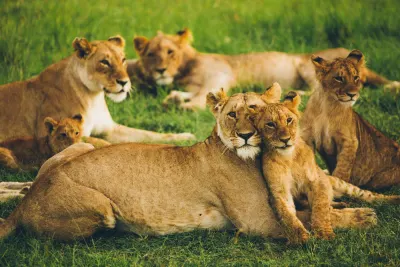
There is a strangeness to the Okavango that never quite leaves you. Everywhere else in Africa, the dry season means retreat — rivers shrink, animals scatter. Here it means flood. Right now, in the middle of Botswana's coldest, driest months, water is pouring across the Kalahari, spreading into a maze of channels and lily-covered lagoons that draws elephant, lion, and wild dog out of the parched interior and into a few thousand square miles of green.
That water came from the highlands of Angola, a thousand kilometres north, and it has been travelling since the summer rains. It reaches the Delta between June and August — precisely when Botswana itself is bone dry. The result is the single best game-viewing window on the continent, and July, the month you are reading this in, sits right in the heart of it.
The Okavango is the world's largest inland delta, one of very few great river systems that never reaches the sea; its waters simply vanish into the desert sand. In 2014 it became the 1,000th site inscribed on the UNESCO World Heritage list. What that designation does not tell you is how it actually feels to be there — poled through shallow water in a dugout canoe at dawn, close enough to hear the reeds part.
When Should You Actually Go?
Now. The dry season runs May through October, and July and August are its apex. The floodwaters are at their peak, the surrounding plains have thinned to gold, and animals concentrate around whatever water remains — which, in the Delta, is a great deal of it. Days are clear and mild, nights are genuinely cold, and the mosquitoes have all but disappeared.
The trade-off is that this is also the most expensive and most heavily booked stretch of the year. The best camps sell out six to twelve months ahead for July dates, and rates climb to their seasonal ceiling. If you want the peak-flood spectacle without the peak-flood price, the shoulder weeks of late May and October deliver most of the wildlife for meaningfully less.
One distinction worth understanding before you book: camps fall into two types. Permanent water camps sit on channels that hold water year-round, so the experience leans on mokoro (dugout canoe) outings and boat safaris. Seasonal camps flood in winter and dry out later, which means they can offer both water activities and classic vehicle game drives depending on the month. For a first Delta trip in July, a camp that can do both is the safer bet.
Which Camps Are Actually Worth the Rate?
A handful of properties define the top of this market, and they are worth knowing by name.
Wilderness Mombo, on a private concession bordering the Moremi Game Reserve, is the one most safari veterans name first. Its reputation rests on sheer density of predators and big game — this is open country where lion, leopard, and cheetah are seen with a regularity that borders on the absurd. Rates start around $3,190 per person per night and push past $5,000 in peak season. Its smaller sister, Little Mombo, runs from roughly $2,889.
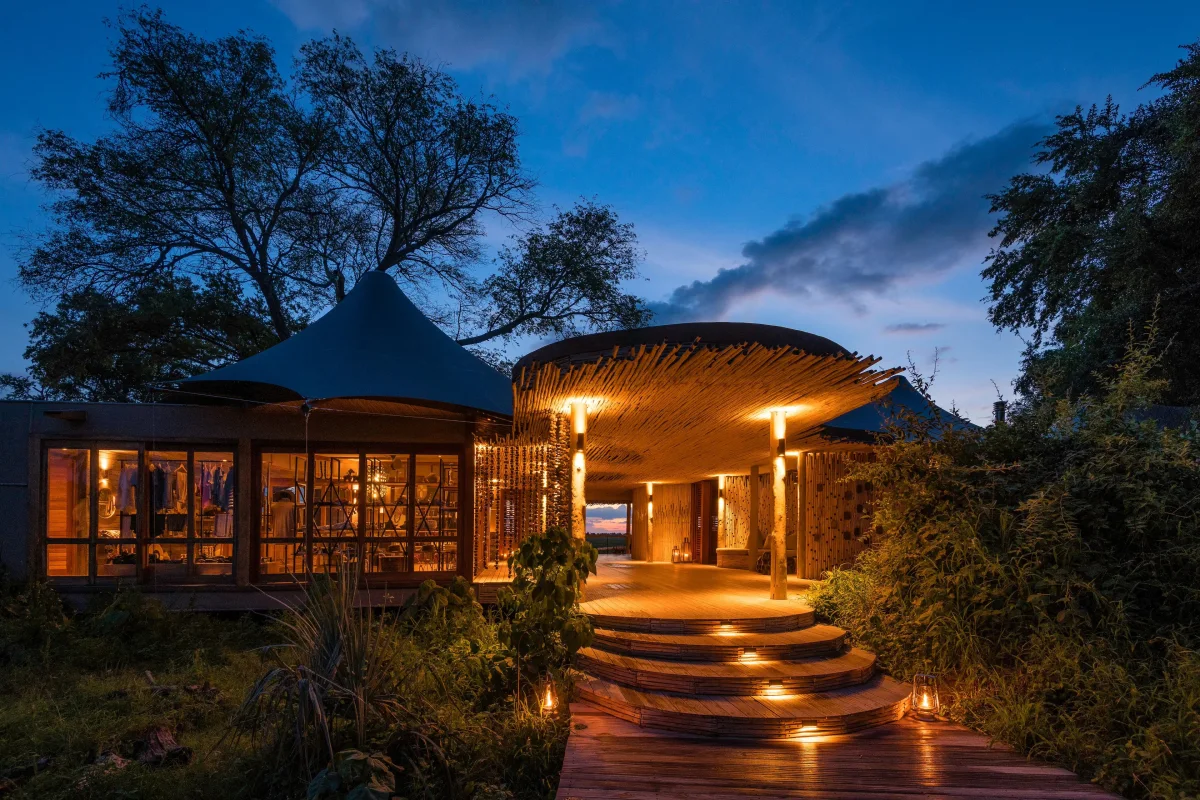
Duba Plains, the Great Plains Conservation camp built by filmmakers Dereck and Beverly Joubert, is the quieter, more personal counterpoint — five tented suites (plus a two-bedroom family suite) set in a palm island in the heart of the Delta, styled after the classic 1920s safari camps. It is famous for the drama between its lion prides and enormous buffalo herds. Peak-season rates run to about $4,225 per person per night.

For design obsessives, Xigera Safari Lodge — part of the Red Carnation Hotels collection — is the outlier: twelve solar-powered suites that double as a gallery of work from some eighty pan-African artists and designers, from the beadwork to the light fittings. Rates start around $2,750 per person per night. It is the most contemporary stay in the Delta, and the least like anywhere else in the bush.
None of these are cheap, and none pretend to be. If you are weighing the Delta against the Mara, our take on the Kenya camps worth the flight is a useful companion — the two deliver very different safaris at a similar altitude of price.
How Do You Even Get There?
Every Okavango trip runs through Maun, the dusty frontier town that serves as the gateway to the Delta. You fly into Maun (airport code MUB) first — Ethiopian Airlines is currently the only long-haul carrier serving it directly, via Addis Ababa, while Airlink connects it to Johannesburg, Cape Town, and Windhoek. From Maun, you transfer to a light aircraft for the final leg into the bush.
That charter hop is part of the experience: a fifteen-to-thirty-minute flight in a small plane over a floodplain stitched with hippo trails and elephant, landing on a bush strip where a guide is already waiting. Seats run roughly $220 to $260 per person each way. The one rule that catches first-timers is luggage — you are limited to about 20 kilograms in a soft duffel, hand luggage and camera gear included. Hard cases do not fly. Pack accordingly.
A word on timing: most international flights land in Maun around midday and connect cleanly onto the shared charters, but a late arrival — past roughly 3pm — can mean missing the last flight into camp and losing a night. Build in a buffer, and let your advisor sequence the connections so a delayed long-haul flight does not cost you a day in the Delta.
Why Is a Botswana Safari So Expensive?
Because the country decided, deliberately, that it should be. In the 1990s Botswana chose a high-value, low-impact tourism model — leasing large concessions to a small number of operators, capping bed numbers, and charging serious conservation levies rather than chasing volume. Almost 40 percent of the country is given over to wildlife.
What you are paying for, then, is scarcity by design: small camps, low occupancy, remote logistics that depend on light aircraft and 4x4 tracks, and a share that funds anti-poaching and the surrounding communities. It is the same logic behind the region's best conservation-led lodges — we unpacked how it works in our look at Singita's conservation model. The Delta is the purest expression of it. You will rarely see another vehicle at your sighting, and that solitude is the entire point.
If the sticker price still gives you pause, it helps to think about it the way we framed what a Bhutan trip actually costs and what you get — high-tariff destinations are usually buying you an emptier, better-protected version of the thing everyone else is queuing for.
What You Actually Want to Know
Is the Okavango Delta worth it?
For a serious safari, yes. The combination of peak-season flood and low-density concessions produces game viewing and privacy that few places on earth can match. It is a splurge, not a bargain — but it is the rare splurge that consistently over-delivers.
What is the best month to visit?
July and August, when the floodwaters peak and wildlife concentrates. May, June, and October are excellent shoulder alternatives with lower rates and lighter crowds.
How much does an Okavango safari cost per night?
The top water camps generally run $2,500 to $5,000 per person per night, all-inclusive — meals, drinks, twice-daily activities, and park fees. Add roughly $220 to $260 per person each way for the light-aircraft transfers from Maun.
What is a mokoro?
A mokoro is a traditional dugout canoe, poled through the shallow channels by a guide standing at the stern. It is the signature Delta activity — silent, low to the water, and the closest you will get to the reeds, frogs, and birdlife.
The difference between a good Delta trip and a great one is almost never the budget — it is knowing which concession is flooding when, which suite to request, and how to sequence the flights so nothing unravels. Noon's advisors have worked with every camp on this list. Tell us where you want to go.
Plan Your Next Journey
Work with a Noon Travel advisor for a trip that exceeds every expectation.
Get Started