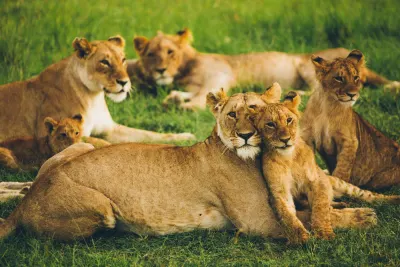
The phrase "trip of a lifetime" gets thrown around so casually that it has almost lost meaning. East Africa is one of the few places where it still applies. A morning on the Maasai Mara — wildebeest stretching past the horizon, lions stepping out of the long grass twenty metres from a Land Cruiser, a balloon rising silently over the Mara Triangle while it is still dark on the ground — does not feel like a vacation. It feels like a different kind of life, briefly visited.
The catch is that there are roughly four hundred safari camps in Kenya, and most of them are not worth a fourteen-hour flight. The country's best properties cluster in a handful of regions and book out far in advance — particularly during migration season. A safari done well is a sequence of two or three properties, paced and connected by light aircraft. A safari done poorly is a single overcrowded lodge inside the national reserve, where the lion you finally find is being photographed by nine other vehicles.
This is the version of Kenya worth the effort. The camps below are the ones that have earned the flight — chosen for the strength of their guiding, the privacy of their concession, the design, and the way they actually feel once you are sitting in front of the fire at night.
TL;DR: Kenya's best safari is not in one place. The Maasai Mara delivers the migration and the predators; Laikipia delivers space, rhinos, and conservation work; Nairobi's Giraffe Manor delivers the surreal arrival. The camps worth flying for in 2026 are Angama Mara, &Beyond Bateleur Camp, Mahali Mzuri, Cottar's 1920s Camp, Segera Retreat, Sirikoi, and Giraffe Manor. Book the migration window (July to October) by early 2026 — the best camps are already filling.
When Should You Go on a Kenya Safari?
The short answer is July through October if you want the migration, and January through March if you do not. Those are the two dry seasons, and they are when game viewing is at its best. The grass is short, the animals concentrate around water, and the light is exceptional in the early morning and late afternoon.
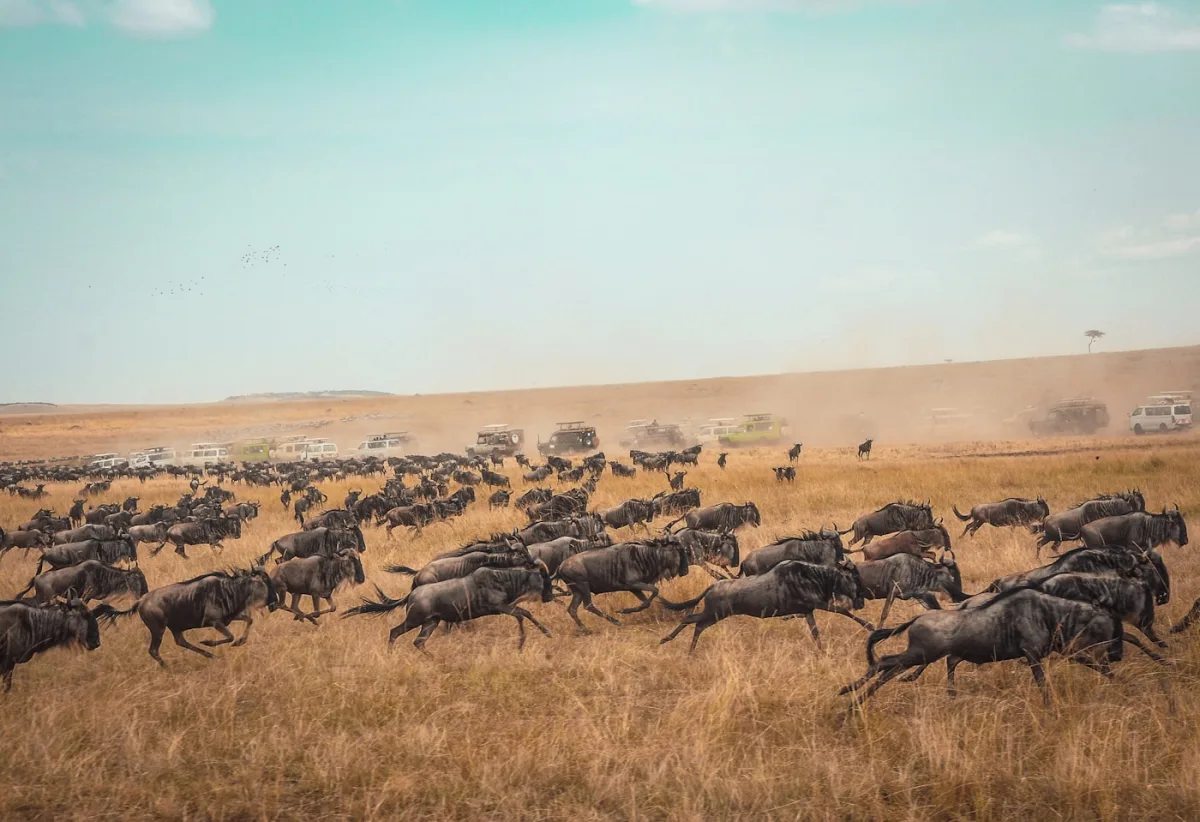
July to October is the famous window. The wildebeest cross the Mara River from the Serengeti in waves, usually arriving in the northern Mara from mid-July, with the most dramatic river crossings concentrated from late July through September. By October the herds begin moving south again. Camps near the river — Angama, Bateleur, Cottar's — book up twelve to eighteen months ahead for this window. If you are reading this in late May 2026, you are already late for the prime weeks. There is still availability at the better camps for shoulder dates, but it is moving fast.
January to March is the underrated alternative. The herds are gone, but the predator viewing is excellent, the green is back in the landscape, and the camps are noticeably quieter. Calving season in the southern Serengeti spills its energy north, and the Mara feels like a different place — fewer vehicles, more space, lower rates.
April, May, and November are the long and short rains. Skip them unless you specifically want a private camp to yourself.
Where to Stay in the Maasai Mara
The Mara is two things at once: a national reserve that anyone can drive into, and a ring of private conservancies that surround it. The conservancies are the play. They are leased from the local Maasai community, capped at low vehicle density, and they allow off-road driving, walking safaris, and night drives — none of which are permitted inside the national reserve. The four camps below sit on or look directly into the Mara, and each represents a different version of luxury.
Angama Mara sits on the rim of the Oloololo Escarpment, looking down into the Mara Triangle from a height that has to be seen to be understood. The property is two camps of fifteen tented suites each, with eleven-metre floor-to-ceiling glass facades framing the view from your bed. The guiding is excellent, the design is the strongest of any camp in Kenya, and the descent into the Mara Triangle each morning is part of the experience. This is the photograph-everything camp — the one that ends up on the front of the album.
&Beyond Bateleur Camp is the classic-luxury alternative. Two intimate sub-camps of nine tents each, set in a forest grove on a private concession bordering the national reserve, with a butler and housekeeper assigned to every tent and the operational polish that &Beyond delivers everywhere it operates. Bateleur is the right pick for travellers who want the iconic Out-of-Africa atmosphere without the modernist drama of Angama.
Mahali Mzuri is Richard Branson's Virgin Limited Edition camp on the Olare Motorogi Conservancy — one of only five camps allowed to operate in that 35,000-acre private reserve. Twelve tented suites, a twelve-metre infinity pool overlooking the migration corridor, and the highest game density of any Mara conservancy. It is the most design-forward of the four and the most thoughtful on the conservation side.
Cottar's 1920s Safari Camp is the heritage pick — a Cottar family camp on the private 7,608-acre Olderkesi Conservancy, run by the fifth generation of the safari family that has been operating in East Africa since 1919. Eleven vintage-style tents (five luxury, four family, two honeymoon), antique campaign furniture, a spa tent, a pool pavilion, and a guiding bench that consistently appears at the top of any insider list. Cottar's is the right answer for travellers who want their safari to feel like the safaris that built the genre.
Why Laikipia Belongs on Every Serious Itinerary
Most first-time Kenya travellers do the Mara and fly home. That is a mistake. The Laikipia Plateau, north of Mount Kenya, is where the country's most ambitious conservation work happens — and where the landscape opens up into something more cinematic than the Mara's grassland. It is a different kind of safari: rhinos, leopards, wild dogs, and the geography to actually walk through it.
Segera Retreat is the design statement on the plateau. Owner Jochen Zeitz, the former Puma CEO behind the Zeitz Museum of Contemporary Art Africa in Cape Town, built Segera as a working ranch, an art collection, and a retreat at once. Six luxury villas and three private homes set across botanical gardens with views of Mount Kenya, an open-air gallery of contemporary African art from the Zeitz collection, and the original biplane from Out of Africa on the property — restored, with a new engine. This is the safari for a design-literate traveller who wants the experience to feel like an installation.
Sirikoi is the conservation-first pick. A family-owned lodge inside the Lewa Wildlife Conservancy — a UNESCO World Heritage site of 62,000 acres — with four luxury tents, a two-bedroom cottage, and a private six-bedroom house. Run by Willie and Sue Roberts, with three decades of guiding experience. Lewa is one of the most successful black and white rhino sanctuaries on the continent, and a stay at Sirikoi puts you inside the conservancy that has made that work possible.
Is Giraffe Manor Worth the Stop?
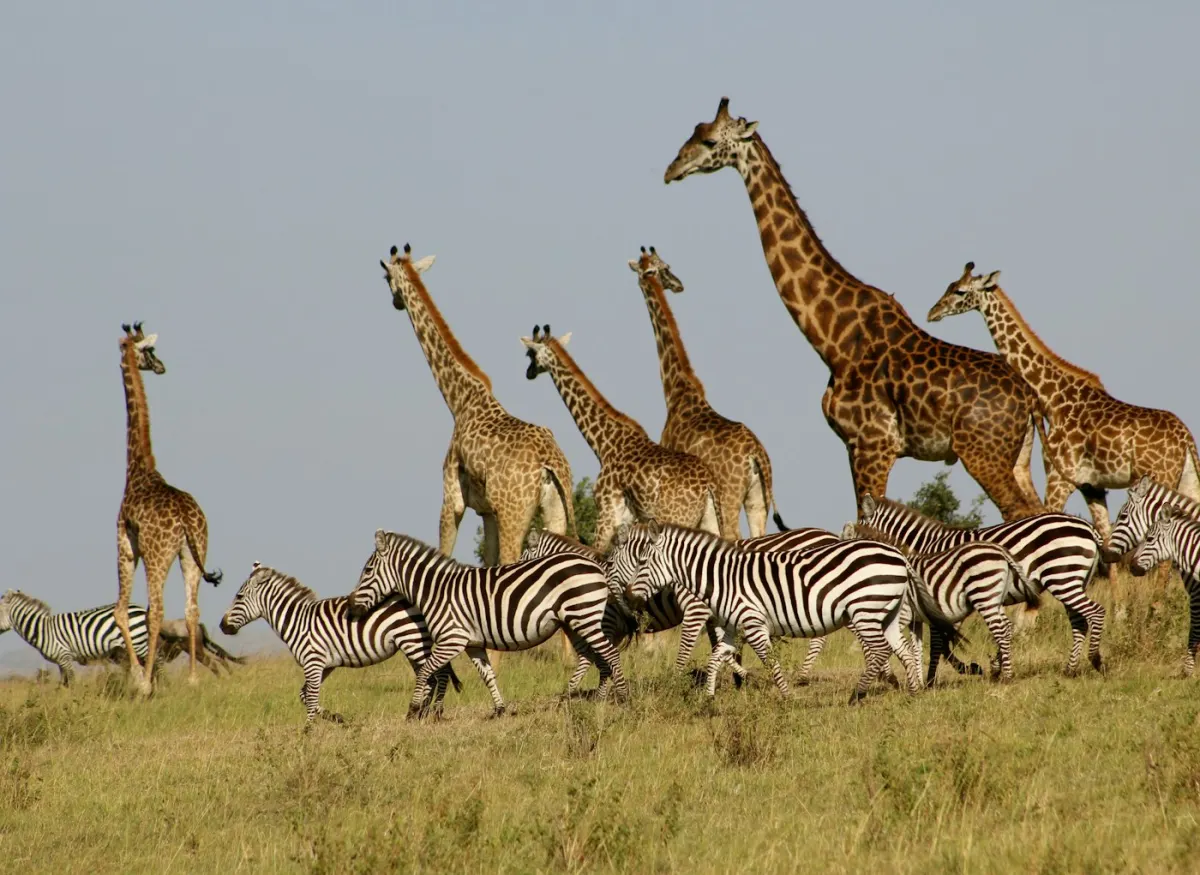
Yes — but only as a stopover, and only if you can get the booking. Giraffe Manor, on twelve private acres just outside Nairobi, is a 1932 manor house and a newer Garden Manor wing, twelve rooms total, surrounded by a herd of endangered Rothschild's giraffes that walk over from the adjoining Giraffe Centre at breakfast and again at tea. The Safari Collection runs it — and the same group operates Sala's Camp, Solio Lodge, and Sasaab, which is useful if you want to keep one operator across the itinerary.
It is not the camp that will change how you think about Africa. The Mara and Laikipia camps do that. But Giraffe Manor is the soft landing on day one or the punctuation mark on the last night, and the photographs are exactly what you have seen — better in person. Book it twelve months out, minimum.
How Do You Build a Kenya Safari Itinerary?
The standard architecture for a serious Kenya safari is seven to ten nights, two or three camps, connected by light aircraft on Kenya's bush airline network. A strong template looks like this: one or two nights at Giraffe Manor on arrival, three nights in the Mara at a private-conservancy camp during the migration window, three nights in Laikipia for the change of pace and the rhino viewing, and back through Nairobi for the flight home. Vehicles between regions are not the answer — Kenya is bigger than it looks on the map, and the bush flights are part of the experience.
Two practical notes. First, single-camp itineraries leave the country with one impression of Kenya. Two- and three-camp itineraries leave with a real one. Second, the camps above each have their own private vehicles and guides, and the difference between an average guide and an excellent one is the entire trip. Ask before you book.
Africa is rewarding terrain for travellers who plan it properly. For another extended East and North African itinerary built around the same principle, see our guide to Egypt as six countries in one.

What You Actually Want to Know
How much does a luxury Kenya safari cost in 2026?
Expect roughly $1,200 to $2,800 per person per night at the camps above, all-inclusive of meals, drinks, game drives, and most activities. Light aircraft between regions adds $400 to $800 per leg. A serious seven-to-ten-night itinerary at this tier typically lands between $20,000 and $45,000 per person, before international flights.
When is the wildebeest migration in the Maasai Mara?
The herds typically arrive in the northern Mara from mid-July, with the most dramatic Mara River crossings concentrated from late July through September. By mid-October they begin moving south again. Crossings cannot be promised on a specific date — the timing varies with the rains — but mid-August through early September is the safest window to book.
Is it safe to travel to Kenya in 2026?
Yes. The safari regions — the Maasai Mara, Laikipia, Lewa, Amboseli, Samburu — are stable and tourism-dependent. Most travellers connect through Nairobi without any logistical complication. A reputable operator will advise on current conditions and is the right source for any specific question.
How long should a Kenya safari be?
Seven nights is the floor for a serious trip. Ten nights is better — enough to do two regions properly, with a stopover in Nairobi at one end. Anything under five nights, and you have flown a long way for a single camp.
Do you need a travel advisor for Kenya?
The best camps are not bookable through a standard online channel, the migration timing is more nuanced than a calendar can capture, and the inter-camp flights need to be sequenced with care. A specialist matters here more than almost anywhere else.
Planning a Kenya trip for 2026 is not about which camp has the best website. It is about which combination of camps, regions, and dates actually works for you — and which guides will be in the vehicle. Noon's advisors have built itineraries through every camp on this list. Tell us where you want to go.
Plan Your Next Journey
Work with a Noon Travel advisor for a trip that exceeds every expectation.
Get Started