
The short version
Sicily is the Mediterranean trip to book in 2026. Base yourself in Taormina on the east coast — the San Domenico Palace and Grand Hotel Timeo are the two rooms to want — then pair it with Palermo or the Baroque southeast. Go in May, June, or September, not the August furnace.
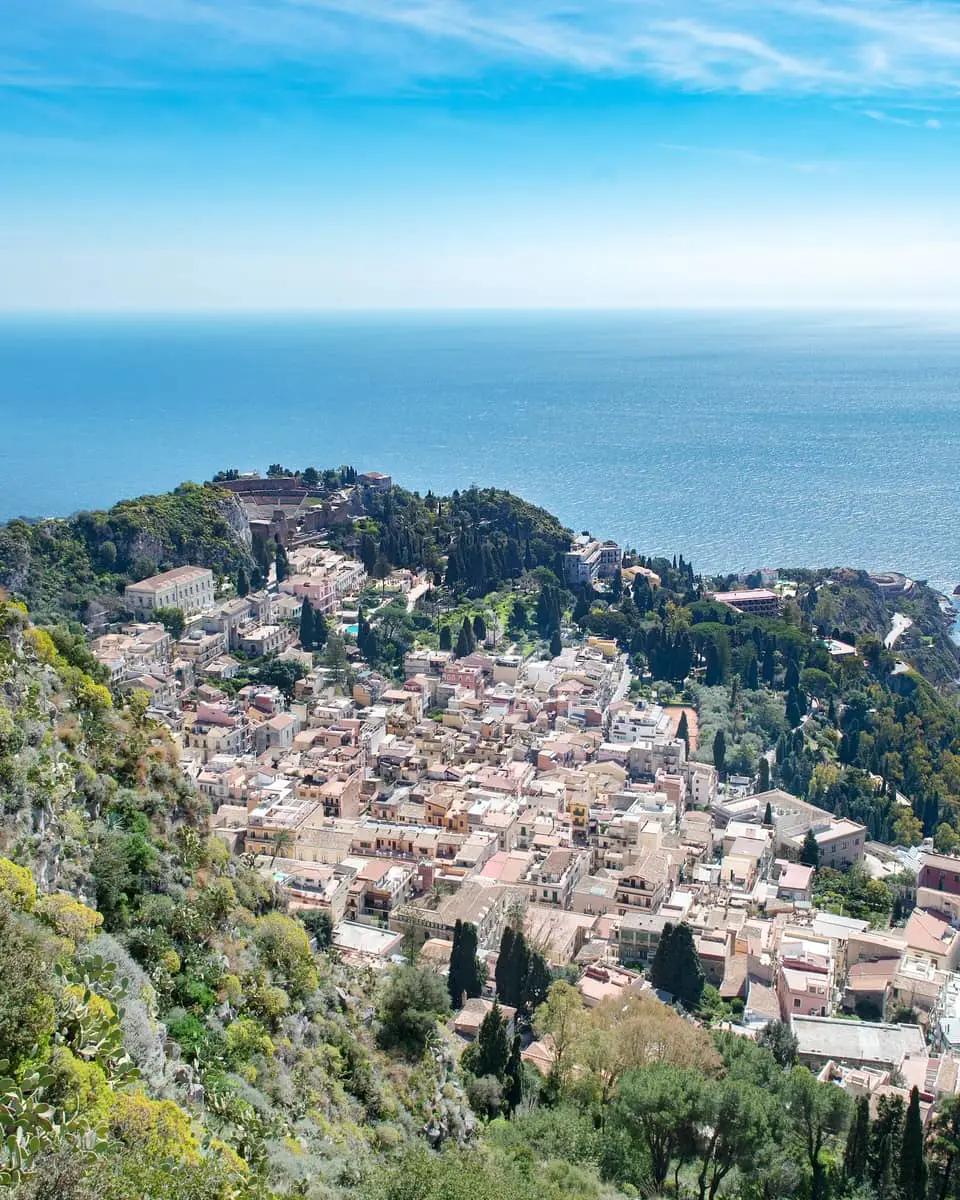
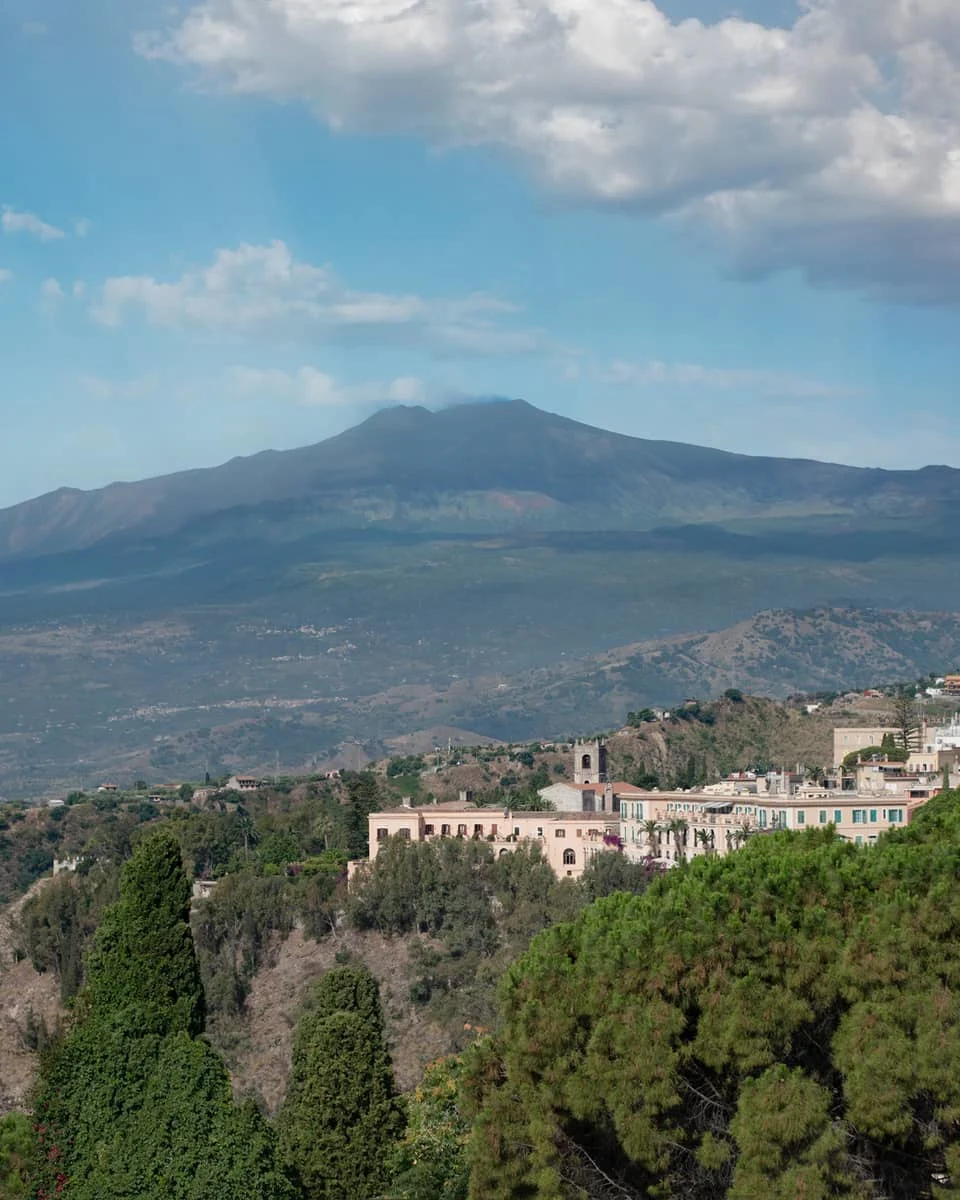
Stand on the cliff at Taormina and the whole argument for Sicily lays itself out in front of you: a Greek amphitheater cut into the rock two thousand years ago, the Ionian Sea going out flat and blue to the horizon, and Mount Etna smoking quietly in the distance like it owns the place. It does. This is one of the great views in the Mediterranean, and for years most travelers drove past it on the way to the Amalfi Coast.
Then The White Lotus filmed its second season at the San Domenico Palace, and Sicily went from “someday” to “this summer” on a lot of lists. The attention is deserved. But the island is the size of a small country, and the mistake people make is treating it like a single hotel with a good backdrop. Where you base yourself changes the entire trip.
Here is how to read it — the coasts, the hotels worth the rate, the volcano, the Baroque towns nobody photographs enough, and the one thing that matters most: when to go.

Where Should You Base Yourself in Sicily?
Start with the two airports. Catania (CTA) serves the east — Taormina, Mount Etna, the Baroque southeast — and it is roughly a 50-minute drive up to Taormina. Palermo (PMO) serves the west: the capital, the wild south coast, and the golf and beach at Verdura. Sicily is big enough that you do not want to zigzag, so pick a coast and commit, or split a week cleanly between the two.
For a first trip, base in Taormina. It is the most polished corner of the island — a cliff-top old town of Baroque churches, a walkable main street, and easy reach of Etna and the sea. For a second trip, or for travelers who already know Italy well, Palermo and the west are grittier, deeper, and more rewarding on the food. Many of our clients do both, linked by a train or a driver down the coast.

Which Taormina Hotels Are Worth It?
Two, above all. The San Domenico Palace, Taormina, A Four Seasons Hotel is a Forbes Travel Guide Four-Star property built inside a Dominican convent founded in 1373. It has 111 rooms, a clifftop infinity pool that is one of the most photographed in Italy, and the restaurant Principe Cerami under chef Massimo Mantarro. This is the hotel that played the resort in The White Lotus season two, and its “Only in Sicily” program — private dinners on Etna, yacht runs out to the Aeolian Islands — is the reason to book a suite rather than a room.

A short walk away, the Grand Hotel Timeo, A Belmond Hotel is the older soul of the two — a Forbes Travel Guide Four-Star hotel of about 70 rooms, the first hotel ever built in Taormina, and a Grand Tour stop that has poured drinks for D.H. Lawrence, Tennessee Williams and Truman Capote at its Bar Timeo. It sits directly beside the Greek theater, and its sister property, Villa Sant’Andrea, sits on a private pebble beach below, with a free shuttle running between the two. Book the Timeo for the view and the history; use Villa Sant’Andrea when you want sand under your feet.

Palermo, Verdura, and the West Coast
The west is where Sicily stops performing and starts being itself. In Palermo, base at Villa Igiea, A Rocco Forte Hotel — a Forbes Travel Guide Four-Star hotel in an early-1900s Liberty-style villa by the Sicilian architect Ernesto Basile, with 100 rooms, the Florio restaurant, a seaside pool, and the Irene Forte Spa. It is about ten minutes from the chaos of the old center and about half an hour from the airport, which is exactly the buffer you want after a day in Palermo’s markets.

Down the south coast near Sciacca, about 80 minutes from Palermo’s airport, Verdura Resort is the other Rocco Forte address — 203 rooms and villas across 230 hectares of olive and citrus groves, two 18-hole championship courses and a par-3 course by Kyle Phillips, and a spa that anchors the whole property. This is the one to book if the trip is really about golf, tennis, and a pool with no agenda. Rocco Forte runs a complimentary transfer between Villa Igiea and Verdura, so pairing city and coast is simple. If a beach-club-first summer is more your speed, see our guide to the best beach clubs in Europe.
Are Mount Etna and the Baroque Southeast Worth the Detour?
Yes — and they are the parts of Sicily that stay with you. Mount Etna, the largest and most active volcano in Europe, is an easy day from Taormina: hike the old lava fields, or better, have your hotel arrange a sunset dinner at one of the wineries on its slopes, where the volcanic soil makes some of Italy’s most interesting reds and whites.
South of Etna lies the Val di Noto — a cluster of towns rebuilt in golden Baroque stone after a 1693 earthquake and now protected by UNESCO. Noto is the showpiece; Ragusa Ibla is the most cinematic; Modica is where you eat the grainy, cocoa-forward chocolate the town is known for; and Ortigia, the island heart of Syracuse, is the best evening passeggiata on the island. This is self-drive country, worth two or three nights on its own. Travelers weighing it against the mainland should read our Puglia guide and our take on Positano and the Amalfi Coast.
When Is the Best Time to Visit Sicily?
Go in May, June, or September. Those months bring warm seas, temperatures in the 70s and low 80s, and towns that still belong to the people who live in them. July and August are the opposite: this is when Italians and the rest of Europe descend, prices peak, and afternoon highs regularly push into the 90s and, increasingly, past 100°F. If August is your only window, stay near the water — a sea-view suite or a beach hotel like Villa Sant’Andrea — and plan the towns and Etna for early morning. October is the quiet reward: warm enough to swim, empty enough to feel like a secret.
What You Actually Want to Know
Is Sicily worth visiting in 2026?
Yes. It offers Amalfi-level scenery and hotels at lower prices and with fewer crowds, plus food, wine, and archaeology the Amalfi Coast can’t match. The White Lotus attention has raised demand, so book the top hotels several months out for summer.
How many days do you need in Sicily?
Five to seven for one coast, ten to fourteen to do both properly. A clean first trip: four nights in Taormina with a day on Etna, then three in the Baroque southeast or Palermo.
Which is the best hotel in Taormina?
The San Domenico Palace, a Four Seasons hotel, for the pool, the service, and the suites; the Grand Hotel Timeo, a Belmond hotel, for history and the Greek-theater view. Both are Forbes Travel Guide Four-Star. You can’t go wrong — it comes down to whether you want polish or patina.
Do you need a car in Sicily?
For Taormina and Palermo, no — use drivers and the train. For Mount Etna, the Val di Noto, and the west coast, yes; a car or private driver is how you actually see the island.
Sicily rewards the traveler who books the right room in the right town at the right time of year — and that is a harder call than any single hotel website will tell you. Noon’s advisors know these properties and how to sequence a week across the island. Tell us where you want to go.
Plan Your Next Journey
Work with a Noon Travel advisor for a trip that exceeds every expectation.
Get Started