The short version
Puglia is southern Italy’s masseria country — fortified farmhouses turned design hotels along the Adriatic heel. Base yourself near Savelletri for Borgo Egnazia, Masseria Torre Maizza, and Masseria San Domenico, or go deep into Salento for Palazzo Daniele. Fly into Bari, travel in May, June, or September, and skip August.
The G7 came to Puglia in June 2024, and the world’s cameras finally caught up to what travelers had known for a decade: the heel of Italy keeps its best addresses behind olive groves and ten-foot stone walls. Heads of state were housed at Borgo Egnazia, a resort built to look like a centuries-old village. Justin Timberlake married Jessica Biel on its main piazza in 2012. Madonna keeps coming back.
What separates Puglia from Tuscany or the Amalfi Coast is the masseria — a fortified farmhouse, once a working olive estate, now restored into some of the most quietly expensive hotels in Europe. The best of them cluster along a single stretch of Adriatic coast near Savelletri di Fasano, close enough that you could sleep at one and have lunch at another.
Here is where to stay, which town earns the drive, and the one month a Noon advisor will quietly talk you out of.
Why Puglia, and Why Now?
Because the window is narrow and the secret is mostly out. Puglia gets more than 300 days of sun a year, and the sea stays warm from mid-June through late September. The catch is August, when roughly 800,000 Italians arrive for their own holidays — roads clog, the white towns strain, and the masserie charge their top rates for their most crowded weeks.
Go in May, June, or September instead. You get high-twenties Celsius, warm water, and room to breathe; June, with highs around 28°C, lands just before the domestic rush. If even shoulder-season Puglia feels too discovered, Croatia’s Dalmatian coast sits a short hop across the same Adriatic.
Where the Masserie Are: The Savelletri Triangle
Three of Puglia’s best hotels sit within minutes of one another on the coast at Savelletri di Fasano. Fly into Bari and you are at the gate in under an hour — the drive runs about 53 minutes.
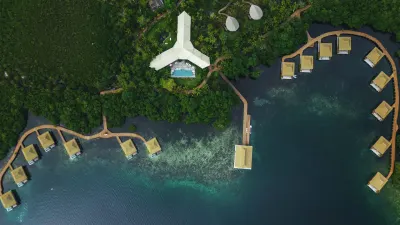
Borgo Egnazia is the one that hosted the G7. It was built from scratch to feel like a Puglian village in three parts — La Corte, the castle-like main building; Il Borgo, a warren of townhouses; and Le Ville, the private villas with their own pools. The Vair spa runs to 2,800 square metres, the property sits beside the 18-hole San Domenico golf course, and it keeps two beach clubs on the water. It is a resort, and it behaves like one.
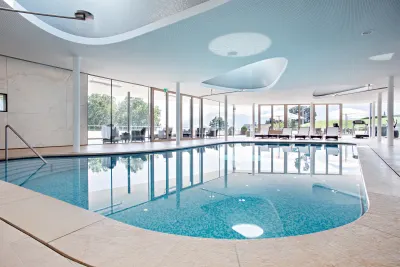
Masseria Torre Maizza, a Rocco Forte hotel, is the opposite temperament: 40 rooms and suites dressed by Olga Polizzi, a nine-hole golf course, a private beach club, and a spa, all on a far more intimate scale. Masseria San Domenico is the grande dame — a 15th-century watchtower once held by the Knights of Malta, restored into a 40-room resort in 1996, with a seawater thalassotherapy spa, a free-form pool, and direct access to the same San Domenico links.

Is Borgo Egnazia Worth It?
Yes — if you want a resort, not a hideaway. Borgo Egnazia is the right call for families, multigenerational groups, golfers, and anyone who wants programming, kids’ facilities, two beach clubs, and a spa the size of a small village all on one estate. It is large by design, and that is the point.
If you are a couple after something lower-key, book Masseria Torre Maizza instead — it delivers the same coastline with a fraction of the footfall and a sharper design hand. If your trip is built around golf or a serious wellness reset, Masseria San Domenico and its thalasso spa is the one. That is the kind of call we make for clients every week: same three miles of coast, three completely different holidays.
What About Salento, the Deep South?
Drive roughly two hours past the masseria coast and Puglia changes character. The Salento is flatter, wilder, and pinched between two seas — the Adriatic on one side, the Ionian on the other. This is where you go for empty back roads, baroque towns, and a slower register.
The stay here is Palazzo Daniele, in the small town of Gagliano del Capo near Italy’s southern tip. It is an 11-suite hotel inside a 19th-century aristocratic palazzo, stripped back to its frescoes and original floors and hung with contemporary art — minimalist, dramatic, and a Member of Design Hotels. Use Lecce, the baroque city often called the Florence of the South, as your cultural anchor; the Basilica di Santa Croce alone justifies the detour.
The Towns Worth the Drive
Three earn a day each. Ostuni, the White City, is a hilltop maze of whitewashed houses visible for kilometres across the olive plain — and the best town base if you want to walk to dinner rather than drive to it.

Alberobello holds the highest concentration of trulli, the conical limestone houses unique to the region; more than 1,500 of them cluster here, and the town is a UNESCO World Heritage site in the heart of the Itria Valley. Polignano a Mare is the cliff town — whitewashed houses stacked on limestone above the Adriatic, and the photograph everyone comes home with.

What You Actually Want to Know
When is the best time to visit Puglia? May, June, or September. The weather is warm, the sea is swimmable, and you avoid the August crush when roughly 800,000 Italian holidaymakers fill the region. June, around 28°C, is the sweet spot.
Which airport should I fly into? Bari (BRI) for the masseria coast — about 53 minutes to Savelletri di Fasano. Brindisi (BDS) is roughly an hour from the same coast and a little closer if you are heading down into Salento.
Borgo Egnazia or Masseria Torre Maizza? Borgo Egnazia if you want a full resort with beach clubs, golf, a vast spa, and family programming. Torre Maizza if you are a couple who wants a smaller, design-led masseria on the same coastline.
How many days do I need? Five to seven. That is enough to settle into one masseria, day-trip the white towns, and add two or three nights in Salento without rushing.
Do I need a car? Yes. The masserie are rural, the best towns are spread out, and Salento only opens up if you can drive it. A car — or a car and driver — is the difference between seeing Puglia and seeing one hotel.
Every itinerary Noon builds starts with one conversation — not a template. Tell us which version of Puglia you want, and we’ll secure the right masseria, the right room, and the right week. Start yours.
Plan Your Next Journey
Work with a Noon Travel advisor for a trip that exceeds every expectation.
Get Started