
The short version
Panama is three trips in one country: colonial Casco Viejo in the city, empty Pacific surf on the Azuero Peninsula, and the overwater islands of Bocas del Toro. I base clients at the American Trade Hotel, then Sansara in Cambutal, then Nayara Bocas del Toro or a private-island buyout at Sweet Bocas. Go December through April.
Almost everyone I talk to about Panama has the same picture in their head: a canal, a container ship, and a layover. That is the whole country, filed under logistics. It is one of the most useful misreadings in travel, because it means the rest of Panama is still quiet.
What is actually here is three completely different trips stacked into one small country. A restored colonial quarter in the capital that drinks and eats like a proper city. A Pacific peninsula with black-sand beaches and surf breaks that never have a crowd on them. And a Caribbean archipelago of overwater bungalows and private islands that looks like the Maldives and costs a fraction of the airfare to get to. You can do all three in ten days without ever seeing the canal.
Here is how I put the trip together — the three zones, the property I book in each, and how they connect.
Where do you actually stay in Panama City?
Not in the glass-tower banking district, which is where most business travelers end up and where there is nothing to walk to. You stay in Casco Viejo, the old town — a UNESCO World Heritage quarter of Spanish-colonial and French-era buildings, plaza cafes, rooftop bars, and the best restaurants in the country, all within a few blocks of each other.
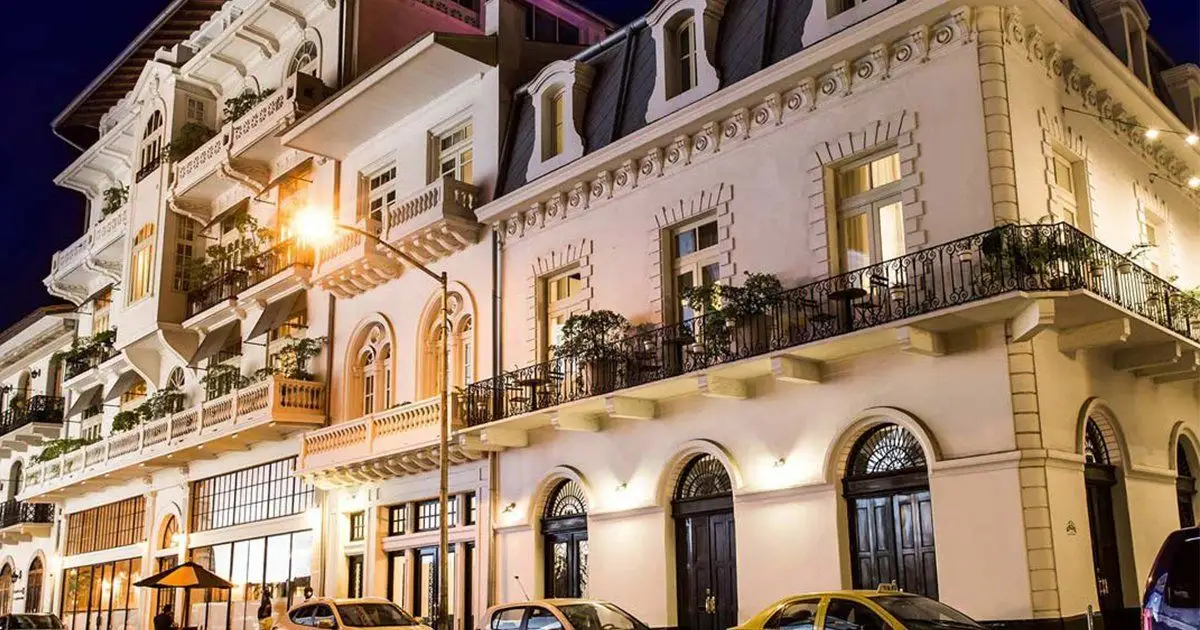
The address I book is the American Trade Hotel. It sits in a 1917 neoclassical building on Plaza Herrera that once housed a department store, was left derelict for decades, and was brought back by Atelier Ace — the group behind the Ace hotels — with the local restoration company Conservatorio. Fifty rooms, high ceilings, walnut floors, ceiling fans, a jazz bar downstairs. It is the rare city hotel where the building itself is the reason to stay, and it puts you on foot in the most interesting square mile in Panama. Give it two nights at the front of the trip to eat, drink, and adjust before you head for the coast.
The Azuero Peninsula: Panama’s empty Pacific coast
From the city you go south, down onto the Azuero Peninsula — the thumb of land that hangs off Panama’s Pacific side. This is the old, agricultural, festival-and-rodeo Panama, and its southern tip is one of the last uncrowded surf coasts in Central America. It is about a five-hour drive from Panama City, or a short flight down to the region and a transfer in; either way, you are trading the capital for empty beaches within half a day.
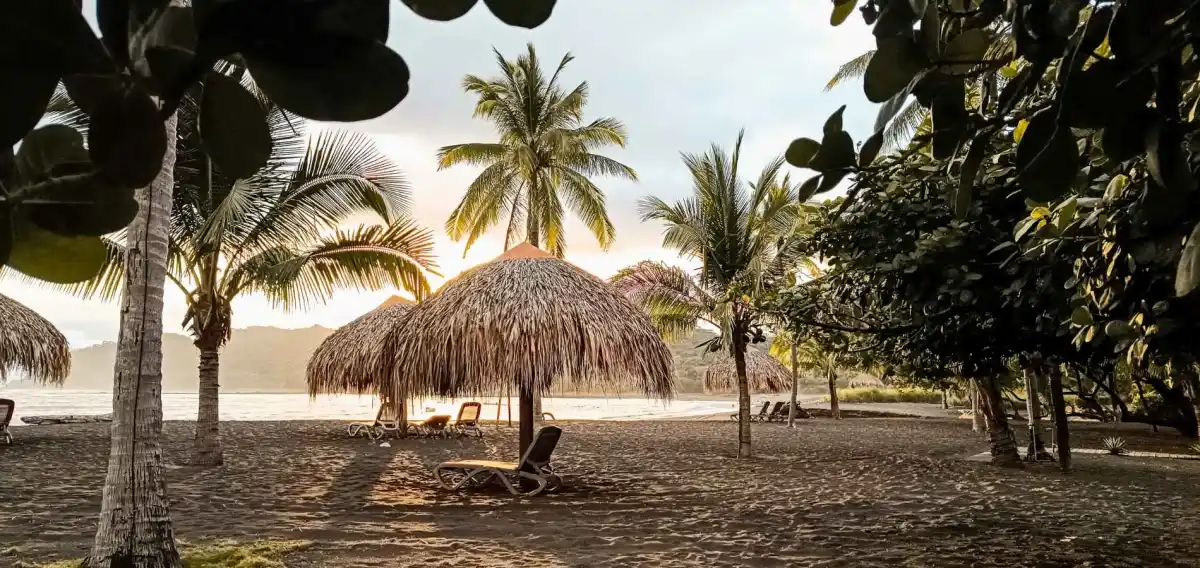
Where I put people is Sansara Surf & Yoga Resort in Cambutal, right at the bottom of the peninsula. It is a small eco-luxury place — a little over a dozen cabanas set above a dark-sand Pacific beach — built around surfing and yoga rather than a buffet and a kids’ club. There is a surf school for beginners and real, consistent waves offshore for people who already know what they are doing. This is the deliberately slow middle of the trip: barefoot, early nights, an ocean-front shala at sunrise. The best surf runs through the green season, roughly April to October, when the south swells come up; for pure beach weather, the dry months are calmer and sunnier.
Is Bocas del Toro worth the trip?
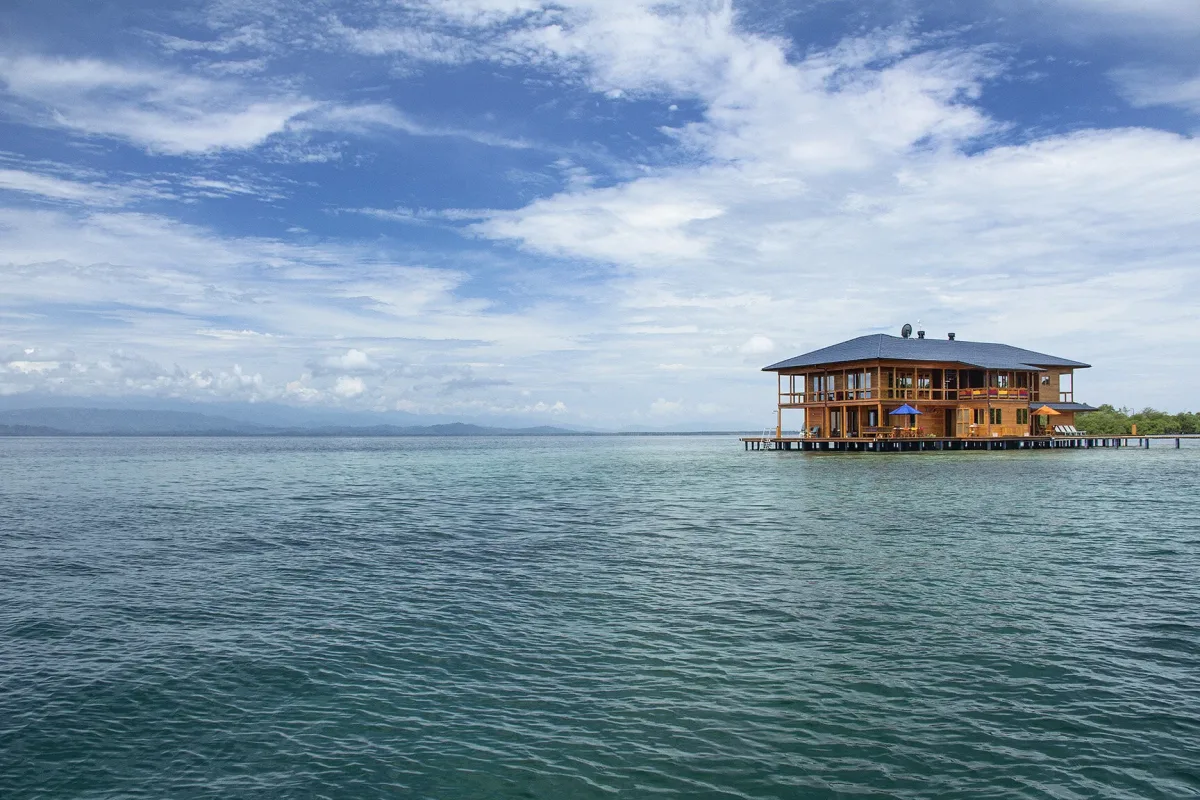
Yes — and it is the part that surprises people most. Bocas del Toro is Panama’s Caribbean archipelago up near the Costa Rican border: warm turquoise water, mangrove islands, and a cluster of properties built out over the reef on stilts. It is about an hour’s flight from Panama City to Bocas town on Isla Colon, then a short boat transfer to your island. That is the whole friction — a flight and a boat — and on the other side of it is overwater-bungalow scenery most people fly to the Indian Ocean for. It is a different, quieter corner of the same sea I send clients to in my favorite Caribbean hotels.
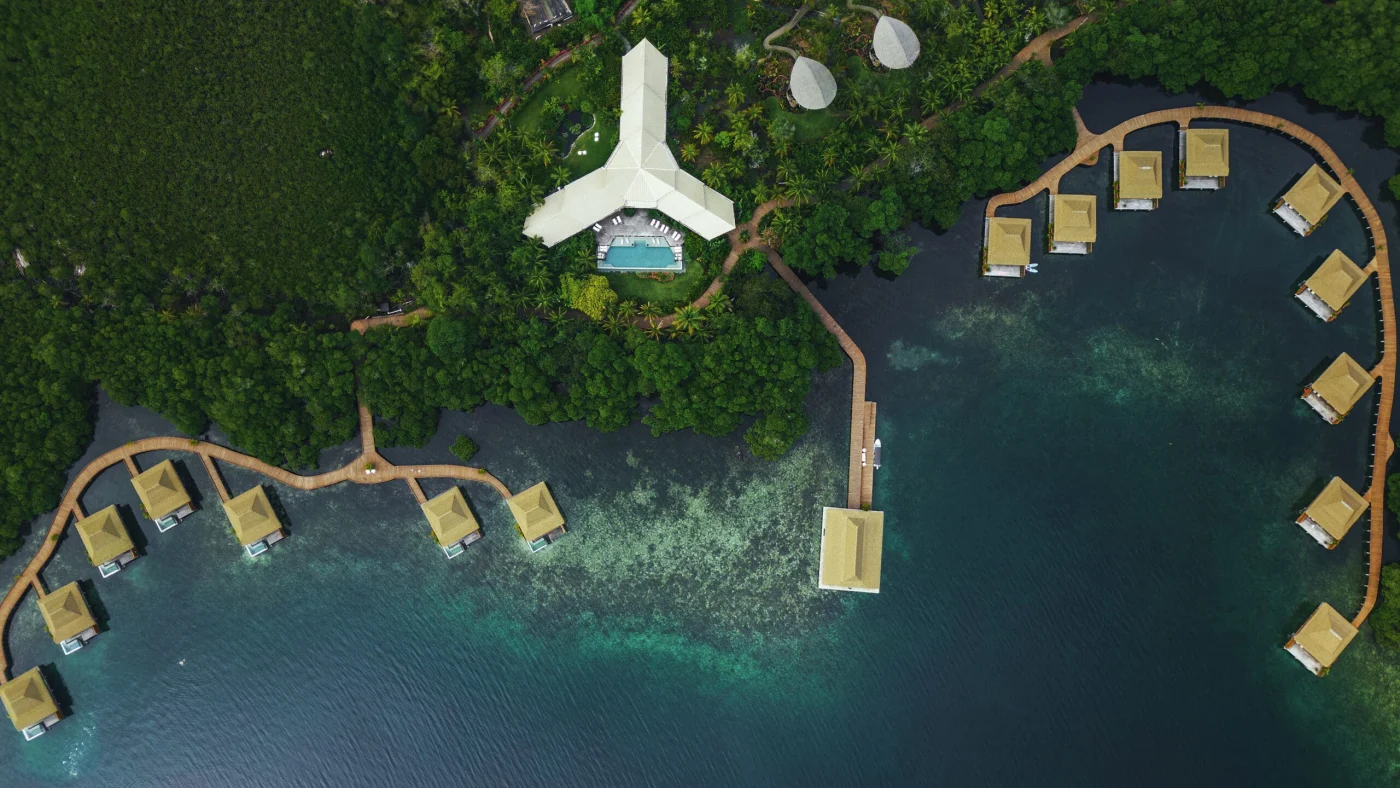
The resort I book is Nayara Bocas del Toro, an adults-only, all-inclusive property on a private island with eighteen overwater villas and a handful of rainforest treehouses. Each villa has a plunge pool and steps straight down into the sea; the whole place runs off-grid on solar and rainwater, so it is genuinely quiet. It is the closest thing the Caribbean has to a Maldivian water villa, at a Central American flight time. If overwater villas are your reason to travel, I keep a running list of the best of them worldwide in my private-island resorts guide.
For a family or a group that wants the island to themselves, the other Bocas play is Sweet Bocas — a roughly fifty-acre private estate that is taken as a single-party buyout. There is no shared occupancy and no public calendar: you book the whole property, it comes fully staffed, and the stay is built around you, from the food to the boat days. It is the move for a milestone trip or a multi-family week where privacy is the entire point.
How do you string the three together?
Order matters, and I run it city first, coast second, islands last. Two nights at the American Trade to land, eat, and get your bearings in Casco Viejo. Then down to Cambutal for three or four nights of surf, yoga, and nothing on the calendar. Then back through the city for the short flight up to Bocas, where you finish on the water — Nayara if it is a couple, Sweet Bocas if it is a group. Ten days does it comfortably; two weeks lets you breathe.
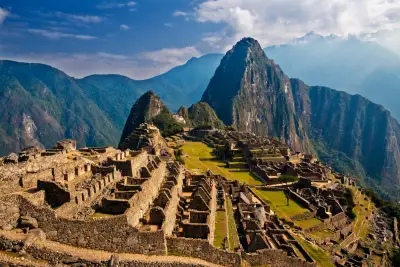
The one logistical note: Panama City is the hub for everything. Both the Azuero and Bocas legs route through the capital, so a night in the city on the turn is not wasted time — it is how the map actually works. This is Latin America the way I like to route it, one country doing several very different things well; I build South America the same way in my Peru itinerary.
What You Actually Want to Know
When is the best time to go to Panama?
The Pacific dry season, mid-December through mid-April, is the safe bet for the city and the Azuero coast — the sunniest, driest stretch. Bocas del Toro sits on the Caribbean side and keeps its own weather calendar; its clearer, drier windows tend to fall around February to March and again in September to October. If you are chasing Pacific surf rather than beach weather, the green season from April to October brings the bigger south swells to Cambutal.
How many days do I need?
Ten days covers all three zones without rushing: two nights in the city, three or four on the Azuero coast, and three on the water in Bocas, with the travel days built in. Two weeks lets you slow down at each stop. If you only have time for two zones, pair the city with Bocas and save the surf coast for next time.
Do I have to see the Panama Canal?
No. The canal is an easy half-day from Casco Viejo if you want the engineering pilgrimage, and the Miraflores locks are genuinely impressive up close. But this trip is built to show you the Panama that is not the canal, and you can skip it entirely without missing the point.
Is Bocas del Toro really like the Maldives?
In looks, at Nayara, close — overwater villas with plunge pools, turquoise water, total quiet. What is different is the setting: this is Caribbean archipelago rather than open atoll, so you get mangroves, rainforest, and reef rather than endless sandbars, and you reach it in an hour’s flight from the capital instead of a long-haul to the Indian Ocean.
City, surf coast, or islands — which one if I only pick one?
Bocas del Toro, for a first trip — it is the most distinctive and the hardest to picture until you are there. But the whole argument of this piece is that you do not have to choose: they are close enough to do together, and each one is better for having the others around it.
Panama is the rare trip where the country is still ahead of its reputation — three very different weeks compressed into one, and none of them the postcard everyone expects. I know which room to book at each stop, how to time the flights, and how to make the connections disappear. Tell me when you want to go, and I’ll build it around you.
Plan Your Next Journey
Work with a Noon Travel advisor for a trip that exceeds every expectation.
Get Started