The short version
Paris reopens in the last days of August, and September is the best month to eat there — the city is fully back and it is the driest month of the year. Book Septime, Table and Frenchie the moment their windows open, eat at Clamato and the wine bars when you cannot, and stay in one of the thirteen hotels the French state calls a Palace.
The most reliable way to eat badly in Paris is to arrive on the tenth of August. For three weeks every summer the city quietly folds in on itself: the chef goes to Brittany, the sommelier goes to Corsica, and a handwritten sign appears in the window of the restaurant you flew nine hours to try. It is the single most avoidable mistake in luxury travel, and thousands of people make it every year.
Then, in the last days of the month, Paris comes back. The shutters go up, the reservation systems reopen, the autumn menus land, and the terraces on Boulevard Saint-Germain fill again with people who have been somewhere else. The French call it la rentrée, and it is the closest thing the restaurant world has to a new year. This week is it.
What follows is how a Noon advisor routes a serious eating trip to Paris: which tables are worth building a trip around, the exact mechanics of getting into them, where to eat when you cannot, and which hotel to sleep in so that dinner is a walk rather than a taxi.
Why is late August the moment to book Paris?
The myth is that Paris closes in August. The truth is narrower and more useful: the closures are concentrated in a window of roughly three weeks, from the first days of the month to around the twenty-third, and the pattern is no longer a blunt shutdown so much as a reduction. Bruno Verjus closes Table for the first three weeks of August and says so on his own site. Allard, the 1932 bistro that Alain Ducasse now runs, spends the whole month on dinner service only. Clamato stays open all summer but drops to evenings only from the tenth to the twenty-third. La Buvette simply loses its Tuesdays and Wednesdays.
Which means the calendar is far more forgiving than the folklore suggests. Before the third of August and after the twenty-fourth, the city runs close to normal. Arrive in the first week of September and you get the version of Paris that Parisians get: full kitchens, full staff, the new season’s menu rather than the tail end of the last one, and a table you can still book.
The weather agrees. Using Météo-France’s own thirty-year normals for the Paris-Montsouris station, September averages a high of 21.5°C, a low of 13°C, and 44.7 millimetres of rain across 7.5 rainy days — which makes it, by volume, the driest month of the Paris year. June and July are warmer. September is drier, emptier and better fed.
Which tables are worth planning a trip around?
Start with the four Paris restaurants that sat on The World’s 50 Best Restaurants list in 2025, because they are genuinely different from one another rather than four versions of the same ambition. Table, Bruno Verjus’s room a few streets from the Marché d’Aligre, was ranked No. 8 — the highest-placed restaurant in France. Plénitude, Arnaud Donckele’s dining room inside Cheval Blanc Paris, was No. 14. Septime, Bertrand Grébaut’s stripped-back room on rue de Charonne, was No. 40. Alain Passard’s Arpège, still the most influential vegetable kitchen in Europe, was No. 45. The 2026 edition of that list is not out until November, so anyone quoting you a 2026 rank right now is inventing it.
La Liste, the French-run ranking that aggregates more than 1,100 international sources, tells a different and older story. In the 2026 edition, published last November, Guy Savoy scored 99.5 — one of ten restaurants worldwide sharing the top position. Kei and Plénitude follow at 99. Le Pré Catelan in the Bois de Boulogne and Yannick Alléno’s Pavillon Ledoyen sit at 98.5; L’Ambroisie, Epicure at Le Bristol and Pierre Gagnaire at 98; Arpège, Le Gabriel and Jean-François Piège’s Le Grand Restaurant at 97.5. Between the two lists you have the whole argument about what Paris is for.
Two corrections worth carrying with you, because most guides have not caught up. Bernard Pacaud retired from L’Ambroisie in June 2025 after four decades; the kitchen on the Place des Vosges is now run by Shintaro Awa, who trained with the Marcons, with Bocuse, and for more than ten years under Éric Frechon at Le Bristol. And Astrance has moved — Pascal Barbot is at 32 rue de Longchamp now, not the old address that half the internet still prints.
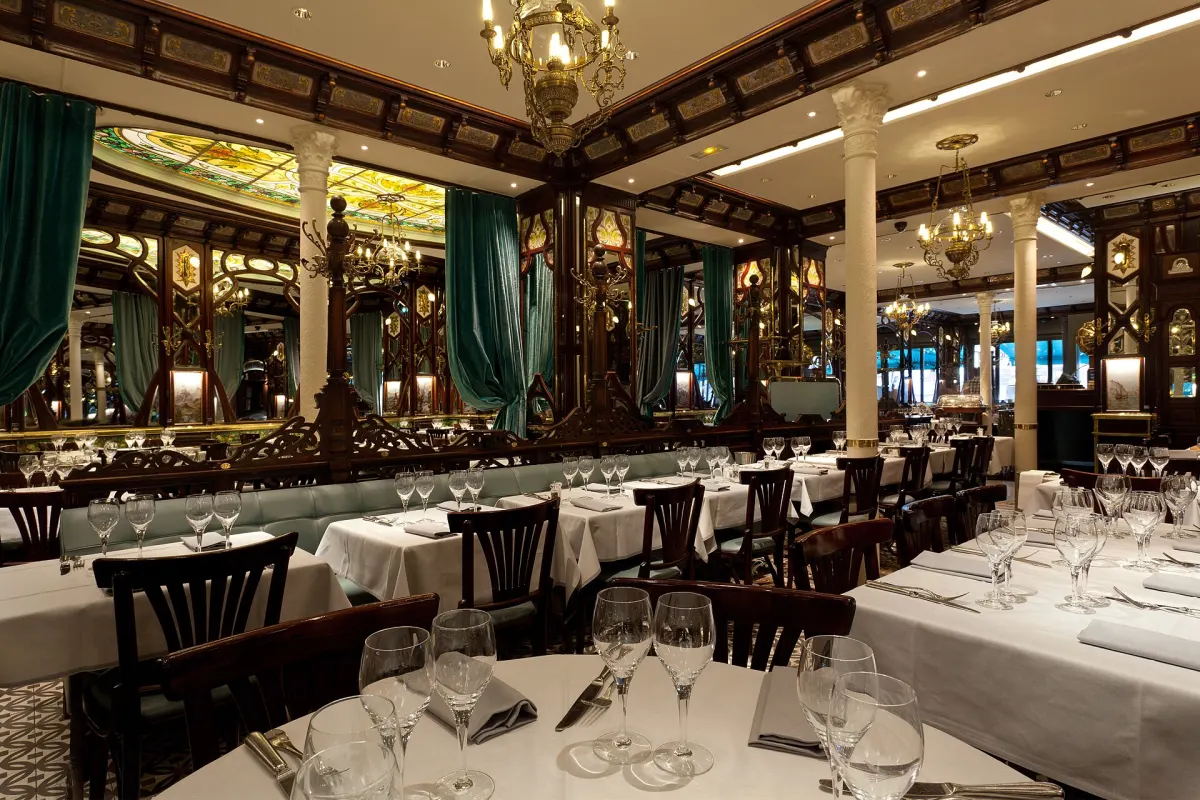
How do you get a table at the ones that matter?
This is the part almost no guide gets specific about, and it is the part that decides whether your trip works. Every serious Paris restaurant has its own booking mechanic, and they are not interchangeable.
Septime (80 rue de Charonne, 11th) releases tables online only, every morning at 10h, exactly three weeks out. Not three weeks and a day. Set an alarm for 4am Eastern, or have your advisor do it. Lunch is five courses at €85, dinner seven at €135, and the room is closed Saturday and Sunday.
Table (3 rue de Prague, 12th) works the opposite way: bookings open up to three months ahead, with new dates released daily. There is one menu, the Couleur du jour, ten to fourteen dishes, €480 at lunch and at dinner, with a non-refundable deposit of €200 a head taken at booking. Allow two and a half hours minimum. It runs Tuesday to Friday only.
Frenchie (5 rue du Nil, 2nd) serves dinner only, seven nights, with a five-course carte blanche at €148 and wine pairings from €70. Bistrot Paul Bert (18 rue Paul Bert, 11th) — the benchmark for the old-guard Paris bistro, Tuesday to Saturday — takes reservations by telephone and nothing else. Dial 01 43 72 24 01 and speak French if you can.
The pattern to internalise: Paris does not reward flexibility, it rewards precision. Decide your two anchor dinners before you book flights, then build the rest of the trip around them.
Where should you eat when you cannot get in?
Here is the good news: the meals people remember are usually the ones they did not reserve. Clamato, at the same address as Septime, takes no bookings at all, opens seven days a week, and serves whatever came off the boats at Saint-Jean-de-Luz, Concarneau and the Île d’Yeu that morning — line- and pot-caught only. Turn up, put your name down, drink something while you wait.
Then the caves à manger, which are the real spine of how Paris eats now. Septime La Cave (3 rue Basfroi, 11th) is open every day from 16h to 23h, drink in or take away. La Buvette (67 rue Saint-Maur, 11th) is a tiny room that has taken no reservations since it opened in December 2012 and does not intend to start. Vantre (19 rue de la Fontaine au Roi, 11th) runs weekdays only and has one of the deepest cellars in the city. Le Verre Volé (67 rue de Lancry, 10th) has been pouring natural wine since 2000 and keeps more than 400 references, with a second shop on rue Oberkampf holding over 700. And Café Compagnon (26 rue Léopold Bellan, 2nd) is open from breakfast to midnight, which is the most useful sentence in this article.
Two more rooms worth knowing: Le Servan (32 rue Saint-Maur, 11th), where Tatiana Levha cooks and her sister Katia runs the floor and the list, and Chez L’Ami Jean (27 rue Malar, 7th), Stéphane Jégo’s loud, generous bistro in the 7th. If you plan whole trips around this kind of eating, you already know the feeling from San Sebastián.
What about bread and pastry?
Paris makes this easy, because the city runs an official competition and publishes the answer. The Grand Prix de la Baguette de Tradition Française de la Ville de Paris ran its 33rd edition in February 2026. A hundred and forty-three baguettes were submitted, each required to weigh 250 to 255 grams and measure 55 to 60 centimetres, and each judged on appearance, taste, bake, crumb and aeration by a jury of trade federations, journalists and Parisians drawn at random. The winner was Sithamparappillai Jegatheepan of Fournil Didot, 103 rue Didot in the 14th, whose baguette ferments for fourteen hours at 5°C. He came to France from Sri Lanka in 2003 and set up on his own in 2018. The prize is €4,000 and a year of quiet local fame.
Bread is not a side note here. The baguette went onto UNESCO’s intangible cultural heritage list in 2022, and by the city’s own count 93 per cent of Parisians live within a five-minute walk of a bakery. The corollary for a traveller is that your hotel’s breakfast is almost always the worse option.

The addresses worth walking to: Poilâne at 8 rue du Cherche-Midi in the 6th, the original bakery and still the one to visit, with outposts on rue Debelleyme, boulevard de Grenelle and rue de Lévis. Du Pain et des Idées at 34 rue Yves Toudic in the 10th, which Christophe Vasseur founded in 2002 and has since expanded into a restaurant and a glass-fronted workshop a few doors apart. Boulangerie Utopie at 20 rue Jean-Pierre Timbaud in the 11th, where a new bread, viennoiserie and pastry appear every weekend. And Ten Belles, a sourdough bakery and coffee roaster with three sites, on rue Bréguet, rue de la Grange aux Belles and rue du Cherche-Midi.
For pastry, Cédric Grolet now has four Paris counters — at Le Meurice on rue de Castiglione, on avenue de l’Opéra, on rue Danielle Casanova, and a chocolate shop at number 33 avenue de l’Opéra — and queues form at all of them before opening. Pierre Hermé has more than twenty-five addresses across the city; the one on rue Bonaparte in the 6th is the one to make a detour for. And if you want the thing nobody else in your party will have heard of, the city also runs a Grand Prix de la Pâtisserie: the 2026 edition, judged by a panel co-chaired by Pierre Hermé, went to Enzo Baptista of Bo&Mie for a hazelnut construction called Amour³.
Which markets are worth the morning?
Paris runs 91 markets, and the first thing to know is that every food market in the city is closed on Mondays. Plan accordingly, because a Monday morning market walk is a wasted morning.
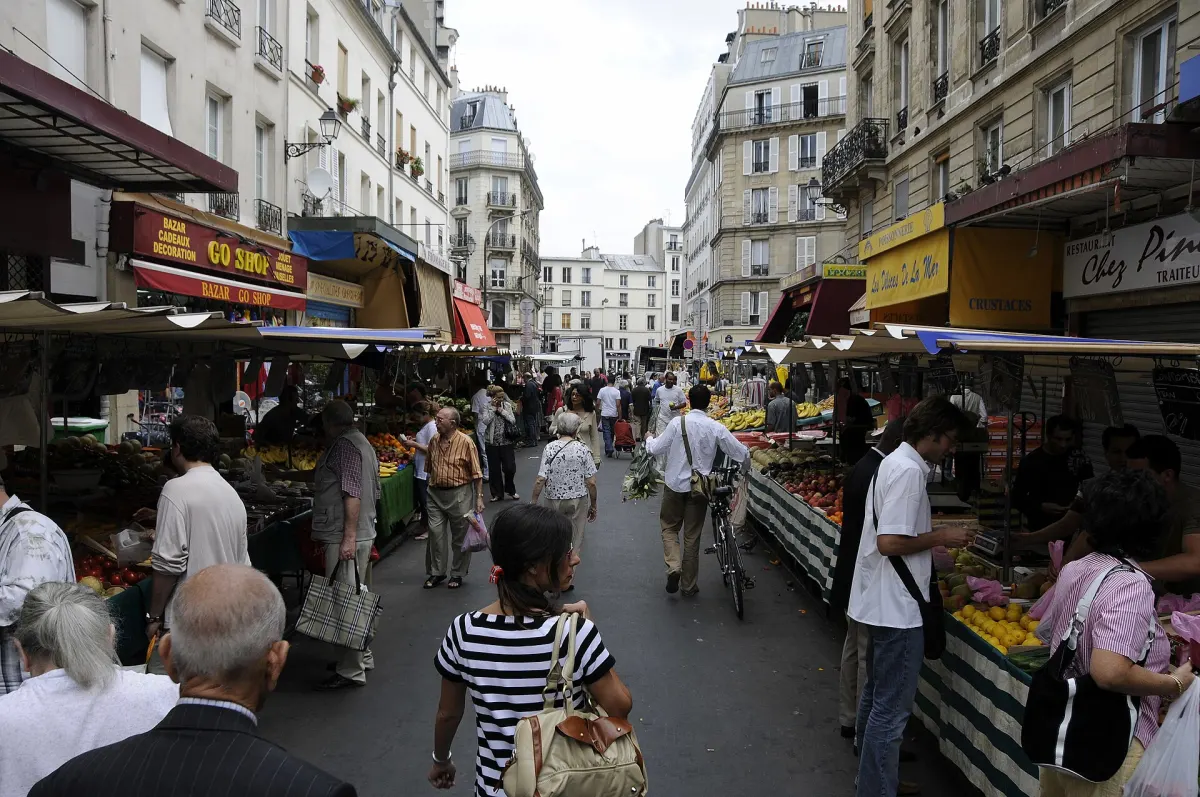
Marché d’Aligre in the 12th is the one to build a morning around, partly because it is two markets at once. The open-air stalls on the Place d’Aligre run Tuesday to Friday from 7h30 to 13h30 and until 14h30 on Saturday and Sunday; the covered Marché Beauvau beside it keeps longer hours, Tuesday to Friday from 8h to 13h and again from 16h to 19h30, with continuous service until 19h30 on Saturday. It is scruffier and cheaper than the Left Bank markets and it is where the neighbourhood actually shops. Table is a four-minute walk away, which is not a coincidence.
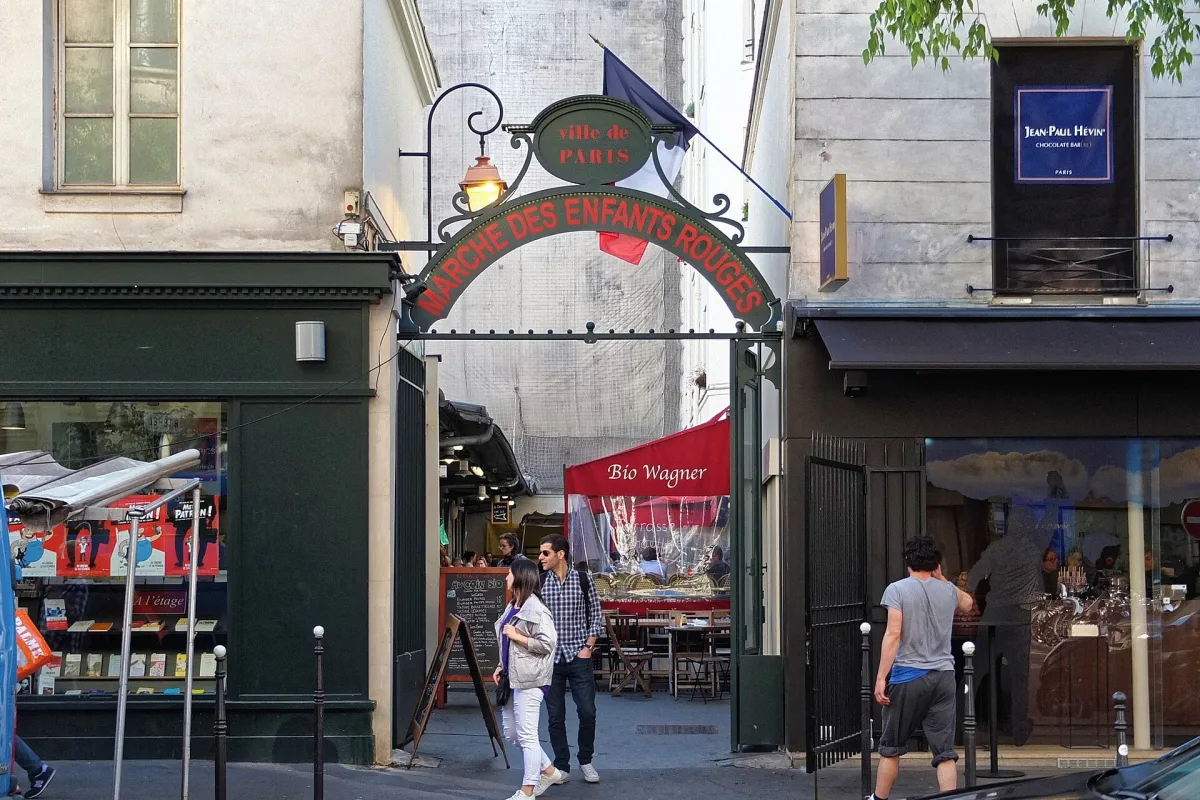
Marché des Enfants-Rouges, at 39 rue de Bretagne in the Marais, is the oldest covered market in the city and now functions mostly as a lunch destination — open Tuesday to Saturday from 8h30 to 20h30, until 21h30 on Thursday, and Sunday from 8h30 to 17h. Go hungry, not shopping. The two great open-air markets, Bastille on the Boulevard Richard Lenoir and Président Wilson in the 16th, each run only twice a week: Bastille on Thursday and Sunday, Président Wilson on Wednesday and Saturday, both from 7h. Président Wilson is the one where the chefs shop.
Where should you stay?
France is one of the very few countries with an official hotel category above five stars, and it matters more in Paris than anywhere. The Palace distinction was created by government order in 2010 and amended in January 2024. A hotel must already hold five stars to be eligible, must have traded for at least two years, must have rooms of at least 26 square metres, a spa, a fitness centre and a swimming pool, and must then survive site visits by two members of a state commission before the tourism minister signs it off. Stars last five years. The Palace distinction has to be re-earned every three.
The current list was republished on 2 June 2026: thirty-three establishments in France, of which thirteen are in Paris — Bvlgari Hotel Paris, Cheval Blanc Paris, Fouquet’s Paris, Four Seasons Hotel George V, Hôtel de Crillon, Hôtel Plaza Athénée, La Réserve Paris, Le Bristol Paris, Le Meurice, Mandarin Oriental Lutetia, Le Royal Monceau – Raffles, Shangri-La Paris and The Peninsula Paris. Twenty-seven were renewals and six were new. Dining is not incidental to the assessment; excellence in restaurant and bar service is one of the formal criteria the commission scores.
Worth knowing before someone tells you otherwise: two of the most famous hotels in Paris, the Ritz Paris and Mandarin Oriental, Paris on rue Saint-Honoré, do not appear on the current Palace list, although both hold a Forbes Travel Guide Five-Star rating for 2026. The two systems measure different things and they do not always agree. Ten Paris hotels hold Forbes Five-Star this year: Cheval Blanc, the George V, the Crillon, the Plaza Athénée, La Réserve, Le Bristol, Le Meurice, Mandarin Oriental Paris, the Ritz and the Shangri-La.

For an eating trip, four of them are the real contenders. Le Bristol, 188 rooms at 112 rue du Faubourg Saint-Honoré, has Epicure and a chef de cuisine, Arnaud Faye, who holds the Meilleur Ouvrier de France title; its heated sixth-floor pool was designed by the naval architect Cäsar Pinnau to look like the deck of a 1920s yacht, and it is kept at a constant 28°C. Cheval Blanc Paris, 72 rooms above the Seine at 8 Quai du Louvre, is the most concentrated dining address in the city: Plénitude and Arnaud Donckele, Maxime Frédéric’s pastry, Hakuba, Langosteria, and Le Tout-Paris on the seventh floor running from 7h to 1h. Le Meurice, 121 rooms and 39 suites facing the Tuileries on rue de Rivoli, pairs Alain Ducasse and Amaury Bouhours in the main room with Cédric Grolet’s pâtisserie downstairs. And the Hôtel de Crillon on the Place de la Concorde changed hands in the kitchen this summer: Alan Taudon took over all of its dining venues on 1 June 2026, working alongside Paul Pairet on Nonos & Comestibles.
Two more, for different reasons. The Plaza Athénée on avenue Montaigne, open since April 1913, employs 550 people including some eighty specialist artisans — florists, bakers, carpenters, a person whose job is preparing fruit — which tells you more about how a Palace actually works than any brochure. And the Ritz is worth a drink even if you sleep elsewhere: Bar Hemingway opens daily at 17h, and from 1 September the Salon Proust switches to a new tea service built by head pastry chef Olivier Lainé.
When in the autumn should you go?
September, if the food is the point. The city is back, the weather is dry, and the restaurant calendar is at its most interesting — Anne-Sophie Pic opens a Paris restaurant and cocktail bar inside the Fondation Cartier’s new home on rue de Rivoli this autumn, which is the most significant arrival on the Paris dining map in several years.
October is where it gets complicated. Paris Fashion Week runs 28 September to 6 October, and the Qatar Prix de l’Arc de Triomphe lands at ParisLongchamp on 3 and 4 October, in the middle of it. That first weekend of October is the tightest hotel window of the season and the worst time to try to book a Palace on short notice. Art Basel Paris follows at the Grand Palais on 23 to 25 October, with the public vernissage on the 22nd and 211 exhibitors from 41 countries; Paris Photo takes the same building on 12 to 15 November.
Two museum notes for anyone building a trip around more than dinner. The Grand Palais shows Cezanne et nous from 23 September, and the Musée de l’Orangerie opens Monet, peindre le temps on 30 September to mark the centenary of Monet’s death, with a late opening every Friday from 18h to 21h for the whole run — the single best way to see the Nymphéas without a crowd. The Centre Pompidou is closed for renovation until 2030, so cross it off. And if you have three spare days, Champagne is 46 minutes away by train and September is harvest.
What You Actually Want to Know
How far ahead do I need to book? Table opens three months out. Septime opens exactly three weeks out at 10h Paris time. Frenchie and the hotel dining rooms want a month. The wine bars and Clamato want nothing at all. Book the two hard tables first, then the flights.
Is Paris really dead in August? No, but the middle three weeks are thin. The closures cluster between roughly 3 and 23 August; before and after that the city runs close to normal, and many places that do close simply drop to dinner service rather than shutting entirely.
What is the difference between a Palace and a five-star? Palace is an official French state distinction sitting above the five-star rating, awarded by the tourism minister after a commission process, and reviewed every three years rather than five. There are thirty-three in France and thirteen in Paris. Five stars is a classification; Palace is a judgement.
How do I get in from the airport? The flat-rate taxi fare from Charles de Gaulle is €56 to the Right Bank and €65 to the Left Bank, fixed by regulation, one fare per trip regardless of passenger count, and there is no baggage supplement in Paris. From Orly it is €45 and €36. The RER B takes 25 to 30 minutes from CDG at €14. Note that the Roissybus was discontinued on 1 March 2026, and CDG Express is not open — the current target is March 2027.
What will the city tax add? More than most people expect. As of 1 January 2026 the nightly tourist tax per adult is €15.93 at a Palace, €11.70 at a five-star and €8.45 at a four-star. The reason it is so high is an Île-de-France Mobilités transport surcharge that adds 200 per cent on top of the base municipal rate.
How many days do I need? Four nights is the honest minimum for an eating trip: two anchor dinners, two long lunches, a market morning and a bakery walk, with room for one thing to go wrong. Five is better. Anything shorter and you are choosing between restaurants and the city.
Paris rewards the traveller who books like a local and eats like a visitor — the alarm set for the reservation window, the market morning on a Tuesday, the hotel chosen because you can walk home from dinner. Every Noon itinerary starts with a conversation rather than a template. Tell us where you want to go.
By Amelia Ingram | August 27, 2026
Plan Your Next Journey
Work with a Noon Travel advisor for a trip that exceeds every expectation.
Get Started