The short version
Frieze Seoul and Kiaf SEOUL run together at COEX from 2 September 2026 — the last time the two fairs will share a building, because Frieze moves to Zaha Hadid’s Dongdaemun Design Plaza in 2027. One ticket covers both. Around them, four nights of gallery openings turn the whole city into the fair.
Seoul does not do subtle. For four days at the start of September the city runs on art the way Milan runs on furniture in April — galleries open until midnight, museums extend their hours, restaurants that never take walk-ins hold tables for people who flew in for a fair. Then everyone goes home and the city gets its streets back.
The fairs themselves are the smallest part of it. Frieze Seoul and Kiaf SEOUL occupy the same convention centre in Gangnam and take about a day and a half between them. The other three days happen across four neighbourhoods on the wrong side of the river, in gallery buildings you would never find on your own, and in museums that most travellers to Seoul walk straight past.
This year has a deadline attached. In August, Frieze confirmed that the 2027 edition moves across town to the Dongdaemun Design Plaza while COEX is redeveloped — and that Kiaf stays put. So 2026 is the last art week where you can see both fairs by walking up an escalator. If you have been meaning to do this, this is the year.
What happens during Seoul Art Week?
Two fairs run concurrently at COEX in Gangnam, and a citywide programme runs around them. Frieze Seoul is in its fifth edition, 2–5 September, in Halls C and D on Level 3, with more than 125 galleries from 30 countries. Kiaf SEOUL — Korea’s original international fair, founded in 2002 and now in its 25th edition — takes Halls A and B on Level 1 with 175 galleries from 18 countries, and runs a day longer, through 6 September.
Two numbers explain why the trip is worth taking. More than 70 per cent of Frieze’s exhibitors are based in the Asia-Pacific region, so this is not the London or New York roster moved east. And more than 50 of them keep permanent spaces in Seoul — which is why the week does not end when the halls close at 19:00.
The practical points worth knowing before you buy anything. Wednesday 2 September is invitation only. Thursday opens to preview-ticket holders at 11:00 and to everyone else at 15:00. Friday and Saturday run 11:00 to 19:00, last admission 18:30. Single-day Frieze tickets are ₩90,000 before 15:00 and ₩70,000 after; the multi-day Preview Ticket is ₩250,000; the early-bird tier has already sold out. Every Frieze ticket and membership includes entry to Kiaf, which is the single most useful thing on this page — do not buy two.
The evenings are organised, and they are the point. Frieze runs Neighborhood Nights: Euljiro on Monday 31 August, Hannam on Tuesday 1 September, Cheongdam on Wednesday 2 September, Samcheong on Thursday 3 September. Galleries in each district open late on their assigned night. Build the week around those four dates, not around the fair.
Why is 2026 the last art week of its kind?
Because COEX is being redeveloped, and Frieze is leaving. From 2027 the fair moves to the Dongdaemun Design Plaza — Zaha Hadid’s aluminium-clad cultural centre north of the river, opened in 2014 — while Kiaf remains at COEX in Gangnam. The two fairs will keep their partnership and their joint ticket, but for the first time since 2022 they will be in different buildings, in different halves of the city.

Frieze has said the DDP gives the fair a tighter footprint and that the 2027 edition will be edited down as a result — fewer stands, more room around each one. That is likely to be better art and a worse excuse for a trip. The version where you clear both fairs before lunch and spend the afternoon in Hannam is the one that ends this year.
Which neighbourhoods should you walk, and in what order?
Four, and Frieze has already sequenced them for you. Take the Neighborhood Nights in order and you will have seen the city’s entire gallery ecology from the bottom up.
Euljiro is the start: a downtown grid of lighting shops, printers and metal workshops with artist-run spaces and non-profits hidden on the upper floors of buildings with no lift. Nothing here is signposted. Go on the Monday when the doors are propped open, or you will walk past all of it.
Hannam-dong, on the north bank in Yongsan, is where the international galleries landed. Pace and Lehmann Maupin sit on Itaewon-ro; Thaddaeus Ropac is on Dokseodang-ro; Esther Schipper is on Hannam-daero. Gladstone opens a larger new Hannam space on 31 August, designed by Minsuk Cho of Mass Studies. Leeum is a five-minute uphill walk from Hangangjin station, which makes this the one district you can do properly on foot.
Cheongdam is the money. White Cube occupies a ceramic-clad building near Dosan Park — the same building as the Horim Art Centre — and Perrotin is one street over. The flagship stores are the reason most people come to this part of Gangnam; the galleries are the reason to come during art week.
Samcheong is the oldest and the prettiest: the lane running north from Gyeongbokgung, with Kukje Gallery and Gallery Hyundai a few doors apart on Samcheong-ro and MMCA Seoul at the bottom of the hill. It backs directly onto Bukchon. Do this district in daylight and stay for the Thursday night openings.

One rule that catches visitors out: Bukchon is a residential village, and Jongno-gu now enforces it. Inside the designated area around Bukchon-ro 11-gil, tourists may only visit between 10:00 and 17:00. Turning up at 19:00 for the empty-lane photograph carries a ₩100,000 fine. Walk it in the morning and be in Samcheong by lunch.
Which museums are worth building a day around?
Three, and they are all showing serious work during the fair week.
Leeum Museum of Art in Hannam-dong is the one to see even if you see nothing else. Three buildings by three architects: Mario Botta’s terracotta drum, which holds the traditional Korean collection; Jean Nouvel’s corroded stainless steel and glass box for modern and contemporary work; and Rem Koolhaas’s floating black volume, now the education centre. The traditional collection is free. Special exhibitions are ₩18,000, or ₩25,000 for everything. Open 10:00–18:00, closed Mondays. Koo Jeong A’s OUSSSMOS opens in the Nouvel building on 5 September and runs to 27 December.
MMCA Seoul, the national museum’s city branch, sits on Samcheong-ro beside Gyeongbokgung in a low complex built on the former Defense Security Command site and opened in November 2013. Its Do Ho Suh exhibition opens on 27 August and runs to 9 February 2027. Go on a Wednesday or Saturday: the museum stays open until 21:00 on those days and admission is free from 18:00.
Amorepacific Museum of Art occupies the ground floor of David Chipperfield’s Amorepacific headquarters in Yongsan, a single cube around a courtyard completed in 2017 and worth the visit for the building alone. Sol LeWitt: Open Structure opens 1 September and runs to 28 February 2027 — LeWitt’s first large-scale solo show in Korea. Open 10:00–18:00, closed Mondays.
If you have a fourth slot, the Seoul Museum of Art at Seosomun is housed behind the 1928 façade of the old Gyeongseong courthouse, which became the Supreme Court and then, in 2002, a museum. It stays open to 20:00 on weekdays and to 21:00 on Fridays, which makes it the easiest thing to slot in after the fair closes.
Where should you stay during art week?
It depends on whether you want to walk to the fair or walk to the galleries. You cannot do both — COEX is in Gangnam and the art is mostly north of the river.
Four Seasons Hotel Seoul is the answer for most people, and it is a Forbes Travel Guide Five-Star property. It opened in 2015 in Gwanghwamun with 317 rooms and suites, which puts you a short walk from MMCA Seoul, Samcheong-ro and the palace gates. Ask for a Palace-View Executive Suite: the Gyeongbokgung view runs floor to ceiling through every room, including the bathroom. Downstairs there is Yu Yuan for Cantonese and Charles H., an unmarked basement bar named for the drinks writer Charles H. Baker. The spa has seven treatment rooms and the ninth floor has a proper Korean sauna.
The Shilla Seoul is the grande dame and the other Five-Star: opened 8 March 1979 on a wooded slope in Jung-gu, 464 rooms, owned by the Samsung family and built around Yeong Bin Gwan, the 1967 state guesthouse that once received visiting heads of state and now hosts banquets. La Yeon, its Korean restaurant, is on the 23rd floor. The outdoor pool is called Urban Island and in early September it is still warm enough to matter.
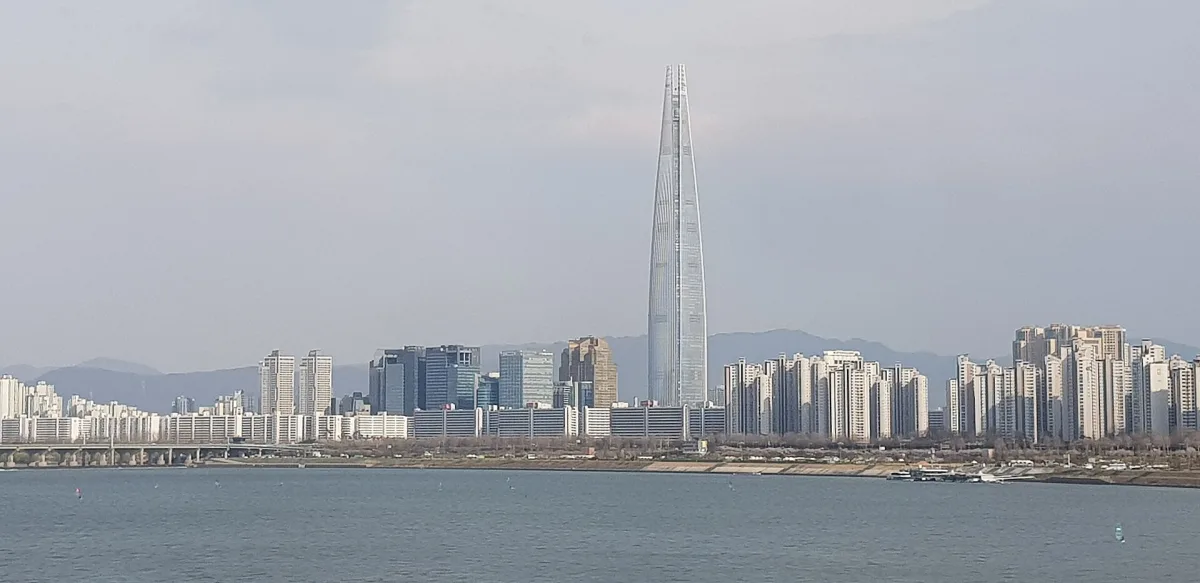
In Gangnam, close to COEX: Josun Palace, a Forbes Travel Guide Four-Star property that opened in 2021 as the Luxury Collection’s Korean debut, carries the lineage of the old Chosun Hotel in its 1914 Lounge & Bar and puts Eatanic Garden on level 36. Park Hyatt Seoul, also Four-Star, is 185 rooms directly above Samseong station — under a minute’s walk from the fair — with a granite-lined pool on the 24th floor and the Ocelas Spa on the 23rd. Signiel Seoul, Four-Star, occupies the upper floors of Lotte World Tower in Jamsil with 235 rooms and suites and Bar 81, which holds one of the largest champagne lists in the country.
For something quieter, Banyan Tree Club & Spa Seoul sits on the flank of Namsan with an in-room relaxation pool in nearly 90 per cent of its rooms. And the one worth knowing about for next time: Rosewood Seoul is due in 2027 on the former UN Command site beside Yongsan Park — around 250 rooms, seven restaurants and bars, architecture by Kohn Pedersen Fox, interiors by Space Copenhagen, and a 4,500-square-metre Asaya wellness floor. It will be a ten-minute drive from the Hannam galleries.
Where should you eat?
Book before you fly. Art week is the one week of the year when Seoul’s best tables are held by people who booked from another continent.
Onjium is the one to prioritise, and it is a four-minute walk from the Gyeongbokgung wall. Chefs Cho Eun-hee and Park Sung-bae rebuild dishes from centuries-old Korean recipe books; the same building houses clothing and design studios doing the same work in other materials. Cho was named Asia’s Best Female Chef 2026. Mingles, in Gangnam, placed fourth on the 2026 Asia’s 50 Best list — chef Kang Min-goo builds a ten-course menu around Korean fermented sauces and vinegars. Mosu Seoul reopened in March 2025 on the Namsan side of Yongsan after two years dark; the dinner tasting is ₩420,000.
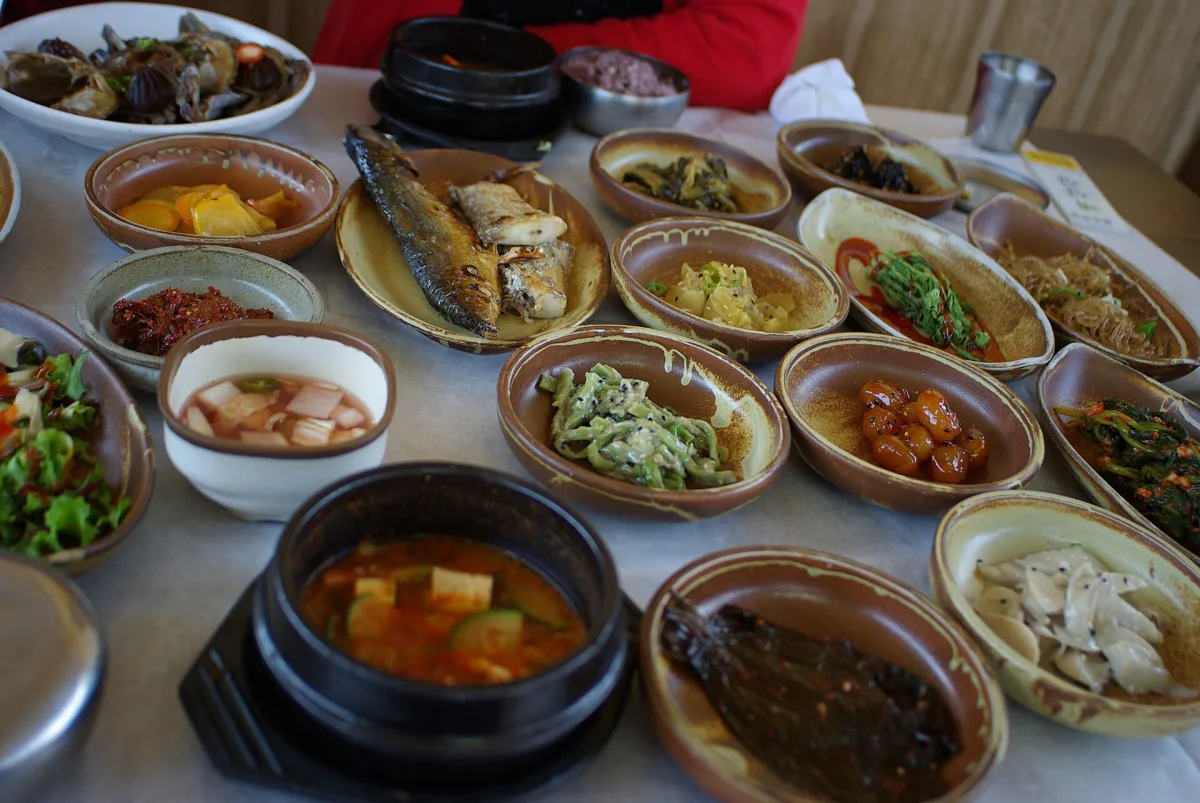
An insider correction worth having: Gaon, the royal-court restaurant that anchored a decade of Seoul lists, has been closed since the start of 2023. It still appears in guides and hotel concierge folders. Do not build a night around it.
For a meal that has nothing to do with any of this, book Balwoo Gongyang, across from Jogyesa Temple — the only temple-food restaurant in Korea run by the Cultural Corps of Korean Buddhism. Entirely plant-based, no garlic, onion, leek, wild chive or asafoetida, sauces fermented for as long as twenty years. Four set menus, ₩36,000 to ₩120,000. Every guest gets a private room. Reserve well ahead. Bium, which placed 43rd on the 2026 Asia’s 50 Best list, does the same tradition through a fine-dining lens.
And if you want beef: Korea grades every carcass, and the scale runs 1++, 1+, 1, 2, 3, with the final grade set by the lowest of the individual criteria. Only 1++ carries a printed marbling number — 9, 8 or 7. “Hanwoo 1++ No. 9” is the top of the top, and it is the only phrase you need to read a menu board.
What to do when the fairs close
September is the moment Seoul becomes bearable outdoors. The jangma rain front normally clears by the end of July; September averages a high of 26°C, a low of 18°C and nine rain days, against fifteen in August. October is better again — 20°C days, 52 mm of rain across the month — and Seoul’s foliage on Namsan and Bukhansan generally peaks at the very end of October.

The timing is unusually good this year, because Gyeongbokgung’s autumn night opening runs 2 September to 2 October — it starts on the same day as Frieze. Entry 19:00 to 21:30, last admission 20:30, closed Mondays and Tuesdays, and the route takes in Gyeonghoeru, the banqueting pavilion on the water. The separate Byeolbit Yahaeng lantern tour runs Wednesday to Sunday at 18:30 and 19:40 through 24 October and needs a reservation. In daylight, the changing of the guard at Gwanghwamun is at 10:00 and 14:00 on days the palace is open, and general daytime admission is ₩3,000. Night viewing is reserved separately.
Two other things worth an hour. The Sool Gallery on Bukchon-ro is a free government-backed tasting room for traditional Korean liquor, open 10:00 to 19:00 and closed Mondays, staffed by specialists who will pour you things no bar exports. And the official Templestay programme, run by the Cultural Corps of Korean Buddhism, includes Jogyesa and Hwagyesa inside Seoul; a night normally runs ₩70,000 to ₩100,000, and through September 2026 a one-night stay at nineteen temples nationwide is ₩30,000 for foreign visitors.
One calendar warning. Chuseok falls on 25 September in 2026, with the holiday running 24 to 26 September. Seoul empties, a great many restaurants and shops close, and domestic transport is at its worst. It is three weeks after the fair — but if you were thinking of stretching the trip into late September, stop before that week.
What You Actually Want to Know
When is Frieze Seoul 2026?
2–5 September 2026 at COEX in Gangnam, Halls C and D. Wednesday is invitation only; the public gets in from 15:00 on Thursday. Kiaf SEOUL runs alongside it in Halls A and B from 2 to 6 September, and one Frieze ticket admits you to both.
Do Americans need a visa or K-ETA for South Korea?
No. Korea’s Ministry of Justice extended the temporary K-ETA exemption for US passport holders through 31 December 2026, so no advance travel authorisation is required for a short visit. You can still apply for a K-ETA voluntarily; the main benefit is skipping the paper arrival card.
How long is the flight, and how do you get in from the airport?
Roughly 15 and a half hours nonstop from New York JFK and just over 13 from Los Angeles, both into Incheon. From there the AREX express train reaches Seoul Station in about 43 minutes from Terminal 1 and 51 from Terminal 2. A car takes 70 to 90 minutes depending on where you are staying and when you land — if you arrive into evening rush, take the train.
Is it worth going if you are not buying art?
Yes, and arguably more so. The fair halls are the least interesting part. What you are buying with the trip is four consecutive nights when every gallery in four different districts is open late and full of people, plus three museum shows — Do Ho Suh, Sol LeWitt, Koo Jeong A — that would each justify the flight on their own.
Should you stay in Gangnam or north of the river?
North, unless you are working the fair. Gwanghwamun and Jung-gu put you within walking distance of the palaces, MMCA Seoul, Samcheong-ro and Bukchon, and a fifteen-minute car ride from Hannam. Gangnam puts you next to COEX and a long way from everything else you came for.
Seoul rewards the traveller who knows which door to knock on — which is most of the reason this week is hard to do well from a search engine. The gallery that is only open on its assigned night, the restaurant that has been closed for three years, the palace ticket that has to be reserved rather than bought at the gate: none of it surfaces until you are standing in front of it. That is the part we handle.
Plan Your Next Journey
Work with a Noon Travel advisor for a trip that exceeds every expectation.
Get Started