
The short version
Book South Africa for a first safari: it is the easiest to reach, the Sabi Sand delivers leopard year-round, and Cape Town is two hours away. Book Kenya for the Migration and the private conservancies. Book Botswana when seeing no one else matters more than the bill — the best Okavango camps publish above US$5,000 a night.
Every August the same email lands. It is usually from someone who has been thinking about this for a decade and has finally decided that next year is the year. They want to go on safari. They have read enough to know that Botswana, Kenya and South Africa are the three names that keep surfacing, and not nearly enough to know why anyone would pick one over the other two.
The animals are not the difference. All three deliver lion, leopard, elephant, buffalo and rhino, and all three have camps run by families who have been doing this for forty years. What separates them is the structure underneath: who owns the land, how many vehicles are allowed at a sighting, how far you fly, what the government charges at the gate, and which currency the bill arrives in.
Those are unglamorous variables. They are also the ones that decide whether you spend a morning alone with a leopard or share it with eleven other Land Cruisers.
What are you paying for in Botswana?
Space, and the arithmetic that protects it. The Okavango Delta camps sit on private concessions, and most of them are tiny. Wilderness Mombo has eight tented suites plus a family unit, sleeping eighteen people across a concession that other reserves would fill with two hundred. Little Mombo next door has four suites and takes eight guests. Duba Plains, Great Plains Conservation’s camp on the northern floodplains, has five tented suites. &Beyond Sandibe caps at twenty-four guests across twelve suites. Xigera, Red Carnation’s fully solar lodge inside the Moremi Game Reserve, has twelve suites and takes nobody under twelve years old.
That arithmetic is the product, and the rates say so. Wilderness publishes Mombo at US$5,043 per person per night for 1 June to 31 October 2026, rising to US$5,345 for the same window in 2027. Vumbura Plains, fourteen suites split across two camps, publishes US$3,945 for the same 2026 dates. These are all-inclusive figures and they hold, because Botswana’s best camps sell out in high season without discounting.
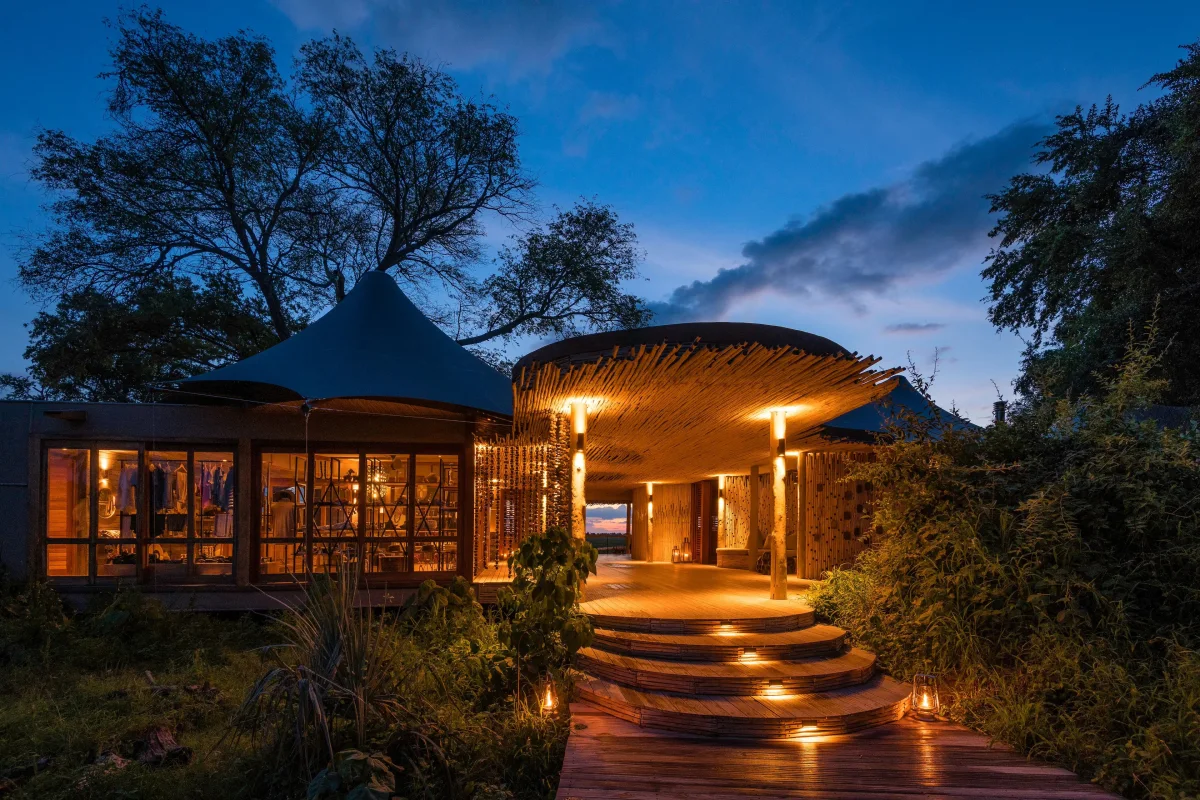
The Delta also runs on a rhythm that catches people out: the water is highest when the land is driest. The rain that fills it falls in the Angolan Highlands and takes months to arrive, so levels start rising in May, peak from June through August, and recede in September. That is why July and August are simultaneously the coldest, driest and wettest months in the Okavango, and why the mokoro — the poled dugout that is half the reason people come — runs best from June through August. Wilderness tells guests to book nine to twelve months out for July to September. Take that literally.
The logistics are the real tax. There is no nonstop from the United States. You route through Johannesburg to Maun or Kasane, then fly a light aircraft into the concession, and Wilderness Air caps luggage at 20 kg per person including hand luggage and camera equipment, in soft bags no larger than 30 × 35 × 70 cm. That limit is the single thing first-timers most often get wrong. The Delta is also a malaria area — the CDC recommends prophylaxis for Ngamiland and Chobe, so this is not the trip for a traveller who cannot take the tablets.
Three things have changed this year worth knowing before you compare quotes. &Beyond has added two three-tent camps, Sandibe Under Canvas and Nxabega Under Canvas, each taking six guests. Jao, long sold under the Wilderness banner, now sells independently as Jao Reserve. And Chief’s Camp has reopened after a rebuild that took its pavilions from 51 square metres to 141. If you want the longer version of the Delta case, we made it in our Okavango Delta safari guide.
Is the Great Migration worth building a trip around?
Yes — with a caveat nobody selling you the trip will volunteer.
The herds are in the Masai Mara roughly from June or July through November. That is the Mara Conservancy’s own framing, and it manages the Mara Triangle, so it would know. But the river crossings, the thing people actually book flights for, cannot be scheduled. The Conservancy’s wording is blunt: crossings happen frequently during the migration, but they are difficult to predict. The herds follow rainfall and new grass, not a calendar. Anyone promising you a crossing on a named date is guessing with your money.
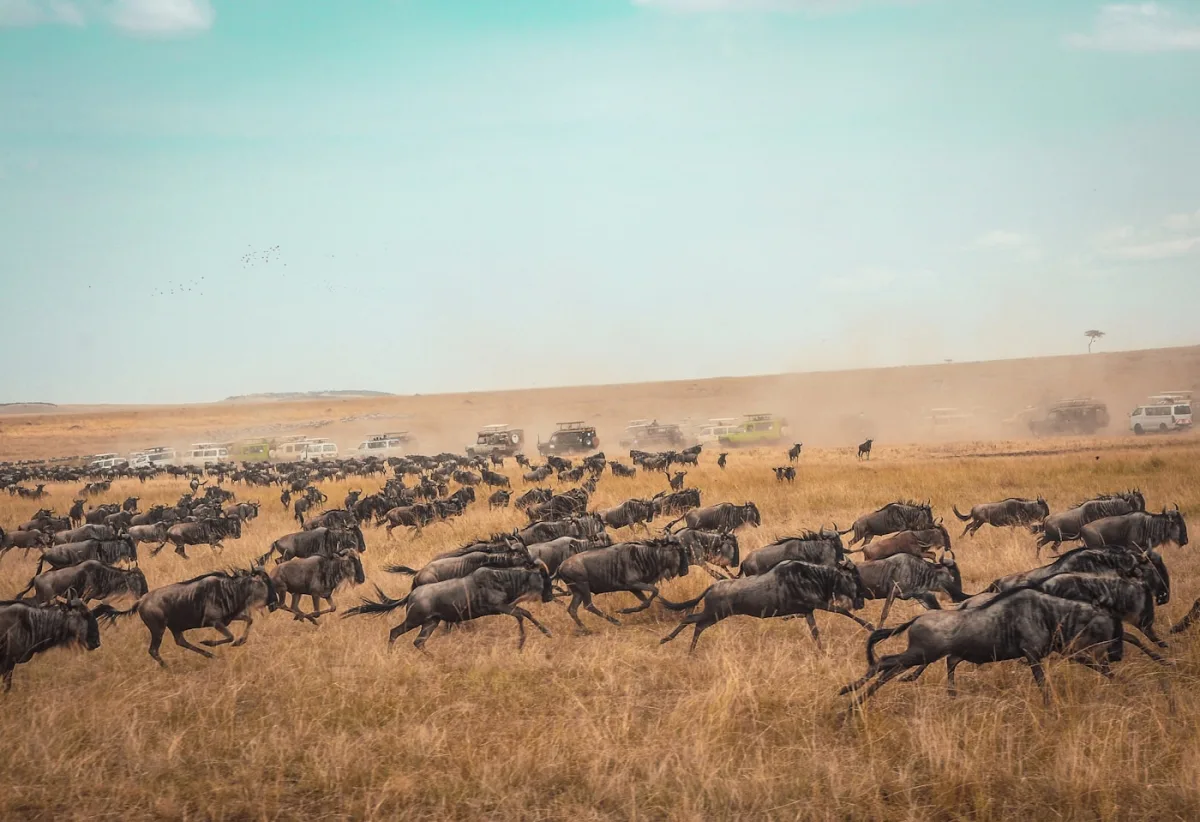
Which is why the smarter Kenya conversation is not about the Migration at all. It is about which side of the boundary you sleep on.
Narok County has set Masai Mara National Reserve entry at US$200 per adult per day for 1 July to 31 December 2026, up from US$100 in the first half of the year. That buys a twelve-hour ticket, 06:00 to 18:00, and at most camps it is charged on top of the nightly rate rather than folded into it. Inside the reserve, the county’s own management plan bans night drives outright and prohibits off-road driving, with a narrow exception in the low-use zone for approaching big cats.
The private conservancies ringing the reserve run under different rules, and they are the reason to go. Mara North holds itself to one bed per 350 acres, allows a maximum of five vehicles at a sighting and gives each one ten minutes before it moves on. Olare Motorogi caps the entire conservancy at 94 beds across five camps, with one game-viewing vehicle per 2,100 acres. Both permit night drives and off-road access to Big Five sightings. Naboisho’s landowners signed their first fifteen-year lease in March 2010; the model now covers 24 conservancies and roughly 450,000 acres under the Maasai Mara Wildlife Conservancies Association, with lease payments flowing to more than 15,000 individual title-holders. It is the rare conservation structure where the incentive actually points the right way.
The camps cost meaningfully less than Botswana. Angama Mara — thirty tented suites split into two camps of fifteen, on the Oloololo escarpment — publishes US$1,850 per person per night in standard 2026 season and US$2,750 at peak, park fees excluded. Angama Amboseli, ten suites in the Kimana Sanctuary, holds a flat US$1,850 across every 2026 season, plus an $80 per adult per night sanctuary levy. Cottar’s 1920s Camp runs eleven tented suites and a five-bedroom private villa in Olderkesi. Mahali Mzuri, Virgin’s twelve-tent camp in Olare Motorogi, reopened in 2025 after its first full redesign. Emboo, now part of Asilia, runs eleven tents inside the reserve on a full electric vehicle fleet and publishes US$900 per person per night for July through October 2026. Wilderness opened its first Kenyan camp, Wilderness Mara, in the Mara Triangle in June 2026. The newest Kenyan camps are where the value sits right now.
Kenya is also the only one of the three with a nonstop from the United States: Kenya Airways flies JFK to Nairobi in about thirteen hours forty-five minutes. Light aircraft to the Mara leave from Wilson Airport, roughly 18 km across town from the international terminal, so build the transfer into the day rather than discovering it on arrival.
One correction worth making before anyone books on it: Laikipia is not malaria-free. The plateau sits at roughly 1,660 to 1,800 metres, and the CDC places every part of Kenya below 2,500 metres — Nairobi included — inside the prophylaxis-recommended zone. Risk there is lower than the coast. It is not zero.
Why does South Africa work best for a first safari?
Because it removes almost every obstacle at once.
Delta flies nonstop from Atlanta to both Johannesburg and Cape Town; United flies Newark to both. From Johannesburg, Singita puts its Sabi Sand airstrip about an hour away by air, or thirty minutes from Nelspruit, and the drive is roughly 500 km and six and a half hours if you would rather not board another aircraft. Light-aircraft limits are 15 kg checked and 5 kg hand luggage, soft-sided — tighter than Botswana on paper, but you are only in the air for an hour.
The Sabi Sand Nature Reserve, renamed from Sabi Sand Wildtuin in 2022, dropped the last of its fences with Kruger National Park in 1993. That is why game moves freely across the boundary, and it is a large part of why the reserve has the leopard reputation it does. Reserve entry runs R170 per person for 2026, rising to R180 in 2027. That is the whole government charge. Compare it with US$200 a day at the Mara gate and you can see why the two countries read so differently on a spreadsheet.
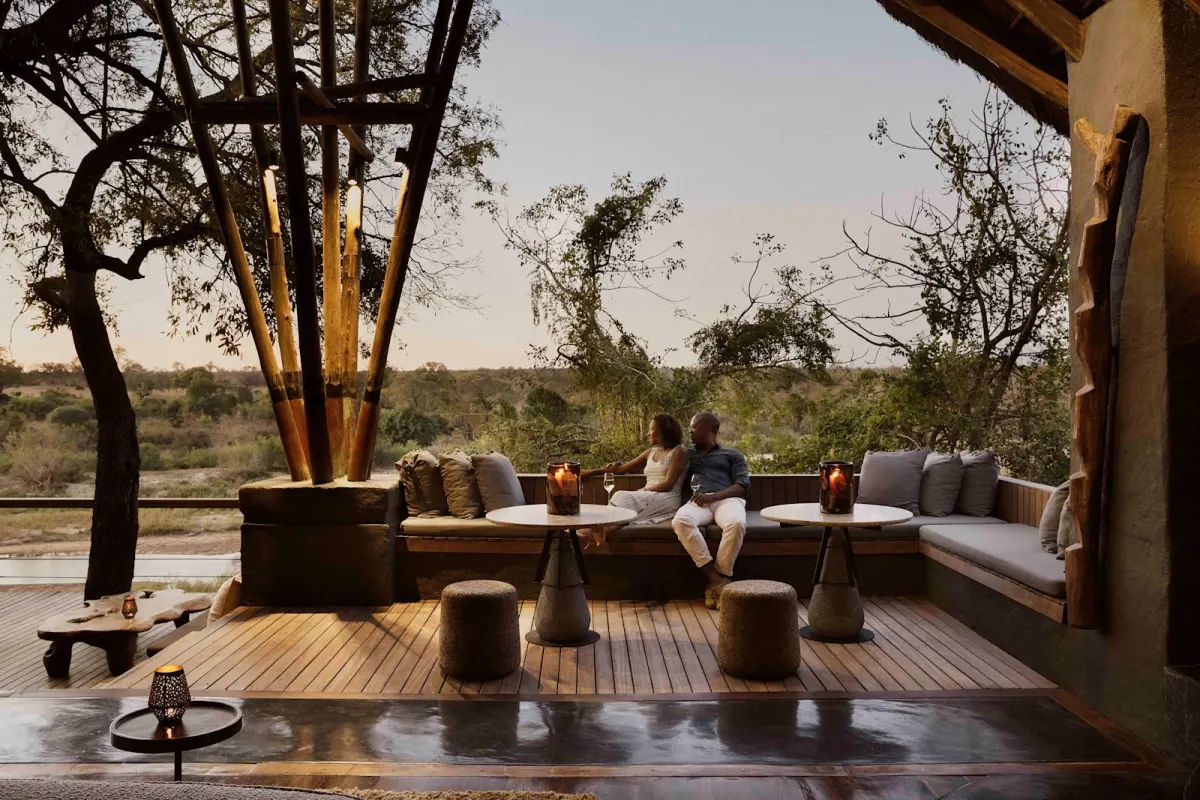
The lodge bench is deeper here than anywhere else in Africa. Singita Ebony has twelve suites and publishes R60,470 per adult per night at peak, all-inclusive and inclusive of VAT, easing to R51,665 in low season. Londolozi runs five camps and thirty-two units, from Varty Camp’s ten chalets at R27,950 to the three Private Granite Suites at R54,000. Royal Malewane in Thornybush is now four lodges — Malewane, Waterside, Farmstead, and Masiya’s Camp, which opened in June 2025 — plus three exclusive-use villas. Cheetah Plains sells only whole villas: three of them, four suites each, twenty-four guests on the entire property, and an all-electric game-drive fleet. Silvan has six suites at R42,235 per person sharing.
Watch the currency. South African lodges publish in rand, which makes a straight comparison against a dollar-quoted Botswana camp harder than it looks on the page. Check the day’s rate before you decide anything is a bargain.
Then there is the part the other two cannot answer. Two hours after your last game drive you can be in Cape Town, and an hour after that in Franschhoek. No other safari country lets you close out a week of dawn starts in the Cape Winelands. It is also worth understanding what the money at the top end is doing: our piece on Singita’s conservation model explains why those rates exist.
If malaria is the sticking point — young children, or a traveller who cannot take prophylaxis — South Africa is the only one of the three with a serious answer. Kruger and the Sabi Sand are endemic, with risk highest from November through April. But Tswalu Kalahari, 118,000 hectares in the Northern Cape with a maximum of forty adults on the whole reserve, states plainly that it is malaria-free, and includes a private vehicle with both a guide and a tracker on every booking. The Motse publishes R46,400 per adult per night for 2026. Nothing in Botswana or Kenya matches that combination.
Two inventory notes for 2026. Ulusaba closed at the end of January for a full rebuild and reopens on 1 April 2027 as a single twenty-suite lodge. And the six properties along the Sand River formerly split between andBeyond management and MalaMala now sell together as the Tengile MalaMala Collection, with a nine-suite addition, Khensani River Lodge, opening in December 2026.
So which one should you book?
South Africa, if this is your first safari. Nonstop flights, an hour’s hop to the Sabi Sand, the best leopard viewing on the continent, a R170 gate fee, and a city and a wine region at the end of it. If you have two weeks and want the trip to contain something other than game drives, this is not a close call.
Kenya, if you want the Migration and the best big-cat density for the money. One nonstop from New York, conservancy camps at US$900 to US$2,750 a night, night drives and off-road access the national reserve does not permit. Budget the US$200 daily park fee if any part of the itinerary sits inside the reserve between July and December, and do not let anyone sell you a guaranteed crossing.
Botswana, if you have been before, or if seeing no one else is the entire point. Five-suite camps, water safaris that only work from June to August, and rates above US$5,000 a night at the top. It is the most expensive and the most logistically demanding of the three, and it is the one repeat safari travellers keep going back to.
One practical filter that decides more of these than people expect: children. Xigera takes nobody under twelve. Singita Boulders sets its minimum at ten, while Ebony next door takes all ages. If you are travelling multi-generationally, check the age policy before you fall in love with a camp.
What You Actually Want to Know
When is the best month to go? For Botswana, July and August — peak flood, peak game concentration, and the only reliable window for mokoro. For Kenya, July through October if you want the Migration in the Mara, though the conservancies are excellent year-round. For South Africa, the dry months from April to October, though the Sabi Sand operates and delivers all twelve months of the year.
How far ahead do I need to book? Wilderness advises nine to twelve months for July to September in Botswana, and the small camps mean that is not marketing. Kenya and South Africa give you more room, but the specific camps worth flying for — Angama, Singita, Londolozi, Cheetah Plains — sell their peak weeks a year out.
Are park fees included in the rate? In Botswana, generally yes for fly-in camps. In Kenya, generally no — Angama publishes its rates park-fees-excluded, and at US$200 per adult per day in the back half of 2026 that adds up fast over a week. In South Africa the Sabi Sand charge is R170 per person and is a rounding error either way.
Do I need malaria tablets? For the Okavango, the Masai Mara, Laikipia, Kruger and the Sabi Sand, yes — take the prophylaxis. Laikipia’s altitude lowers the risk but does not remove it. If you need a genuinely malaria-free safari, Tswalu Kalahari in South Africa’s Northern Cape is the strongest option at this level.
How much luggage can I bring? Botswana’s Wilderness Air allows 20 kg per person total, including hand luggage and cameras, in soft bags no bigger than 30 × 35 × 70 cm. South African light aircraft to the Sabi Sand allow 15 kg checked plus 5 kg hand, also soft-sided. Plan to leave a hard case in Johannesburg or Nairobi.
Can I combine two of them? Kenya and Botswana is a long, expensive routing with no useful direct link, and we rarely recommend it on a first trip. South Africa combines with almost anything, because Johannesburg is the regional hub — a Sabi Sand week followed by the Okavango is the classic version, and it works.
Is Botswana worth more than double Kenya’s nightly rate? If exclusivity is what you are buying, yes. A five-suite camp on a private concession is a categorically different experience from a fifteen-suite camp on a conservancy, and there is no way to get it cheaply. If what you want is volume of game and range of landscape, Kenya gives you more per dollar.
This is the call we make with clients most weeks — matching the country to the departure city, the season, the age of the travellers, and the specific camp that fits how they actually travel. Tell us when you can go and who is coming, and we will tell you which of the three to book and which suite to ask for once you have chosen.
Plan Your Next Journey
Work with a Noon Travel advisor for a trip that exceeds every expectation.
Get Started