The short version
Japan’s autumn colour moves north to south over roughly ten weeks. Hokkaido peaks in late September, Tohoku in mid-October, Nikko and the Alps from late October, Kyoto in late November, Kyushu into December. Pick the window first, then the hotel — not the other way around.
Everyone books Japan for the cherry blossoms. The people who go twice book it for autumn.
Spring gets the postcards, but it also gets a colour window that lasts about a week and a forecast that changes daily until it doesn’t. Autumn is the opposite. The colour moves down the country in a slow, legible wave that takes something like ten weeks to travel from the mountains of Hokkaido to the temple gardens of Kyushu. If you understand how that wave moves, you can book a trip that lands inside it — and you can do it in August, while rooms still exist.
That is the part most travellers get wrong. They decide on Kyoto in October because October sounds like autumn, arrive to a city that is still green, and spend the week wondering what happened. Kyoto is one of the last places in Japan to turn. Here is how the season actually works, and where to be standing when it does.
Why does Japan’s autumn arrive on a schedule you can book against?
Because it is triggered by temperature, not by the calendar. Japanese maples begin to turn once overnight minimums settle below roughly 8°C, and the colour deepens fastest when nights sit closer to 5 or 6°C. Chlorophyll breaks down faster than the red pigments do, and the leaf goes from green to gold to the deep lacquered red the Japanese call momiji.
That 8°C line is the whole trick. It arrives in the Hokkaido highlands in the last week of September and reaches Kyushu in December, and it moves down the archipelago — and down each mountain — with enough consistency that you can plan around it. Elevation matters as much as latitude: in Nikko, the high plateau turns in early October while the town at the bottom of the road is still weeks away.
Two caveats worth knowing before you commit. The peak shifts by roughly three to five days either side of the average depending on how warm the late summer ran, and a hot September pushes everything later. And the official forecasts — from the Japan Meteorological Corporation and Weathernews, which between them track hundreds of individual viewing sites — don’t publish until September. Book the region now on the historical window; refine the day trips once the first forecast lands.
When does each region actually peak?
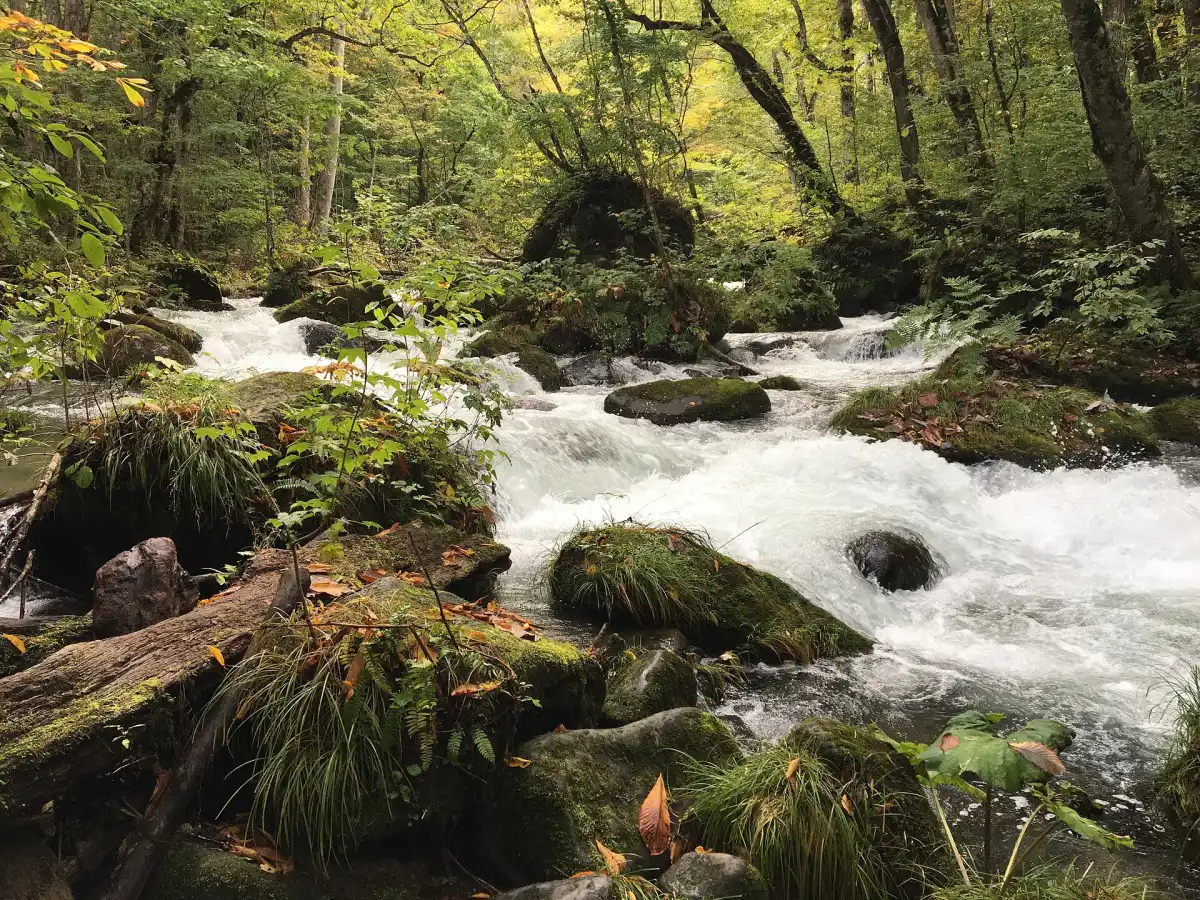
Think of it as five windows. Late September to early October belongs to Hokkaido, where Daisetsuzan turns first and hardest. Mid-October is Tohoku — Aomori, the Oirase Gorge, Lake Towada. Late October into mid-November covers Nikko, the Japan Alps and the Kanto highlands. Late November is Kyoto and the Kansai temple gardens. Early to mid-December holds on in Kyushu and the far southwest.
The practical consequence: a first-time traveller who wants Kyoto in full colour should be landing in the third week of November, not in October. A traveller who wants mountains, hot springs and almost no other foreigners should be going in the first half of October, and should be going north.
The most elegant version of the trip runs the wave in reverse. Start in Tohoku in mid-October, work south through Nikko in the last week of the month, and arrive in Kyoto as the maples turn in late November. It is a three-week trip and it is the single best use of a Japan autumn we know of — though most people do a compressed version of it in ten days.
Where should you actually stay in each window?
Four properties, one per window, and they are not interchangeable.
Hokkaido, late September. Zaborin, in the Hanazono woods outside Niseko, is fifteen villas, and every one of them has two private onsen — one indoors off the bathroom, one on your own terrace facing the trees. In late September you are bathing outdoors in cold air while the birch turns around you, and the ski crowd is still three months away. This is the quietest, best-value moment in Niseko’s year.
Tohoku, mid-October. Hoshino Resorts Oirase Keiryu Hotel is the only resort hotel on the Oirase Stream itself, inside Towada-Hachimantai National Park, which means you walk out of the lobby — past a vast fireplace by the artist Taro Okamoto — and into the gorge. Shin-Aomori is roughly three hours from Tokyo on the Tohoku Shinkansen, which makes it far easier to reach than its remoteness suggests, and almost nobody does it.
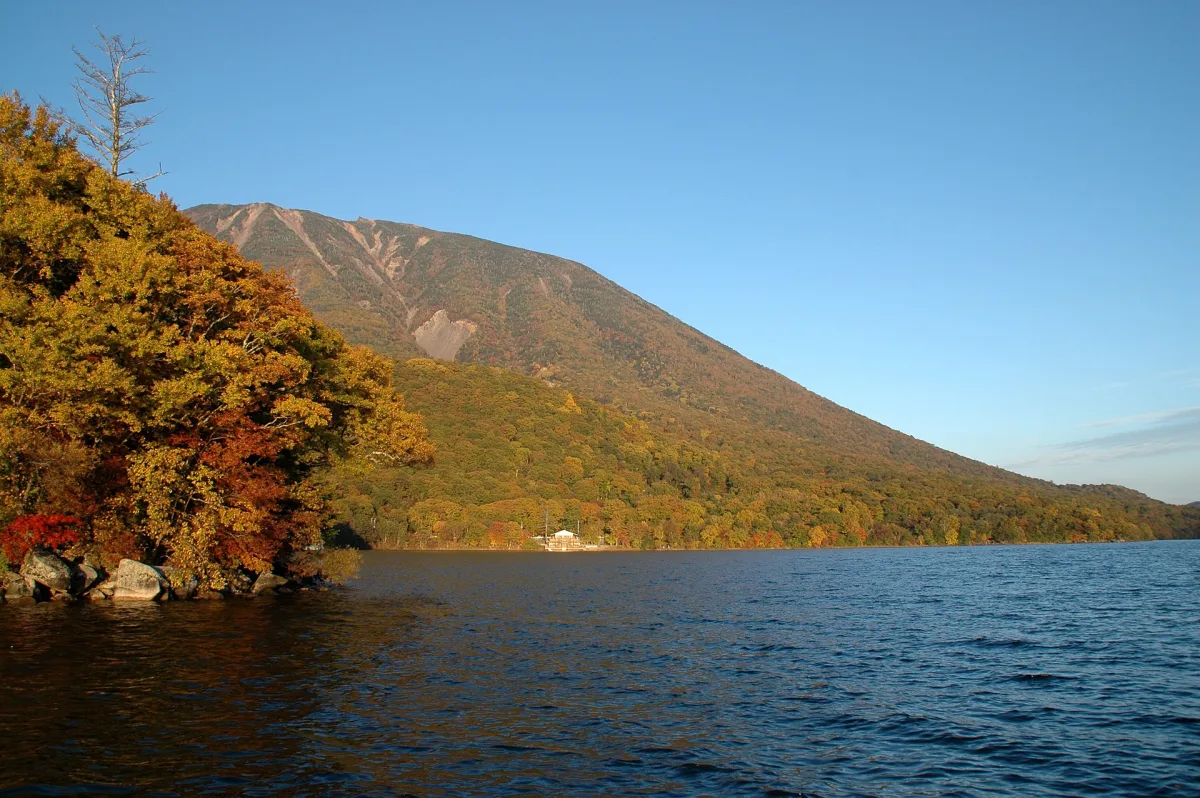
Nikko, late October. The Ritz-Carlton, Nikko has 94 rooms and suites looking across Lake Chūzenji to Mount Nantai, and an onsen fed from the Yumoto hot spring up the valley. Ask for a lake-facing room on a high floor; the mountain view rooms are handsome but the lake is the reason you came. The colour reaches the lakeshore in mid-October and the hairpins of the Irohazaka road in the last week of the month.
Kyoto, late November. Three real options, depending on what you want the city to feel like. Aman Kyoto sits north of the city at the foot of the Takagamine hills inside its own maple and cedar forest — you are inside the foliage rather than commuting to it, and the Takagamine Pavilion, at 241 square metres, is the largest room on the property. Hoshinoya Kyoto is 25 river-facing rooms in Arashiyama reached only by private boat up the Ōi from Togetsukyō Bridge, a fifteen-minute journey that does more to separate you from Kyoto’s November crowds than any concierge could. And Park Hyatt Kyoto — 70 rooms, nine of them suites — puts you in Higashiyama beside Kōdai-ji with the Yasaka Pagoda outside the window, which is the right answer if you want to walk to the temples at dawn. Kyoto also has a strong newer entrant worth knowing about.
How do you see Kyoto’s maples without the crowds?
Go early, go at night, or go north. Those are the three levers, and locals use all of them.
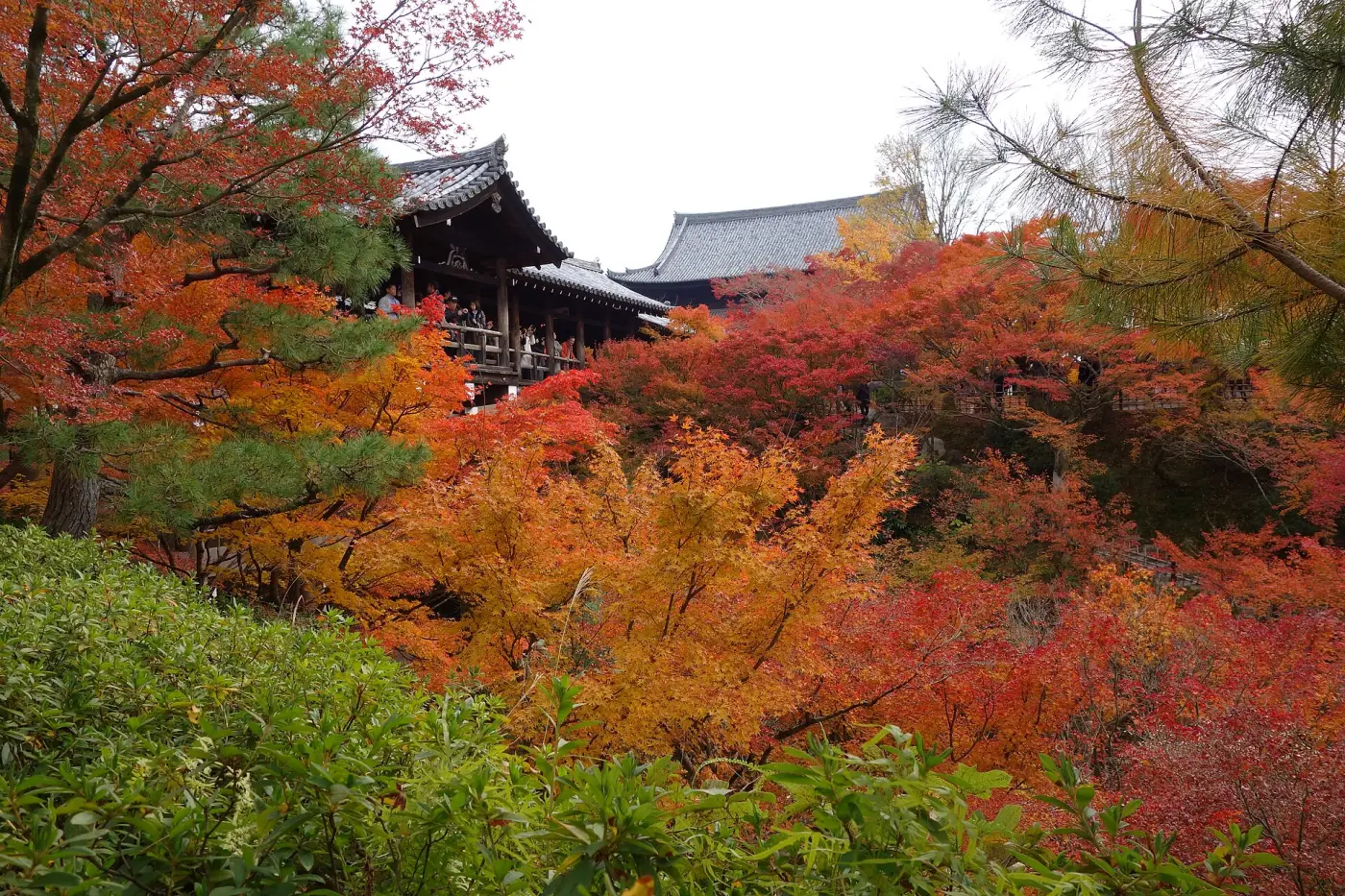
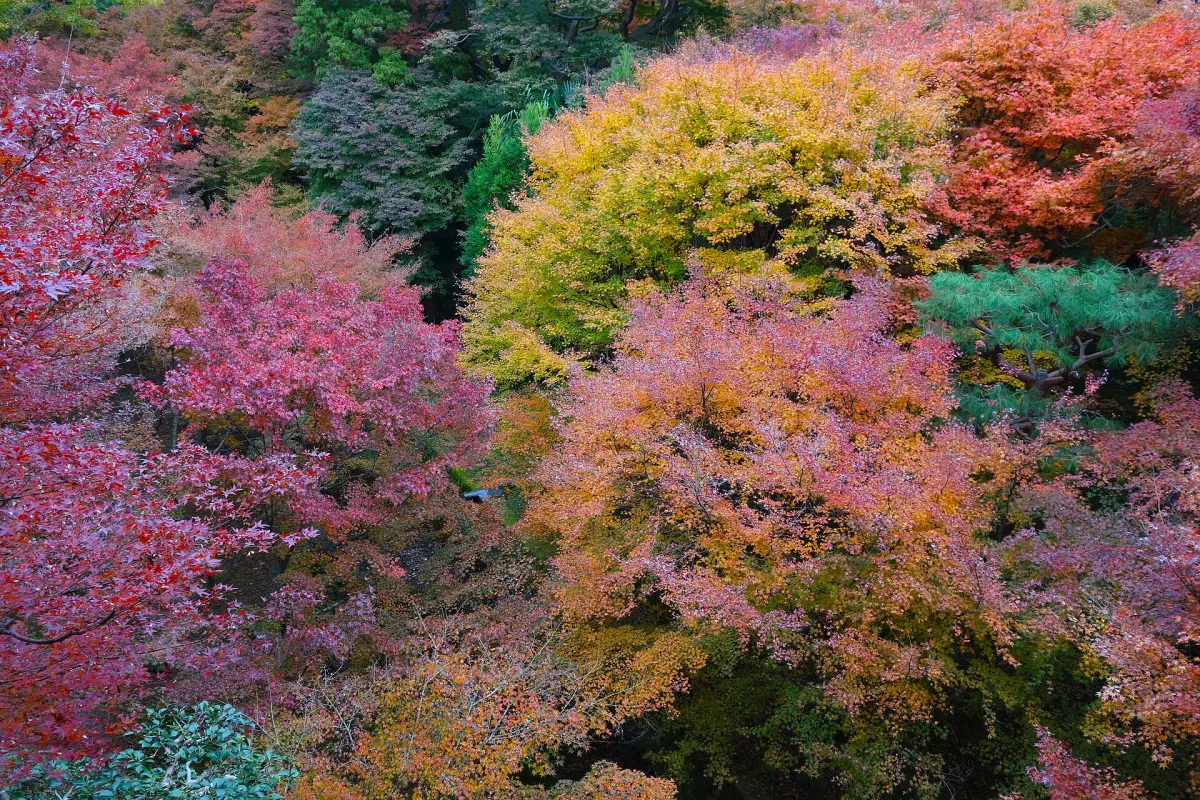
Tofuku-ji is the postcard: a wooden bridge, the Tsutenkyō, thrown across the Sengyokukan ravine with more than two thousand maples filling the gorge beneath it. During peak weeks the temple opens at 8:30 a.m. instead of its usual hour. Be in the queue at 8:15 and you get the bridge close to empty; arrive at ten and you will be shuffling shoulder to shoulder for a photograph you have already seen.
Eikan-dō is the night answer — roughly three thousand maples lit after dark, with the Tahōtō pagoda reflected in the Hōjō pond. Evening entry is a separate ticket from daytime admission and sells through quickly in late November, so have your hotel handle it two to three weeks out rather than turning up hopefully at five.
The third lever is the one we push hardest with clients: leave the city. The temples in northern Kyoto and out toward Ōhara run several days behind the famous ones and carry a fraction of the traffic. If you are staying at Aman Kyoto you are already there.
Is Tokyo worth building into an autumn trip?
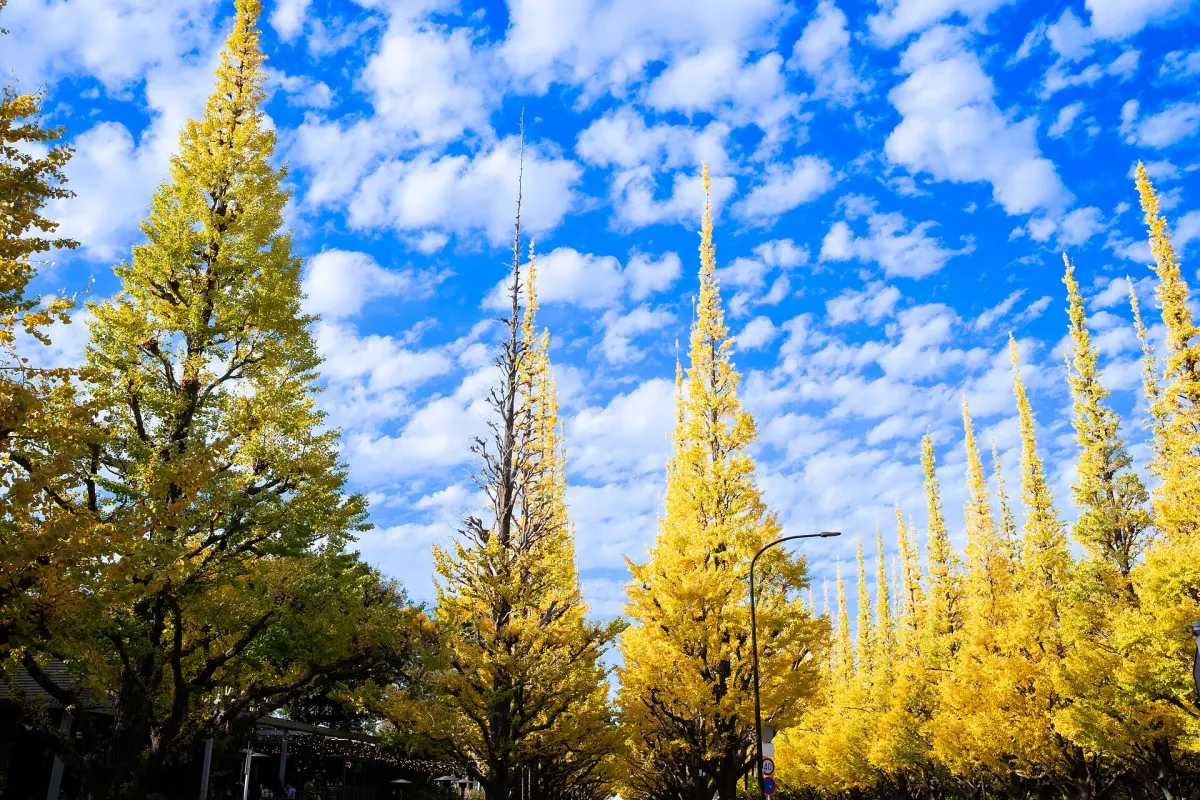
Yes, and later than you would think. Tokyo’s signature autumn sight is not a maple at all: it is the ginkgo avenue at Meiji Jingū Gaien, 146 trees planted in 1923 along a 300-metre run that turns the colour of a wheat field in the last week of November and the first week of December. It is free, it is in the middle of the city, and on a weekday morning before half past ten it is genuinely calm.
That timing is useful. Tokyo peaks a few days after Kyoto, so a trip that puts Kyoto in the third week of November and Tokyo at the end of it catches both at full colour — and gives you the city at the end, when you want restaurants and shops rather than another temple. If design is the thread you are pulling, our Tokyo design guide is built for exactly that half of the trip.
What You Actually Want to Know
When is the best time to see autumn leaves in Japan in 2026?
It depends entirely on where you go. Hokkaido peaks in late September, Tohoku in mid-October, Nikko and the Alps from late October, Kyoto in late November, and Kyushu into December. If you only have one window and want the classic temple-and-maple image, aim for the third week of November in Kansai.
How far ahead should I book?
Now, for late November. The best rooms in Kyoto for peak foliage week go earlier than most people expect, and the small properties — Hoshinoya’s 25 rooms, Zaborin’s fifteen villas — sell out first because there is so little of them. Book the region on the historical window and adjust day trips once the September forecasts publish.
Is autumn busier than cherry blossom season?
In Kyoto during peak week, comparably so — the famous temples are genuinely crowded. Everywhere else, no. Tohoku and Hokkaido in October are quiet by any standard, which is the strongest argument for building your trip around the north rather than the obvious south.
What is the difference between koyo and momiji?
Kōyō is the general term for autumn foliage — the whole seasonal phenomenon. Momiji refers specifically to Japanese maples and the deep red they turn. Forecast maps and temple signage use both.
Can I combine autumn leaves with an onsen trip?
That is the ideal version of it, and it is what the Japanese do — outdoor bathing in cold air under colour is the entire point of the season. Tohoku and Nikko make this easiest. Our guide to the best onsen ryokans in Japan covers the properties worth routing a trip around.
Noon’s advisors have worked with every property on this list and know which rooms face the colour and which quietly don’t. Tell us which window you want, and we will build the trip around it.
Plan Your Next Journey
Work with a Noon Travel advisor for a trip that exceeds every expectation.
Get Started