Westerners tend to treat the ryokan as a one-night curiosity — book it after Kyoto, sleep on the futon, post the kaiseki, move on. That isn't how a Japanese family does it. The point of an onsen ryokan is to surrender to it: three or four nights at the same property, no agenda, the same staff bringing tea at the same hour, the bath at midnight, again at dawn, again before lunch.
Done that way, a ryokan stay is the most restorative thing in luxury travel — softer than a Swiss longevity clinic and several orders of magnitude more interesting than a hotel spa weekend. The buildings are quiet. The water in the bath comes out of the ground at the temperature it's meant to meet skin. The food is the chef's, not a brand's. There is no Wi-Fi password screen by the elevator because there is no elevator.
The six properties below are the ones our advisors send people to when they're ready to book Japan the way the Japanese book it.
TL;DR: The six onsen ryokans worth flying for in 2026 are Gora Kadan in Hakone, Asaba in Shuzenji, Beniya Mukayu in Yamashiro Onsen, Hoshinoya Karuizawa in Nagano, Zaborin in Niseko, and Sansou Murata in Yufuin. Each is a different region, a different aesthetic, and a different argument for why a ryokan beats a five-star hotel in Japan.
What is an onsen ryokan, exactly?
A ryokan is a traditional Japanese inn. An onsen ryokan is a ryokan built on top of, or fed by, a natural hot spring. The water arrives at the bath under its own pressure — at the better properties it's gensen kakenagashi, meaning unrecycled, unheated, and continuously overflowing — and it's the entire point of the building. The architecture, the meal service, the rhythm of the day all bend around it.
Inside, the rules are simple. You arrive at three. You change into a yukata. You drink tea. You bathe. You eat a multi-course kaiseki menu in your room or in a private tatami dining space, designed by the property's chef around what is in season within a few miles of the kitchen. You sleep on a futon laid out on tatami while you are at dinner. The next morning the futon is gone and a low table of breakfast has replaced it. The same thing happens for as many nights as you stay. Nothing is improvised; nothing is rushed.
Six properties worth the detour
Gora Kadan — Hakone
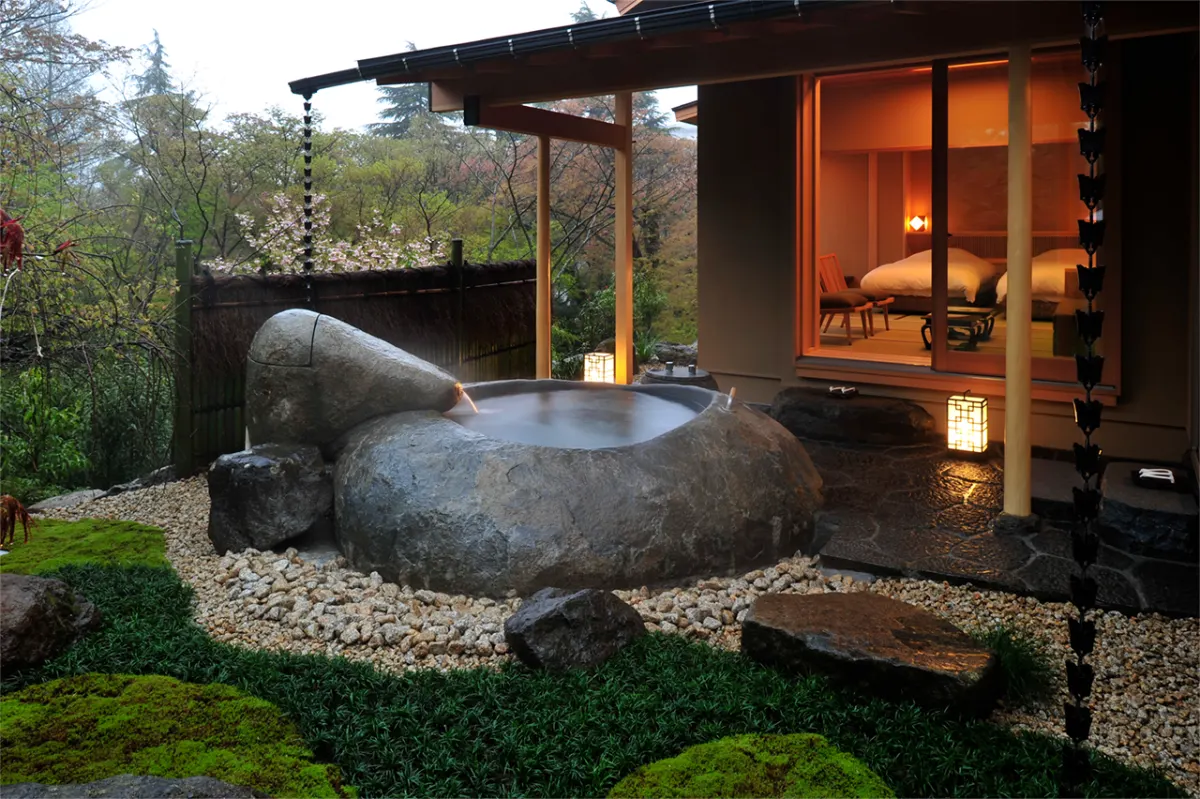
The easiest argument for a ryokan, full stop. Gora Kadan sits on the grounds of a former summer villa of the Kan'in-no-miya imperial family in the Gora district of Hakone — an hour and a half from Tokyo by train, less in a car. It opened as a ryokan in 1952 and became the first Japanese member of Relais & Châteaux in 1992. The bones are sukiya-zukuri: exposed timber, shoji screens, tatami, mountain views framed like paintings.
Most of the suites have their own private open-air onsen carved into stone or hinoki, fed from the property's own hot spring. The kaiseki is the strongest reason to choose Gora Kadan over any of its Hakone neighbours — book the in-suite dinner option even if it costs more. It is the right first ryokan for a traveler who has done Tokyo and Kyoto and now wants to understand why their Japanese friends keep talking about Hakone.
Asaba — Shuzenji, Izu Peninsula
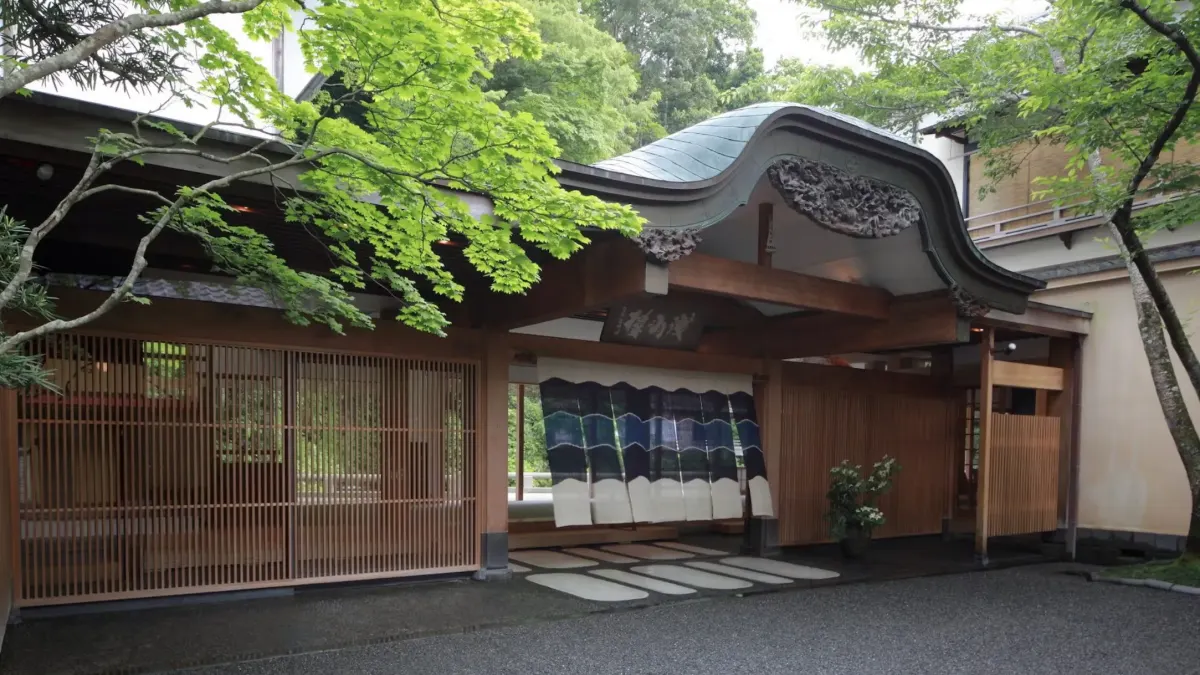
Asaba is the oldest of these. The Asaba family has run an inn on this site since 1484, when their ancestor opened a lodging house in front of the local Soto Zen temple. There are seventeen rooms. Most look out over the central pond, in the middle of which sits a covered noh stage — relocated from Tokyo in the late Meiji era — that the property still uses for traditional performances during the annual Asaba Cultural Journey.
The onsen water runs warm year-round. The rooms are pure Japanese: tatami, low table, futon at night, garden view in the morning. Asaba is the answer for the traveler who wants to feel five hundred years of continuous Japanese hospitality, not a modern interpretation of it. Roughly two and a half hours from Tokyo by train and taxi, deep into the Izu Peninsula.
Beniya Mukayu — Yamashiro Onsen, Ishikawa
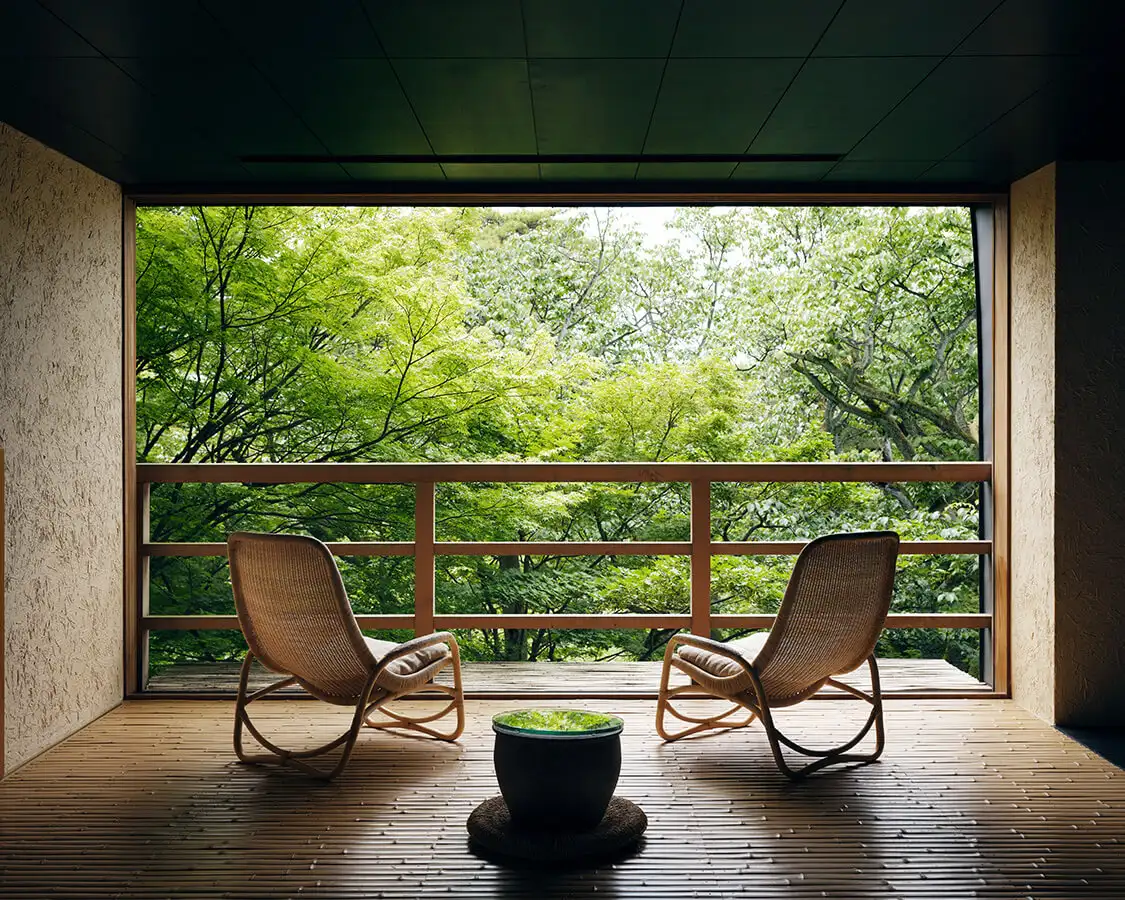
Sixteen rooms, every one of them with a private open-air hot spring bath looking into a forest garden, on the Sea of Japan side of the country. Beniya Mukayu is a Relais & Châteaux property and the work of a family that has been refining the same plot of land for generations — most recently into a quietly contemporary expression of wabi-sabi using tatami, washi paper, bamboo, and diatomaceous earth.
The food leans on Ishikawa's seafood — the prefecture also gave Japan kaiseki tradition's spiritual capital, Kanazawa — and the morning yoga in the forest pavilion is the kind of programming most wellness resorts charge an upcharge for. The rooms range from 95 to 120 square metres. The Wakamurasaki suite at 120 square metres has floor-to-ceiling sliding doors that open entirely onto the cherry blossoms in spring and the snow in winter.
Hoshinoya Karuizawa — Nagano

The modernist option, and the easiest to get to: a little over an hour from Tokyo on the Hokuriku Shinkansen, plus twenty minutes by taxi from Karuizawa Station. Hoshinoya Karuizawa is built as a small village of 77 villas along the Yukawa River, arranged so that almost every villa has water within a few metres of its windows. The architect Rie Azuma designed the interiors as a study in calm — high ceilings, brown and cream tones, hinoki bath, heated floors for the cold months.
The on-site Meditation Bath is the experiential signature: two connected indoor onsen rooms, one bright and high-ceilinged, the other dark and cave-like, designed so guests can swim from one to the other in near-silence. Roughly three-quarters of the property's power is generated on site by its own hydroelectric system. For travelers who can't shake the feeling that a traditional ryokan would be "too Japanese" for them, Hoshinoya Karuizawa is the bridge.
Zaborin — Niseko, Hokkaido

Fifteen villas hidden in a private birch forest at the edge of the Niseko ski area. Every one has its own pair of indoor and outdoor private onsen, both running gensen kakenagashi — water rising from almost a kilometre below ground, holding its temperature on the way up, never reheated or recycled. There are no communal baths at Zaborin. The point of the property is privacy.
The kitchen serves a single-menu kita kaiseki — a northern variation on the form, leaning on Hokkaido seafood and dairy. In summer the architecture vanishes into the forest; in winter the same villas are the most architecturally serious place to stay during the Niseko powder season, ten minutes from the lifts. Book five nights in February if you can. Bring books.
Sansou Murata — Yufuin, Oita (Kyushu)
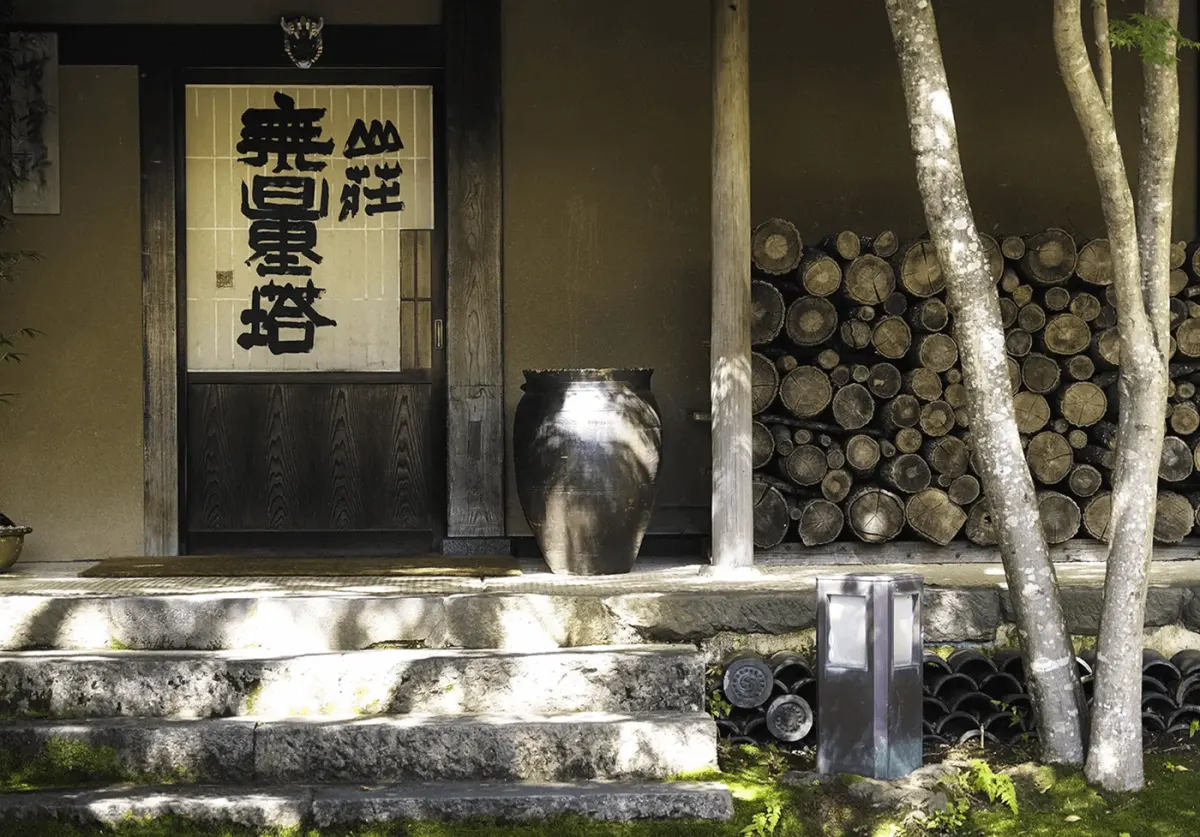
Kyushu is Japan's southernmost main island, and Yufuin is its most beloved onsen town. Sansou Murata is twelve rooms spread across centuries-old folk houses that were transported intact from Niigata Prefecture in the north and rebuilt on a wooded property here. Every room has its own bath; every room is a different floor plan and a different combination of antique furniture and contemporary lighting.
The property's two restaurants — Tan's Bar (a modernist cocktail room) and the Theomurata chocolate atelier on the same grounds — are the reason food magazines have been covering Sansou Murata for two decades. For travelers building a Japan trip that goes further than Honshu, this is the best argument for adding Kyushu to the route. About ten minutes by car from JR Yufuin Station.
How to stay at one properly
Three rules a good advisor will tell you that most blog posts will not. First: stay at least two nights at one property, ideally three or four. The first night is unfamiliar; the second is when a ryokan starts to do its job. Second: book your kaiseki dinner in your room where it's offered. The food arrives in courses brought by a single staff member, the pacing is yours, and the experience belongs to the room rather than to a dining room. Third: do not combine two ryokans in a single week unless you genuinely have ten days in Japan — better to spend three nights at one than two nights at each.
Seasons matter. Spring (cherry blossom) and autumn (maple) are the booked-out months and need a year's lead time. Late winter at Zaborin or Hoshinoya Karuizawa is its own argument. Summer in Hakone or Yufuin is the underrated window, especially when you want to combine an onsen stay with city time in Tokyo or Fukuoka without the seasonal-tariff pricing. For first-time visitors building a trip, our guide to Japan in cherry blossom season covers how to time a ryokan into a wider itinerary.
The other thing to know: an onsen ryokan and a wellness resort are not the same product, but they overlap. If your reason for going to Japan is sleep, recovery, and a reset — read our round-up of the hotels doing sleep tourism best alongside this list. A four-night Hoshinoya Karuizawa or Beniya Mukayu stay does more than most longevity clinics, for a fraction of the price and twice the food.
What You Actually Want to Know
What's the difference between an onsen ryokan and a regular ryokan?
An onsen ryokan sits on or is fed by a natural hot spring — the bath is the architectural centre of the building. A regular ryokan is a traditional inn that may or may not have a hot spring, and where the bath, if any, is fed by heated municipal water. The price difference between the two is real and the experiential difference is enormous.
Should I book a room with a private onsen?
If your budget allows it, yes. A private in-room bath lets you use the water on your own schedule, which is the entire point of a ryokan stay. Every property on this list offers at least a few rooms with a private bath; Beniya Mukayu and Zaborin offer them in every room. The communal baths at the better ryokans are also worth using at off-peak hours.
Are tattoos a problem at these ryokans?
At the properties on this list, in-room and in-villa private onsen mean the question rarely comes up. Zaborin has no communal baths at all. Communal baths at Beniya Mukayu, Hoshinoya Karuizawa, and the others have grown more flexible in recent years, but it is worth confirming at the time of booking — which a Noon advisor will do.
How far in advance do I need to book?
Six to nine months for spring and autumn at any of these, twelve months for cherry blossom dates at Asaba and Gora Kadan. Winter at Zaborin should be booked at least six months out for the February window. Sansou Murata, Beniya Mukayu, and Hoshinoya Karuizawa are easier to land on short notice — three months in many cases — but the best room categories at each go first.
Booking a ryokan well is its own skill — what category of room, which floor, which season, whether the in-room kaiseki is worth the upcharge. Tell us where in Japan you want to land and we will build the rest around it.
By Amelia Ingram
Plan Your Next Journey
Work with a Noon Travel advisor for a trip that exceeds every expectation.
Get Started