
The short version
Mexico City is the most exciting place to eat in the Americas right now. Book Contramar for a long lunch, Quintonil and Pujol in Polanco for the big nights, and Rosetta in Roma for dinner in a townhouse. Base yourself in Roma Norte or Condesa and you can walk to most of it.
Ask a chef in New York, Paris or Copenhagen where they fly to eat on their own time, and a surprising number give the same answer: Mexico City. In the space of a decade the capital has gone from a place people passed through on the way to the coast to one of the two or three great eating cities on earth. Two of its restaurants now sit near the very top of the World's 50 Best list, and the everyday cooking — the tacos, the market stalls, the lunch that starts at three and ends at seven — is arguably better than the fine dining.
What makes it addictive is the range. You can start the morning with a guava roll from a sourdough bakery, eat a tuna tostada that launched a thousand imitators for lunch, and finish at a bar pouring mezcal from a single village in Oaxaca — all within a few walkable neighborhoods. This is a city where food travelers organize an entire trip the way they once did around San Sebastián.
Here is how a Noon advisor routes a first serious eating trip: the tables worth planning weeks ahead, the neighborhood to sleep in so you can walk home from dinner, and the meals you can't book but shouldn't miss.
Where should you eat first?
Start with lunch at Contramar. Gabriela Camara opened it in Roma Norte in 1998 to recreate the feeling of a Pacific beach palapa, and it remains the city's great midday institution — a loud, sunlit room that fills with everyone from film directors to grandmothers. Order the tuna tostada, a fried tortilla layered with chipotle mayonnaise, avocado and fried leek that has been copied by every young chef in town, and the pescado a la talla: a whole butterflied fish grilled and painted half red with chile and half green with herbs and tomatillo. It is a lunch place by nature — reserve ahead, go hungry, and let it run into the afternoon.
For dinner in Roma, book Rosetta. Chef Elena Reygadas — named the World's Best Female Chef in 2023 — cooks a constantly changing menu built around small Mexican producers and a serious devotion to vegetables, all inside a plant-filled early-twentieth-century townhouse on Colima. Come morning, do what locals do and stop at Panaderia Rosetta next door for the guava rolls and cardamom buns before they sell out.

Then there is Polanco, where the two tables everyone wants live a few blocks apart. Quintonil, from Jorge Vallejo and Alejandra Flores, was ranked the third-best restaurant in the world in 2025 and is now the hardest reservation in the country — book weeks out, or have someone do it for you. Pujol, Enrique Olvera's landmark, slipped out of the global top 50 that same year but remains essential; if you can't get the tasting menu and its famous aged mole madre, take a seat at the bar for the taco omakase, a procession of tacos that quietly rivals the main dining room. If you build trips around restaurants, these belong on any list of the best tables worth flying for.
Which neighborhood should you make your base?
Stay in Roma Norte if it's your first time. It has the highest concentration of good restaurants in the city — possibly in Latin America — and it's flat, leafy and walkable, which matters when dinner ends near midnight. Condesa, next door, is greener and quieter, built around Parque Mexico and Parque Espana, and better suited to couples who want a residential feel. Juarez, tucked between Roma and Paseo de la Reforma, is the up-and-comer, full of new restaurants and close to the museums.
Polanco is the polished option — wide boulevards, the marquee restaurants, the big hotels and the designer shopping — though it can feel a step removed from the city's energy. And the Centro Historico, the ancient heart built on the ruins of Tenochtitlan, rewards anyone who wants to wake up beside the Metropolitan Cathedral and the Zocalo. Pick the neighborhood first; the hotel follows from it.
Where should you stay?
Three hotels cover the ways to do the city. On Paseo de la Reforma, between Polanco and Condesa, the Four Seasons Hotel Mexico City is a hacienda-style building wrapped around a garden courtyard with a fountain — a genuine calm in the middle of the traffic. It's a Forbes Travel Guide Four-Star hotel with 240 rooms, a seafood restaurant in Zanaya, Italian cooking at Il Becco, and Fifty Mils, one of the best cocktail bars in the city. Chapultepec Park is a block away.

In Polanco, Las Alcobas is the intimate choice: a 35-room hotel on Presidente Masaryk designed by Yabu Pushelberg, also a Forbes Travel Guide Four-Star property, with two restaurants and a small spa — and Quintonil and Pujol within walking distance. It is the address for travelers who came primarily to eat at the top.

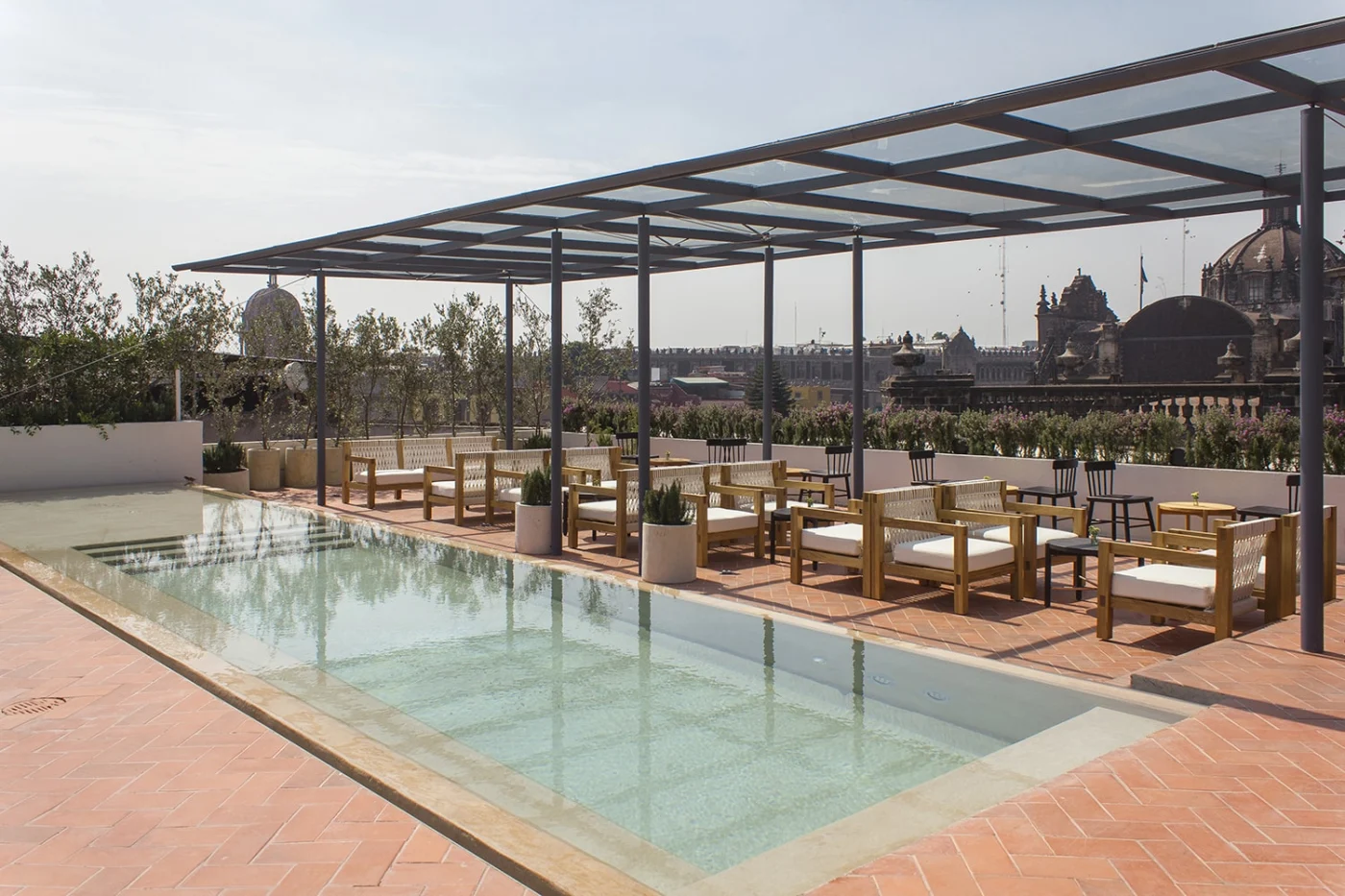
For design-minded travelers, Circulo Mexicano from Grupo Habita sits in a 19th-century building in the Centro Historico that was once home to the photographer Manuel Alvarez Bravo. Its 25 minimalist, Shaker-inspired rooms use handmade Oaxacan textiles, and the rooftop — pictured at the top of this story — has a lap pool and a restaurant, Comedor Mexicano, looking straight across at the Cathedral. It is the most atmospheric place to sleep downtown.
What about the meals you can't reserve?
The reservations get the headlines, but the city's soul is in the food you walk up to. Find a busy stand for tacos al pastor — pork shaved off a vertical spit, dressed with pineapple, onion and cilantro on a small tortilla — and eat two standing up. Spend a morning in a market like Mercado de San Juan or the stalls of Roma for quesadillas cooked to order. And give an afternoon to mezcal: the good bars pour by the village and the agave, and a knowledgeable pourer will walk you through it.

For a cocktail, Fifty Mils at the Four Seasons is a reliable landmark — a bar that reworks the classics and leans into Mexican spirits — but the whole city drinks well, from Roma's natural-wine rooms to the cantinas downtown that have been open for a century.

When is the best time to go?
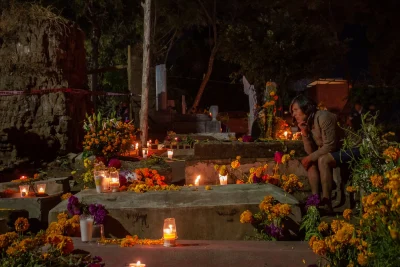
The sweet spot is the dry season, roughly November through April, when the days are bright and mild and the rain holds off. Spring brings the jacarandas, when the city's streets turn purple for a few weeks in March and April. If you can time it, the days around Day of the Dead in early November are extraordinary — book far ahead, because the whole city fills up. The food, of course, is a year-round argument. Many travelers pair a few days of eating in the capital with time on the coast; if that's you, Amanvari on Baja's East Cape makes an easy second act.
What You Actually Want to Know
Do I really need reservations? For the marquee restaurants, yes. Quintonil and Pujol should be booked several weeks ahead, and Contramar fills for lunch — reserve before you fly. The taco stands and markets need nothing but an appetite.
Is Pujol still worth it? Yes. It fell out of the global top 50 in 2025, but the tasting menu and the aged mole madre remain a benchmark, and the bar's taco omakase is one of the best-value great meals in the city.
How many days do I need? Four full days lets you hit the big tables, a couple of markets, a mezcal bar and a museum or two without rushing. A long weekend works if you plan tightly and stay central.
Which neighborhood should I stay in? Roma Norte for the food and walkability, Polanco for the top restaurants and shopping, the Centro Historico for atmosphere. Most first-timers are happiest in Roma or Condesa.
Can I drink the tap water? Stick to bottled or filtered water, which every hotel and restaurant provides. It's the one routine precaution worth taking.
Mexico City rewards planning — the right table on the right day, the room you can walk home to, the reservation made a month out. Every Noon itinerary starts with one conversation rather than a template. Tell us where you want to go.
By Amelia Ingram | July 25, 2026
Plan Your Next Journey
Work with a Noon Travel advisor for a trip that exceeds every expectation.
Get Started