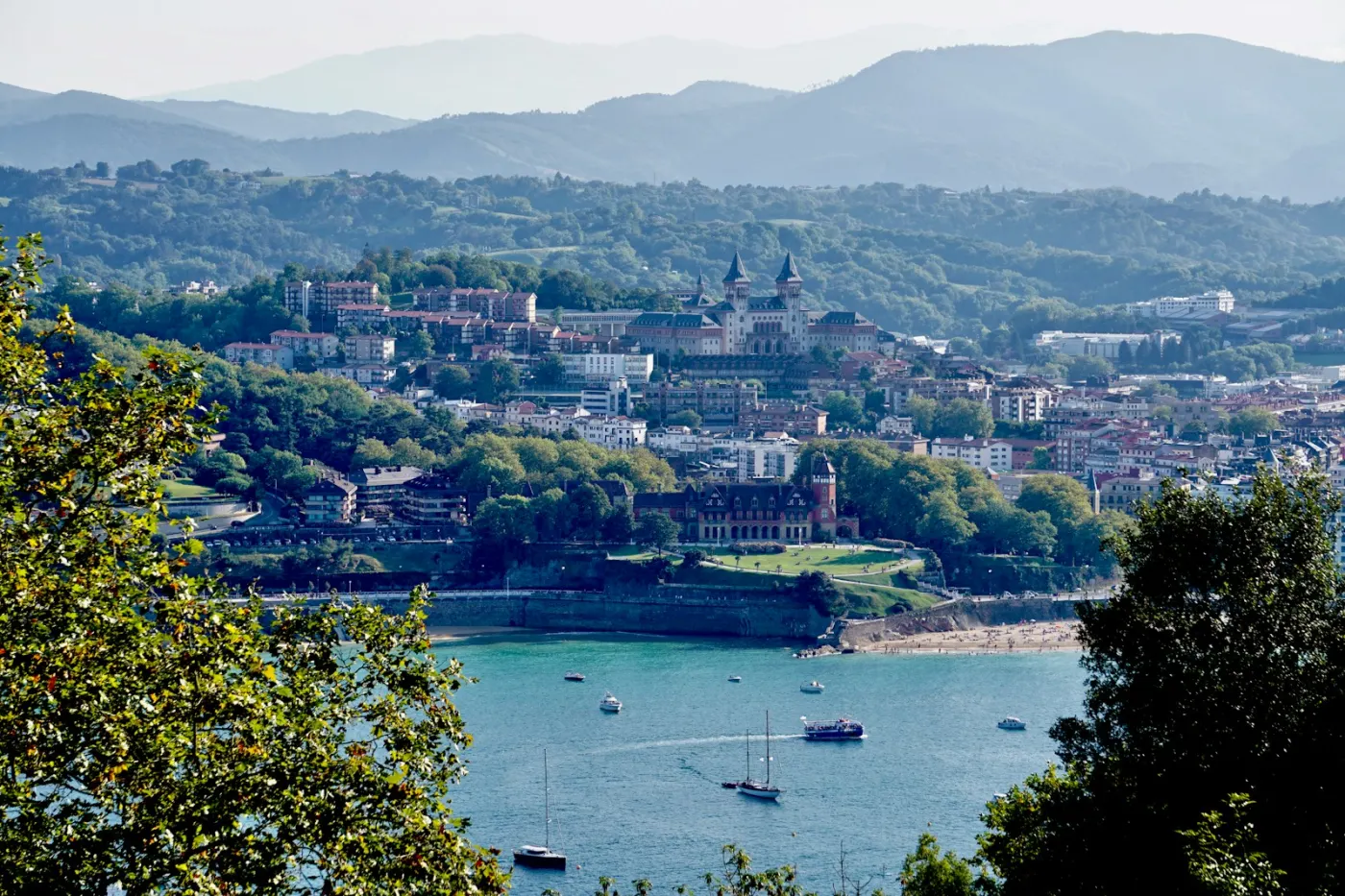

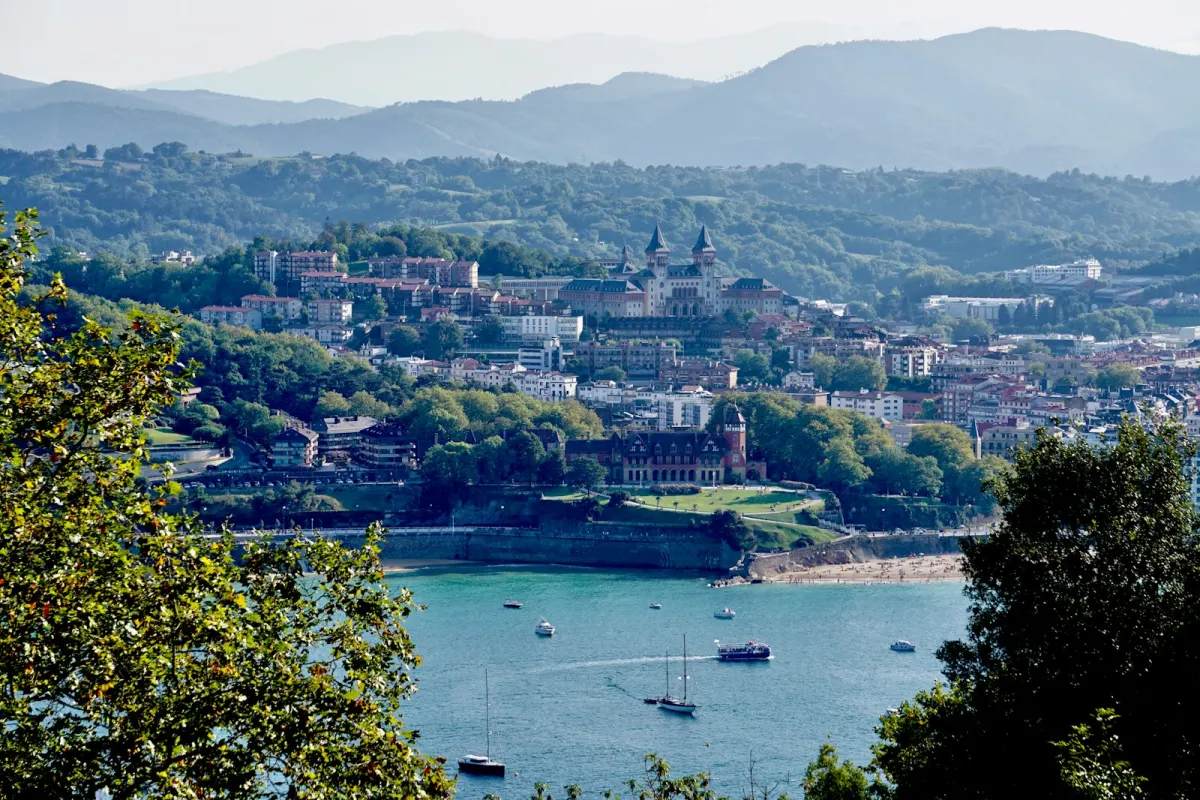
Spain has plenty of great food cities. Madrid, Barcelona, and Valencia all feed you well. But there is one small town on the Basque coast where eating stops being a thing you do between sights and becomes the entire reason to get on a plane. San Sebastián — Donostia to the people who live there — is a crescent of belle-époque buildings wrapped around one of Europe's prettiest urban beaches, La Concha. It is also, square meter for square meter, the most serious kitchen on the continent.
What makes it strange is the scale. This is a city of under 190,000 people, walkable end to end in an afternoon. And yet it has been the launchpad for nearly every idea modern Spanish cooking has produced over the last fifty years, alongside a bar-counter culture so dense that locals treat a great meal as a casual right rather than an occasion. You can eat at one of the most ambitious restaurants on earth at lunch and stand elbow-to-elbow eating two-euro snacks off a toothpick by dinner.
For a traveler who plans trips around the table, San Sebastián is the clearest answer to a question people keep asking: where is the best food in the world right now? Here is how to eat it properly.
TL;DR: San Sebastián is the world's best food city because it pairs a legendary fine-dining scene — Arzak, Akelarre, Mugaritz — with the densest, highest-quality pintxos culture anywhere, all inside a small, walkable Basque beach town. Go May through October, book the big tables two to three months ahead, and build your days around the old town.
Why Does One Small City Cook Better Than Anywhere Else?
The short answer: the Basques have always taken food seriously, and in the 1970s a handful of local chefs turned that obsession into a movement. Juan Mari Arzak, cooking in his family's tavern on the edge of town, helped launch what became known as New Basque Cuisine — taking the region's ironclad ingredients and traditions and rebuilding them with the techniques he was seeing in France. His restaurant, Arzak, is now run alongside his daughter Elena, and it remains one of the most influential addresses in the country.
That generation created a culture rather than a single restaurant. Pedro Subijana built Akelarre on a hillside above the Cantabrian Sea, where the dining room looks straight out at the water. Andoni Aduriz opened Mugaritz in 1998 in the hills outside town and turned it into one of the most experimental kitchens on the planet, a fixture near the top of the World's 50 Best Restaurants list. Martín Berasategui anchored the suburb of Lasarte-Oria with his eponymous flagship. Four genuinely world-defining restaurants, all within a twenty-minute drive of the same beach.
How Do You Do the Pintxos Crawl Without Wasting a Bite?
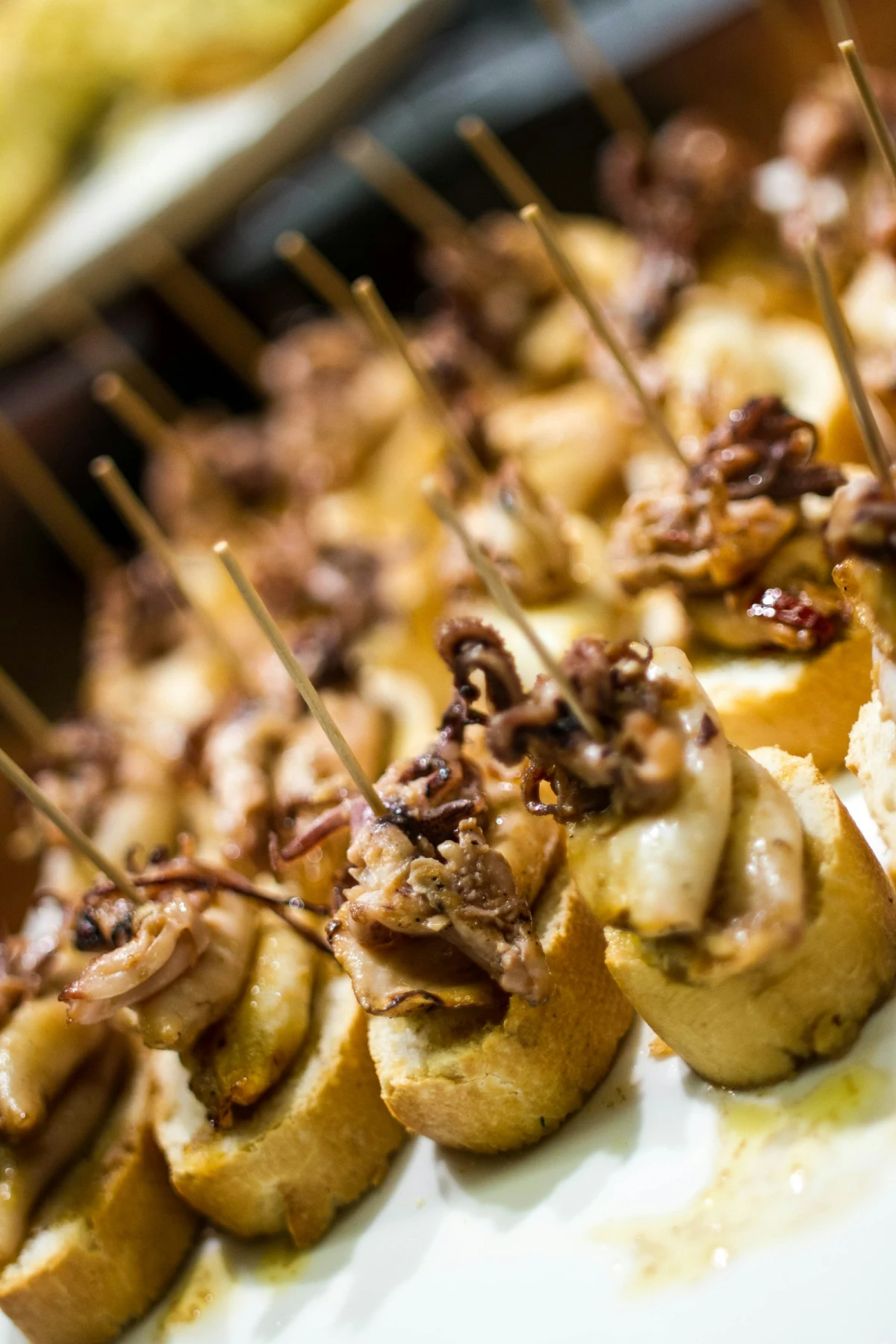
The answer most visitors get wrong: do not sit down, do not order everything in one place, and do not try to clear a bar's entire counter. The pintxos crawl — txikiteo — works on a simple rhythm. One bar, one or two specialties, one glass, then move on. The whole point is momentum.
The heart of it is the Parte Vieja, the old town, a tight grid of streets at the foot of Monte Urgull packed with more bars than any sane city should contain. Start with the original pintxo, the gilda — an olive, a guindilla pepper, and a cured anchovy on a stick, salty and sharp and designed to make you thirsty for the next glass. Wash it down with txakoli, the bone-dry local white that gets poured from a height to wake it up.

Then work the standouts. La Cuchara de San Telmo keeps nothing on the bar — you order hot, made-to-order plates from a chalkboard, and the slow-cooked veal cheek in red wine is the reason people queue. Ganbara is the one to hit in autumn, when the counter fills with wild mushrooms sautéed with an egg yolk on top. Bar Néstor is a cult of three things — a single daily tortilla that sells out in minutes, a charred txuleta beef chop, and tomatoes — and you sign a list on the wall to get any of it. End somewhere busier like Gandarias for a final glass when the streets are at full roar.
Which Tables Are Worth Building a Trip Around?
If you want the full sit-down experience, two names should top the list. Akelarre is the easiest to fall for — Subijana's tasting menus arrive with that endless sea view, and the experience feels generous rather than austere. Arzak is the pilgrimage: a family kitchen that helped invent the modern Spanish restaurant and still cooks with obvious joy. Mugaritz is the wild card, a genuinely avant-garde experience that some travelers adore and others find baffling — book it knowing it is theater as much as dinner.
These rooms are small and demand is global. For any of the top tables, reserve two to three months out, especially across the busy May-to-October stretch. A good advisor can shorten that timeline, but nobody should arrive expecting a walk-in.
Is It Worth Leaving the City for Dinner?
Yes — the best single dish in the region might be a short drive away. In the fishing village of Getaria, about half an hour west along the coast, Elkano has been grilling since 1964 and built its reputation on whole turbot cooked over coals until the skin is lacquered and the flesh slides off the bone. It is simple, expensive, and close to perfect.
Push a little further inland to the village of Atxondo and you reach Asador Etxebarri, Bittor Arginzoniz's temple to live-fire cooking, where everything from the chorizo to the dessert touches custom-built grills. It was ranked the No. 2 restaurant in the world and the best in Europe at the 2025 World's 50 Best awards, and it is roughly an hour from San Sebastián — an easy day trip for anyone serious about where this food comes from.

Where Should You Stay When the Food Is the Point?
The obvious base is the Hotel Maria Cristina, a Luxury Collection Hotel. It opened in 1912, was designed by Charles Mewès — the architect behind the Ritz in Paris and Madrid — and sits across from the Victoria Eugenia Theatre on the Urumea river, a short walk from both the beach and the old town. It is where the film-festival crowd has stayed for a century, and its own restaurant, Amelia by Paulo Airaudo, means you do not even have to leave the building for an ambitious dinner.
For something more design-forward, Nobu Hotel San Sebastián sits steps from La Concha with a rooftop pool and the brand's signature kitchen downstairs. And if you want to wake up to that hillside sea view, the five-star hotel attached to Akelarre lets you stay where you dine. If you have ever planned a trip around a meal — the way some travelers do for the whisky distilleries of Scotland or the tables of Sardinia — this is the city that rewards it most.
What You Actually Want to Know
When is the best time to visit San Sebastián for food?
May through October, when the weather is warm and the kitchens are at full strength. September brings the film festival and a particular energy, but it also fills hotels — book early. Winter is quieter and many top restaurants close for stretches.
How far in advance do I need to book the big restaurants?
Two to three months for Arzak, Akelarre, Mugaritz, and Elkano, longer for peak-season weekends. Etxebarri, just outside the region, can take even more lead time. Pintxos bars need no reservation — that is the joy of them.
Do I need a car?
Not for the city itself, which is entirely walkable. You will want a car or a driver for the grill towns — Getaria, Lasarte, and especially Etxebarri near Atxondo are far easier with private transport than by public transit.
Is San Sebastián only about fine dining?
No — the opposite. The pintxos bars of the Parte Vieja are the soul of the place, and you can eat brilliantly for very little money standing at a counter. The high-end restaurants are the headline, but the everyday eating is what makes the city special.
The difference between a good food trip and a great one usually comes down to a single insider call — which table to fight for, which night to crawl the old town, which grill town is worth the drive. Noon's advisors know San Sebastián and the people who run its best rooms. Tell us where you want to eat.
Further reading
Plan Your Next Journey
Work with a Noon Travel advisor for a trip that exceeds every expectation.
Get Started