
The short version
Sri Lanka is the best place in the world to do Ayurveda in comfort. Book Santani in the Kandy hills for a serious five-to-seven-night programme, Ulpotha if you want the village version, and Amangalla in Galle Fort or Anantara Tangalle if you want a beach with a doctor attached. Go December to March, and book now.
The first thing the doctor does is take your pulse. Not the way a nurse does it, with a watch, but with three fingers resting on your wrist for a long minute while she looks past you at the hills. Then she asks about your sleep, your digestion, your temper, what you eat at eleven at night. By the end of the consultation she has decided which of the three doshas is running your life, and the next five days of oils, meals, steam and stillness are built around that answer.
That is Ayurveda, and Sri Lanka has been practising it for well over two thousand years. Unlike India, where the serious retreats can feel clinical, or Bali, where it is mostly a spa menu, Sri Lanka does the real thing in places you would want to stay anyway: a glass-walled chalet above the Knuckles Range, a Dutch colonial hotel inside a seventeenth-century fort, a lantern-lit village with no doors on the huts. The medicine is authentic. The thread count is also high.
Two things make this the moment to book. The southwest coast and the hill country dry out from December to March, which is the window every one of these properties fills first. And since May 25, 2026, Americans, Britons, Canadians, Australians and most Europeans get a 30-day double-entry tourist visa free of charge, applied for online in a couple of minutes. The paperwork excuse is gone.
What does an Ayurveda retreat in Sri Lanka involve?
A doctor's consultation on arrival, a personalised plan, one to two hours of treatment a day, food cooked to your constitution, yoga morning and evening, and nothing else. The minimum that does anything is five nights. Two to three weeks is the traditional course.
The treatments are mostly the pleasant ones: abhyanga, the full-body warm-oil massage; shirodhara, a thread of warm oil poured steadily onto the forehead until your thoughts stop; pizhichil, the Kerala-style oil bath; herbal steam; rice-bag compresses. The full Panchakarma, the five-part elimination course, adds inhalation therapies and a supervised purgation, and at the best places the harsher classical procedures are simply not offered. Every property in this piece has a qualified Ayurvedic physician on site, which matters. A hotel spa with "Ayurvedic" on the menu and no doctor is a massage.
Expect to give up alcohol, coffee and your phone at dinner. Expect to be hungrier than you thought and then, around day three, not hungry at all. And expect the first two days to feel like nothing is happening, which is why five nights is the floor and seven is the honest recommendation.
Santani: the one to book first
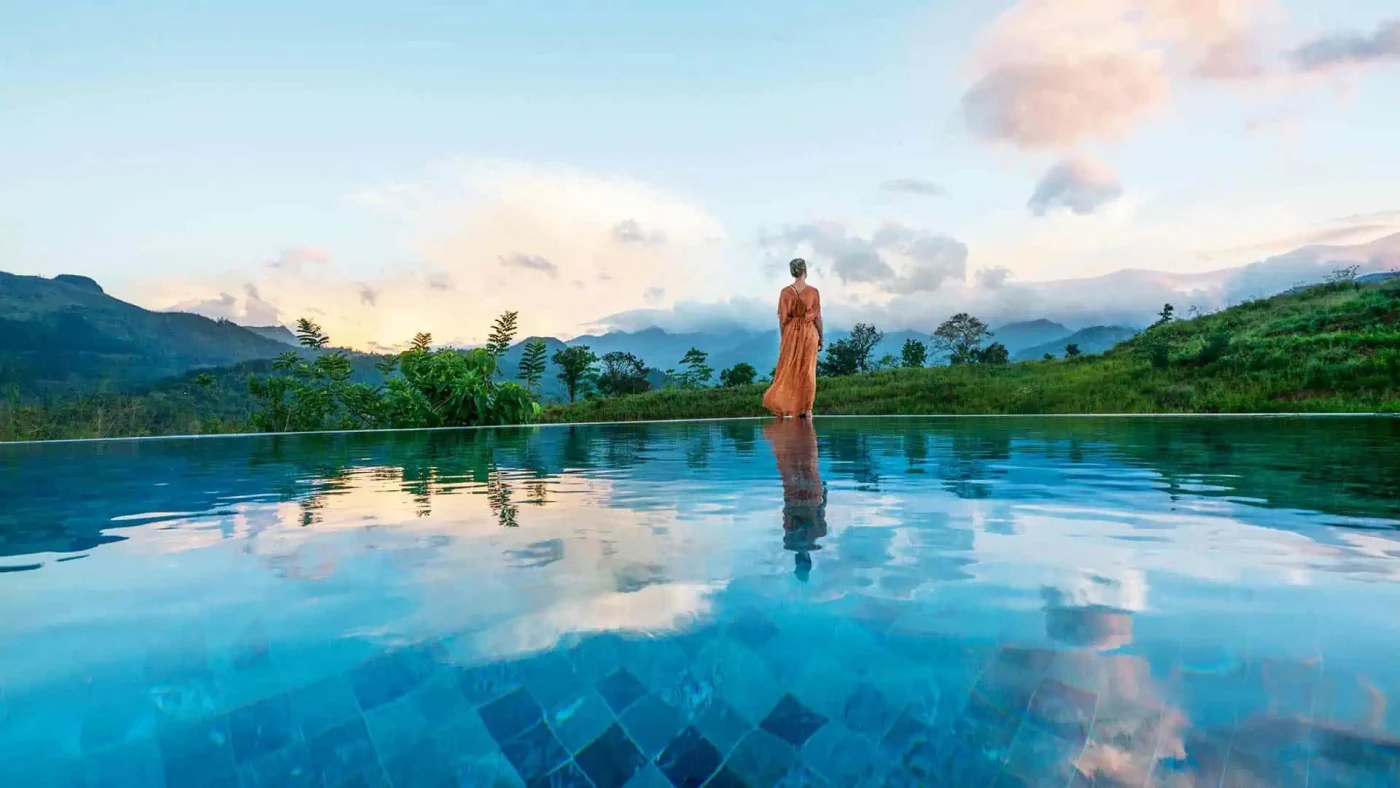
If you do one Ayurveda retreat in Sri Lanka, do it at Santani Wellness Kandy. It opened in 2016 as the country's first purpose-built wellness resort, on a 116-acre former tea estate an hour east of Kandy with 300 metres of private river frontage and the Knuckles Range, a UNESCO site, across the valley. Founder Vickum Nawagamuwage, a strategy consultant who came home to build it, hired architect Thisara Thanapathy to make the buildings disappear: flat roofs, polished concrete, floor-to-ceiling glass, no television anywhere.
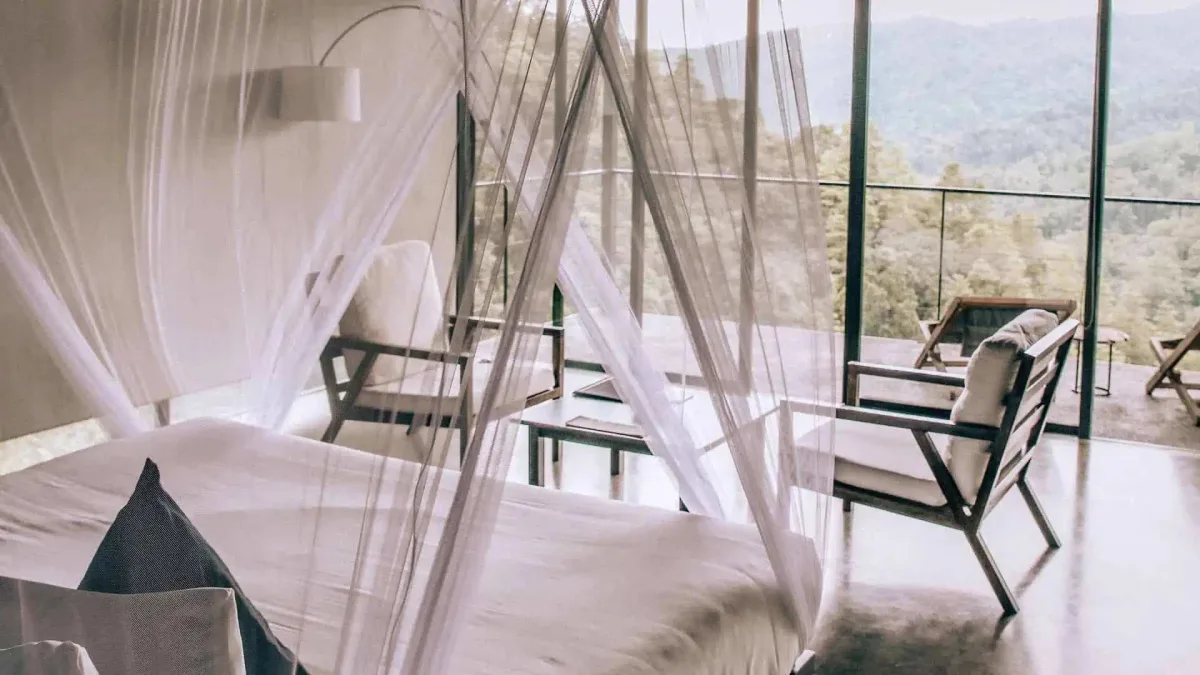
There are sixteen stand-alone Mountain View Chalets of 500 square feet, each with a glass wall facing the hills and a balcony, four Garden View Chalets for families, and a two- and a three-bedroom villa with private infinity pools and butlers. Request a Mountain View Chalet at the end of the row; nothing in front of it but valley. The spa steps down the hillside on three levels, from consultation rooms at the top to a hydrotherapy suite with a cedar sauna facing the mountains and an open-air thermal salt pool, then four treatment rooms that open straight onto the paddy fields.
The programmes are the point. Personal Dosha Ayurveda, Sleep, Detox and Stress Management all carry a five-night minimum; the Immune-Boosting Detox and the Recovery programme need seven. Every wellness booking includes the doctor's consultations, a meal plan written for your constitution, a 90-minute treatment a day and private yoga, on top of what all guests get: three meals, juices and herbal teas, twice-daily Hatha yoga, the sauna, steam and salt bath, and a guided walk to the river each morning. The kitchen cooks to the six Ayurvedic tastes rather than a menu, and it is very good; book direct for two nights or more and the five-course wellness dinner on your last night is included; it is the one meal you will photograph.
Logistics: Santani is an hour from Kandy by road. From the airport it is a long drive up the Central Expressway, a helicopter to a school playing field fifteen minutes from the gate, or a seaplane to Digana and 45 minutes by car. Book direct for five nights and the one-way transfer is included; seven nights and it is round trip. Children under twelve are only accepted in the three-bedroom villa, which tells you what kind of quiet this is.
Ulpotha: the village version
Ulpotha is the opposite proposition and the one I recommend to people who have already done a five-star spa and found it slightly hollow. It is a working village in the Galgiriyawa hills, an hour north of Kurunegala and three hours from the airport, revived from 1994 by co-founder Viren Perera as an experiment in traditional living: reforested land, ancient irrigation tanks brought back into use, organic paddy, and eleven hand-built wattle-and-daub huts with no doors, no windows and no electricity to speak of. You sleep under a mosquito net the villagers hang for you, wash in an open-air stone shower, and read by lantern.
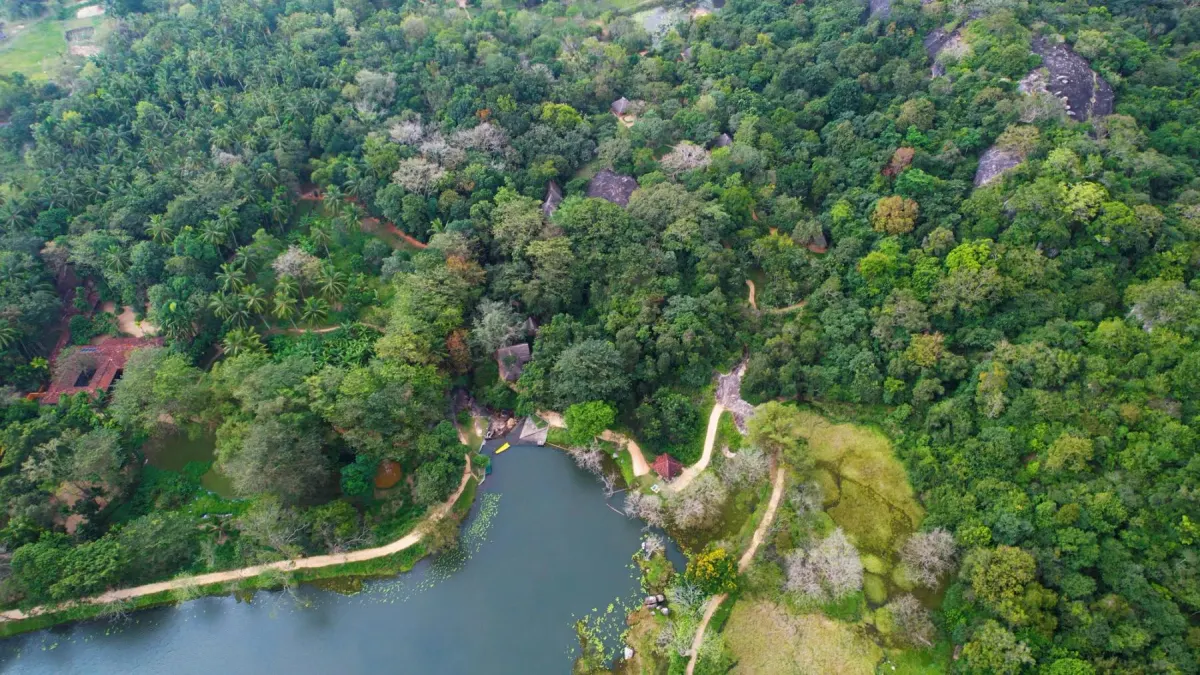
It only opens to guests for part of the year, in two-week teacher-led yoga retreats that run from late October to March. A fortnight in late November with the teacher Jules Jenkinson is US$3,500 per person twin-share, all meals, two yoga classes a day and bicycles included; a hut to yourself is a supplement of US$1,470 a week. The Ayurveda is booked on top and it is village Ayurveda in the proper sense. The resident physician, Dr Srilal, runs the preparatory oils, steams and herbal baths, and limits the elimination stage to inhalation and purgation; the classical emesis, enemas and bloodletting are not done here. A 21-day Panchakarma is US$1,500, a 28-day course US$2,000, and he will ask you to be on site for 48 hours before he starts.
Who it is for: anyone who can go two weeks without a hairdryer and wants to come back changed rather than rested. Who it is not for: anyone who needs air conditioning, a private bathroom or a signal.
The clinical classics: Barberyn and Jetwing
Sri Lanka's Ayurveda tourism was invented by one family. The Rodrigos opened Barberyn Reef in Beruwala in 1968 and made it the country's first Ayurveda resort in 1984; there are now four Barberyn properties, Reef and Sands on the west coast at Beruwala and Bentota, and Beach and Waves near Weligama in the south, all running the same model of daily doctor's rounds, a treatment schedule that fills most of the morning, and medicines made at the family's own accredited facility. Barberyn's doctors will tell you plainly that the purification course wants two to three weeks and will write a shorter plan if that is what you have. The rooms are simple. The Ayurveda is the most rigorous on the island.
Jetwing Ayurveda Pavilions in Negombo is the answer to a different question: what if you only have three or four days and a flight to catch? It sits minutes from the airport, with twelve air-conditioned pavilions, each with its own frangipani garden and, crucially, its own treatment room inside the pavilion, so the therapist comes to you. There is a proper Ayurveda centre with a pharmacy, a pool and a kitchen that cooks to the doctor's orders. I use it as a bookend: two nights on arrival to reset the clock before the drive south, or the last three nights of a longer Sri Lanka trip.
Beach plus doctor: Anantara Tangalle and Amangalla
Most Noon clients do not want three weeks in a hut. They want the south coast, a pool villa and a physician who takes the Ayurveda seriously. Two properties deliver that.
Anantara Peace Haven Tangalle sits on a rocky point above its own cove inside a 40-acre coconut plantation, about three hours from the airport down the Southern Expressway, with 152 rooms and pool villas. As of January 2026 it is the only spa in the region overseen by three resident Ayurveda doctors, led by Dr Bhagya Wellapilli, and opened Ayu Lavanya, a treatment parlour doing thirty- and forty-five-minute Ayurvedic facials, hair rituals and a two-hour Prana Radiance ritual for guests who want the results without the regime. For the regime, there are four five-day programmes: Inner Harmony, Deep Sleep, Natural Weight and Rebuilding Detox, each combining daily treatments, yoga by the sea, nutrition and a life-coaching thread. Book an Ocean Pool Villa; the Garden Pool Villas are lovely but you came for the water. Turtles nest on Rekawa Beach nearby and the resort supports the conservation work there.
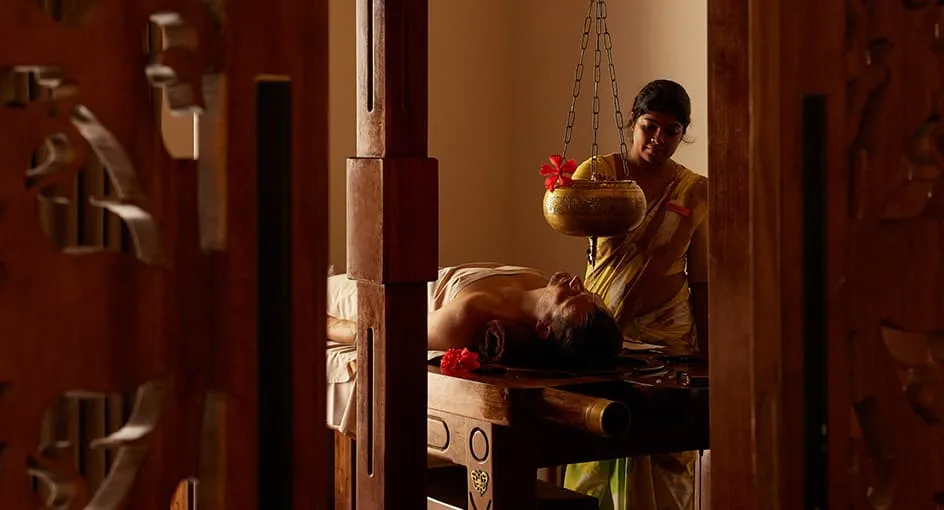
Amangalla is the soft landing. The building went up in 1684 as the Dutch commander's headquarters inside Galle Fort, became the New Oriental Hotel in 1865, and reopened as Aman's first Sri Lankan property in February 2005 with the polished floors, sash windows and four-poster beds intact. Its spa, The Baths, is built around two hydrotherapy suites, each with a warm massage pool, sauna, steam room and cold plunge, and an in-house Ayurvedic physician who writes the plan. The three-night Ayurveda Experience gives you a consultation, a daily 60-minute treatment, daily yoga and a breakfast designed for your dosha; the seven-night version adds mornings at nearby temples and a tea plantation. Every stay includes thirty minutes a day in the hydrotherapy suites and morning yoga, and the best session on the property is private yoga on the ramparts at sunrise, before the fort wakes up.

Amangalla is two hours from the airport by road, or a daily seaplane from Colombo to Koggala, twenty-five minutes away. Pair it with Amanwella, Aman's beach resort at Tangalle, where the 47-metre pool looks over a coconut grove and the spa runs the warm-oil abhyanga, and you have the fort-and-beach week that most people mean when they say Sri Lanka.
When should you go, and how long do you need?
December to March for the south and west coasts and the hill country; five nights minimum, seven if you want the programme to work, fourteen or more for a true Panchakarma. The southwest monsoon soaks the coast from roughly May to September, when the east coast is dry and the Ayurveda purists argue the softer, humid air is better for oil therapies; that is true, but it also means rain on your walk to the treatment room. Kandy sits at a temperate 18 to 22 degrees Celsius most of the year, which is why Santani works in almost any month, and Ulpotha's retreat calendar simply avoids the wet season altogether.
The routing I build most often is seven nights at Santani first, so the discipline happens while you are fresh, then three or four nights at Amangalla or Anantara Tangalle to let it settle beside the sea. Reverse it and the beach undoes the work. If you have already read our guides to Europe's longevity retreats and Japan's onsen ryokans, think of Sri Lanka as the third pillar: less diagnostic than the Swiss clinics, more medical than the Japanese baths, and the only one of the three where the treatment tradition was born on the ground you are standing on. Our broader piece on where wellness travel is going in 2026 explains why that authenticity now sells out first.
What You Actually Want to Know
Is Sri Lanka better than India or Kerala for Ayurveda?
For most Western travellers, yes. The medical tradition is equally old and the doctors are equally serious, but Sri Lanka's retreats sit in far better hotels, the distances are shorter and the island is easier to combine with a beach or the tea country. Kerala wins only if you want a classical, hospital-style Panchakarma at the lowest price.
How much does an Ayurveda retreat in Sri Lanka cost?
Ulpotha's two-week retreats run about US$3,500 per person twin-share before Ayurveda, which adds US$1,500 for a 21-day course. Santani's five- and seven-night programmes are priced on the room and length of stay; treatments, doctor's time, meals and yoga are built in. Anantara Tangalle's flexible rates start around US$300 a night before the five-day programme, and Amangalla's Ayurveda Experience is priced as a three- or seven-night package on request.
Do I need a visa for Sri Lanka in 2026?
You need an electronic travel authorisation, but since May 25, 2026 it is free for citizens of forty countries including the United States, the United Kingdom, Canada, Australia and most of the European Union, valid for 30 days with double entry. Apply on the government site before you fly; it usually clears within two days.
Can I drink wine or coffee on an Ayurveda programme?
Not if you want it to work. Santani's rates include unlimited juices and herbal teas and no alcohol; Ulpotha serves none at all; the resort hotels will pour you a glass but the doctor will notice. Treat the week as a reset and save the wine for the fort.
Is five nights really enough?
Five nights gets you the consultation, a daily treatment and the food, and you will sleep better than you have in a year. It does not get you a Panchakarma, which the doctors at Barberyn and Ulpotha say wants two to three weeks. Seven nights is the honest minimum for a change you can still feel a month later.
The difference between a good Ayurveda trip and a great one is knowing which doctor, which chalet and which week, and having someone hold all three before the December calendar closes. That is what we do.
Plan Your Next Journey
Work with a Noon Travel advisor for a trip that exceeds every expectation.
Get Started