The short version
Oaxaca is the best place in Mexico for Day of the Dead, and the three nights that matter are October 31, November 1 and November 2. Arrive by October 29, stay four nights in the historic centre, book Otro Oaxaca or Escondido Oaxaca now, and spend one night in the Xoxocotlán cemetery and one at the Jalatlaco comparsa.
Around the twenty-fifth of October, Oaxaca starts to smell of marigolds. The Central de Abastos fills with cempasúchil stacked head-high, bakeries put out pan de yema with little painted faces, and copal smoke drifts out of shop doorways on Macedonio Alcalá. By the thirty-first the whole city has been turned into an altar, and on the night of the first of November families sit up until dawn beside candlelit graves, eating mole and pouring mezcal for the people who are no longer there to drink it.
I have sent clients to Día de Muertos in several Mexican cities. Oaxaca is the one I send them back to. The Zapotec version of the tradition is older and less staged than anything you will find in Mexico City, the celebrations happen in real cemeteries and real neighbourhoods rather than in a parade for tourists, and the city is small enough to walk between all of it.
It is also the hardest week of the year to book. The good hotels in the centre are gone months out and rates double. If you are reading this in early September and want to go this year, the order of operations is: secure the room today, then read the rest.
When exactly is Day of the Dead in Oaxaca in 2026?
The dates that matter are October 31, November 1 and November 2, 2026, and the celebration stretches roughly a week either side. Each night has a different job, and the mistake most first-timers make is treating it as one event rather than three.
October 31 is the night the spirits of children are welcomed home, and it is the night the big cemetery at Santa Cruz Xoxocotlán, four kilometres from the centre, fills with families, brass bands and thousands of candles. If you visit only one cemetery, this is it. Go around six as the light drops, before the crowds thicken, and give it two hours; the festive part is near the gate, and the further in you walk the quieter and more private it becomes.
November 1 is All Saints, the night the adult souls return, and the night the city itself comes alive. The Jalatlaco comparsa, a costumed neighbourhood procession with competing brass bands, starts around eight in the evening in the prettiest barrio in Oaxaca and surges again around midnight. Out in the Etla Valley, San Agustín Etla runs its muerteada the same night: masked dancers with bells and mirrors, satire aimed at local politicians, and a party that goes until sunrise. It is the wildest thing in the whole calendar and the hardest to reach. The town is forty-five minutes away, road access has been closed to outside traffic around seven in recent years, and the drive back can take two or three hours. Do not attempt it without a private driver who has agreed in advance to wait.
November 2 is All Souls and the gentle finish. The altar competition in the Zócalo is judged that day and is best seen after dark when the candles are lit, the sand tapestries at Plaza de la Danza are at their most complete, and the small cemetery at San Felipe del Agua, fifteen minutes north, gives you the vigil atmosphere without the Xoxocotlán crowds.
Where should you stay for Day of the Dead?
In the historic centre or in Jalatlaco, and nowhere else. Streets close for the comparsas, taxis vanish after the cemetery vigils, and a ten-minute drive becomes an hour. The whole point of Oaxaca that week is being able to walk home at two in the morning with a brass band somewhere behind you.
The hotel I book first is Otro Oaxaca. It sits directly opposite Santo Domingo on Macedonio Alcalá, sixteen rooms behind a historic façade, designed by the local studio RootStudio with interiors by Grupo Habita's Carlos Couturier and everything from the furniture to the linen made by Oaxacan artisans. The floor plan borrows the cross-shaped corridors of Mitla. The reason to book it in November is the roof: a ten-metre pool that looks straight at the church's stone façade, which turns gold at sunset, and a bar that mixes some of the best mezcal cocktails in the city. Underneath the courtyard there is a small spa with a seven-metre heated plunge pool under a brick dome. Ask for a Junior Suite or the Townhouse.

The alternative from the same group is Escondido Oaxaca on Morelos, a few blocks west near the Basílica de la Soledad and a ten-minute walk from Santo Domingo. Alberto Kalach restored a colonial casona, with its frescoed walls and brick floors, for the restaurant, the reading room and four bedrooms, then added a contemporary tower behind it with eight more: two with patios, six with balconies. Twelve rooms in total, interiors by Década, a rooftop pool, and a twenty-two-seat restaurant where chef Saúl Carranza changes a tasting menu weekly around whatever he bought in the market that morning. It is quieter and more monastic than Otro, which some people prefer after a night in a cemetery.
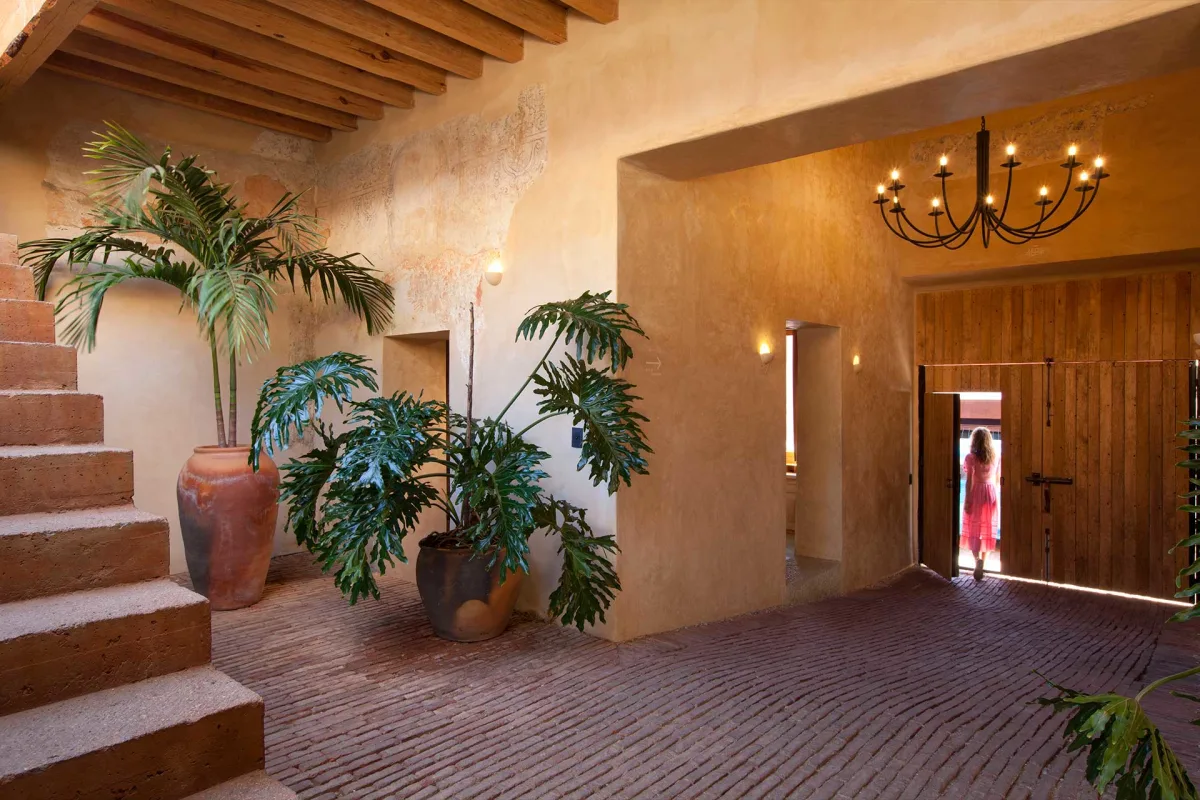
Two others worth knowing. Hotel Sin Nombre is a seventeenth-century house on 20 de Noviembre with nineteen rooms around a sunlit courtyard and interiors that owe as much to Morocco as to Mexico; it also rents as a whole house, which is the answer for a group of eight or ten who want to do the week together. And Quinta Real Oaxaca is the old Convent of Santa Catalina, founded in 1576, with the original frescoes, stone courtyards and ninety-one rooms. It is the biggest and most conventional of the four, and the one I use when everything smaller is full.

Where do you eat during Día de Muertos?
You eat the festival food first. Pan de yema with a cup of chocolate de agua, thick and dark and made with water rather than milk, is the seasonal breakfast; mole negro, the most ceremonial of Oaxaca's seven moles, is what families cook for the altar and then eat themselves; and the tamales de mole negro sold outside the cemetery gates at Xoxocotlán are better than most restaurant dinners.
Then book the restaurants, because the tables go as fast as the hotel rooms. Casa Oaxaca El Restaurante, Alejandro Ruiz's flagship on Constitución, has an open-air rooftop terrace a block from Santo Domingo and is the dinner to reserve for the night you want to sit above the noise. Criollo, which Enrique Olvera of Pujol opened with Luis Arellano in 2016, serves a seven-course tasting menu that changes daily in the courtyard of a heritage house on Francisco I. Madero; you enter through the kitchen past the wood-fired ovens where the tortillas are being made. And Levadura de Olla on García Vigil is where Thalía Barrios García, who was selling tamales in her village at seven, cooks the food of the Oaxacan countryside with vegetables rather than meat at the centre of the plate. Order the tomato soup and the maize drinks. Rodolfo Castellanos's Origen rounds out the list for a fourth night.

For the days, drive twenty minutes to Monte Albán, the Zapotec capital on its flattened hilltop above the city, and go early before the tour buses. Teotitlán del Valle, twenty-nine kilometres east, is the weaving village, and during the festival some families there open their homes and altars to visitors through the right guide, which is the most intimate version of the tradition you will find. If you have a fifth day, Mitla, whose name comes from the Nahuatl for the place of the dead, holds its own cemetery celebrations beside the ruins.
How many nights, and how do you get there?
Four nights, arriving October 29 or 30 and leaving November 3. Three is the absolute minimum to see the three main nights; four lets you do the markets before the crowds and a village day without racing. Five if you want Mitla.
Oaxaca has nonstop flights from the United States: American flies daily from Dallas in just under three hours, United flies from Houston in around two hours forty, and Volaris flies from Los Angeles. Otherwise connect through Mexico City, which also lets you pair the trip with a few days in the capital; our Mexico City food guide covers what to book there. Inside the city, walk. For San Agustín Etla, Teotitlán and Mitla, we arrange a private driver and, where it adds something, a guide with family access.
One note on etiquette, because it matters more here than anywhere else I send people. The cemeteries are open to visitors and families are generous with outsiders who show real interest, but you are a guest at a private occasion. Ask before you photograph anyone, keep your voice down past the bandstand, never touch an altar or a grave, and if someone hands you a cup of mezcal, take it. Face paint is fine for the comparsas and wrong for the vigils.
What You Actually Want to Know
Is Oaxaca or Mexico City better for Day of the Dead?
Oaxaca. Mexico City's parade is a modern creation; Oaxaca's celebrations happen in family cemeteries and neighbourhoods and have Zapotec roots that go back long before the Spanish arrived. Do the capital before or after.
How far in advance do I need to book?
The small hotels in the centre sell out months ahead and rates for the week can be double or triple the normal price. September is late but not too late if you move now; by mid-October you are choosing from whatever is left.
Can you visit the cemeteries without a tour?
Yes. Xoxocotlán and San Felipe del Agua are open to respectful visitors and are easy to reach by taxi from the centre. A guide earns their fee for the village events, especially San Agustín Etla, where transport is the whole problem.
Is it appropriate to bring children?
Very. It is a family celebration at heart and the cemeteries are joyful rather than frightening. The late nights are the only difficulty; the daytime altars, markets and sand tapestries are ideal for children. If you are travelling three generations, our guide to planning a multigenerational trip applies here.
What is the weather like?
Late October and early November sit at the end of the rainy season, with warm, mostly dry days and cool nights at Oaxaca's altitude of around 1,550 metres. Bring a proper layer for the cemetery, where you will be sitting still until well after midnight.
Can I add a beach?
Yes, but not the Oaxacan coast this year: the highway from the city to Puerto Escondido has been subject to closures in recent weeks, so ask us to check the road before you plan on it. The easier pairing is a flight to Los Cabos via Mexico City for the week after.
The Noon view
Day of the Dead in Oaxaca is the rare festival that is better in person than in the photographs, and the difference between a good week and a great one is almost entirely logistics: the right room in the right five blocks, dinner tables held before they vanish, and a driver waiting outside San Agustín Etla at three in the morning. Those are things you fix in September, not in October.
Every itinerary we build starts with one conversation, not a template. Tell us the nights you want to be there and we will hold the room, the tables and the driver before the week fills.
Plan Your Next Journey
Work with a Noon Travel advisor for a trip that exceeds every expectation.
Get Started