It may be the most expensive act of revenge in hotel history. The story goes like this: in the late 1800s, a man was turned away at the door of Bombay's grandest hotel because he was Indian. So he built a grander one next to the sea — and made sure it would outlast the place that humiliated him by a century and counting.
The hotel he was refused was Watson's Esplanade. The hotel he built was the Taj Mahal Palace. One is now a global icon. The other is a crumbling shell most tourists walk past without a second glance. Whether the snub happened exactly as legend claims is still debated — but the outcome is not in question, and it is even better than the myth.
Here is the full story.
TL;DR: Legend says industrialist Jamsetji Tata was refused entry to the Europeans-only Watson's Hotel and responded by opening the Taj Mahal Palace in 1903 — grander, more advanced, and open to everyone. Historians debate the snub, but the result is real: the Taj became one of the world's most famous hotels, and Watson's decayed into a ruin.
Was Jamsetji Tata Really Turned Away?
Maybe. The most-told version says Tata — one of India's wealthiest and most powerful industrialists — tried to enter Watson's Hotel and was stopped at the door because the hotel admitted Europeans only. Insulted, he resolved to build something that would put it to shame.
It is a great story. It may also be too neat. Historians including Sharada Dwivedi and Charles Allen have questioned it, arguing that a man of Tata's stature — someone who routinely crossed swords with the colonial government — was unlikely to build a hotel over a single slight. Allen has written that the Taj was instead urged on by the editor of The Times of India, who felt Bombay deserved a hotel worthy of the city, and that Tata conceived it as a gift to the place he loved. After the plague epidemic that devastated Bombay in 1896, Tata wanted to reinvest in the city — and to create a place where Indians and Europeans could meet as equals.
That, in the end, is the more interesting truth. Whether or not he was ever stopped at Watson's door, Tata built a hotel that rejected the entire logic of the door. The colonial city sorted people by race; the Taj sorted them by nothing at all. That was the real provocation.
What Made Watson's So Untouchable?
To understand the scale of what Tata was up against, you have to know how dominant Watson's was. When it opened in 1871, the Bombay Gazette called it, without hedging, the finest hotel in Bombay.
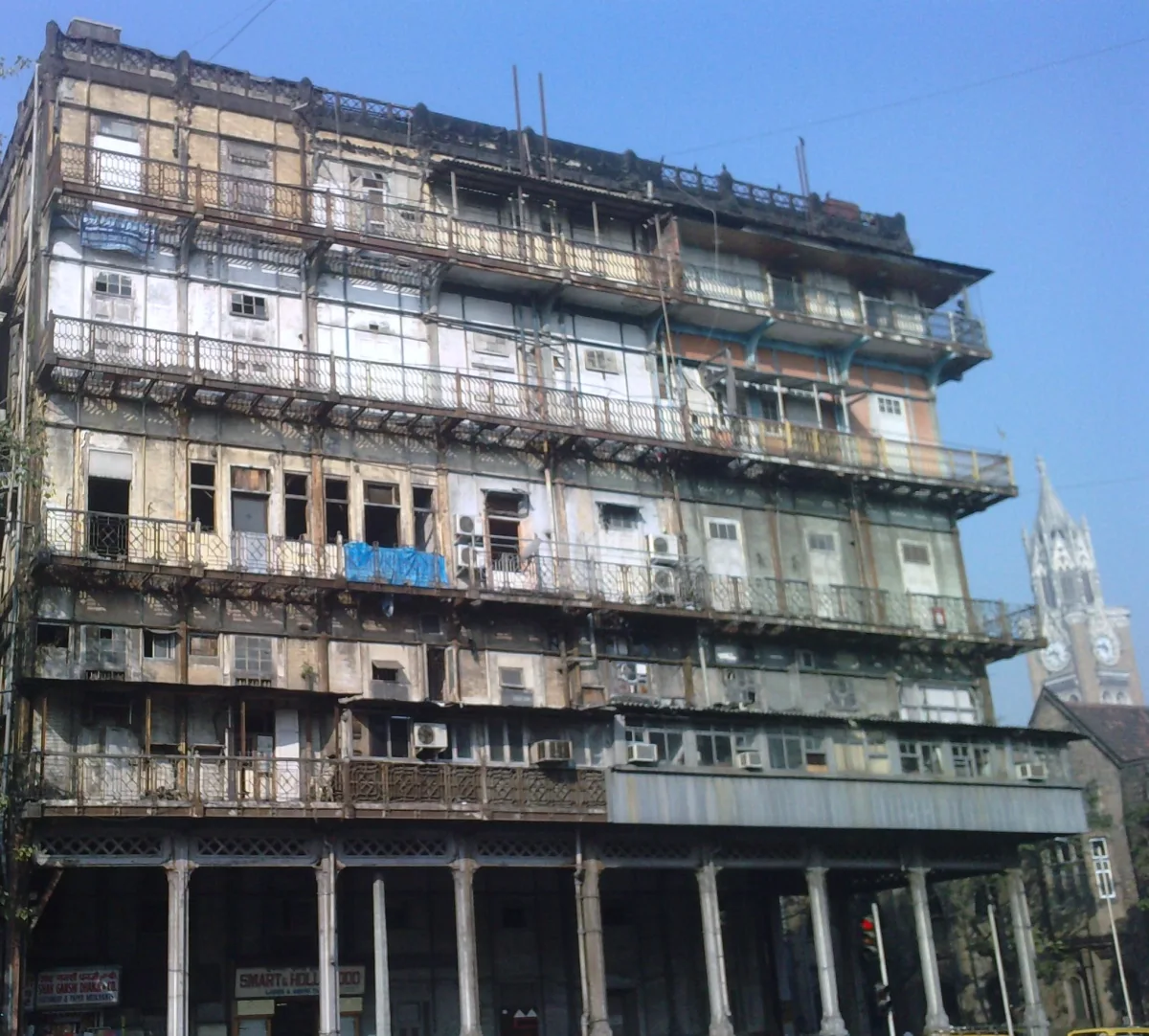
It was also a feat of engineering. Watson's was built from cast iron prefabricated in England, shipped to India in pieces, and bolted together on site between 1867 and 1869. The frame was designed by Rowland Mason Ordish, the engineer behind parts of London's Crystal Palace and Albert Bridge. It remains India's oldest surviving cast-iron building and is considered one of the oldest multi-storey iron-framed buildings anywhere in the world. In 1896 it even hosted India's first film screening, when the Lumière brothers' moving pictures reached Bombay.
It was, in short, the most advanced and prestigious address in the city — and it was reserved for the colonial elite. Politicians, socialites, and British officials filled its halls. That cast-iron pedigree is exactly what made the Taj's later dominance so striking: Tata did not just beat a hotel, he eclipsed the building everyone agreed could not be beaten.
How the Taj Rewrote the Rules
The Taj Mahal Palace opened its doors on 16 December 1903, looking out over the Arabian Sea where the Gateway of India now stands. It was designed by Indian architects Sitaram Khanderao Vaidya and D.N. Mirza and completed by the English engineer W.A. Chambers, in an Indo-Saracenic style that fused Moorish domes with Florentine and Rajput detail. It is said to have cost around £500,000 — an enormous sum at the time.
And it was unlike anything India had seen. Tata sourced the world for it: electrical machinery from Düsseldorf, chandeliers from Berlin, fans from America, spun-steel columns from the Paris Exhibition. The Taj was the first building in Bombay lit by electricity, and it opened with electric passenger lifts, Turkish baths, and a level of comfort the city had never experienced. It welcomed Indians and Europeans alike — the precise thing Watson's would not do.
More than a century later, the Taj has roughly 560 rooms and 44 suites and remains the flagship of Taj Hotels and one of the most recognized hotels in the world — so distinctive that in 2017 it became the first building in India to trademark its own image. It has weathered a great deal, including the 2008 terror attacks, after which it was carefully restored and reopened. Its endurance is now part of its legend.

And What Became of Watson's?
It faded. Watson's lost its founding family in 1896, and once the Taj arrived in 1903 it lost its crown. By 1920 it had stopped being a hotel at all. The grand cast-iron structure was carved up into offices and rented cubicles, renamed, and slowly abandoned to neglect. Today it stands in Kala Ghoda as Esplanade Mansion — a protected heritage building in name, a dangerous ruin in fact. In 2005, part of its famous iron frame collapsed and killed a man.
One hotel became a symbol of a confident, modern India. The other became a cautionary footnote. Same city, same era, opposite endings — which is why, true or embellished, this remains the best story in hospitality. For more hotels with a past worth knowing, read our take on the Ritz Paris and the Chateau Marmont.
What You Actually Want to Know
Did Jamsetji Tata really build the Taj out of revenge? It is the popular legend, tied to being refused entry to the Europeans-only Watson's Hotel. Respected historians dispute it, pointing instead to civic pride and a wish to give Bombay a hotel open to all. The snub may be myth; the defiance behind the hotel is real.
When did the Taj Mahal Palace open? On 16 December 1903. It was among the first buildings in Bombay with electricity and featured electric lifts and Turkish baths from day one.
Is Watson's Hotel still standing? Yes, as Esplanade Mansion in the Kala Ghoda district of Mumbai. It is India's oldest surviving cast-iron building but is badly dilapidated and no longer operates as a hotel.
Can you still stay at the Taj Mahal Palace? Yes. It remains an operating five-star hotel beside the Gateway of India and the flagship of Taj Hotels, with around 560 rooms and 44 suites.
Great hotels are never just buildings — they are arguments about who gets to belong. The Taj won its argument in 1903 and is still winning it. If a story like this is the reason you want to stay somewhere with real history, that is exactly the kind of trip Noon's advisors build. Tell us where you want to go, and we will get you in the right room.
Further reading
Plan Your Next Journey
Work with a Noon Travel advisor for a trip that exceeds every expectation.
Get Started