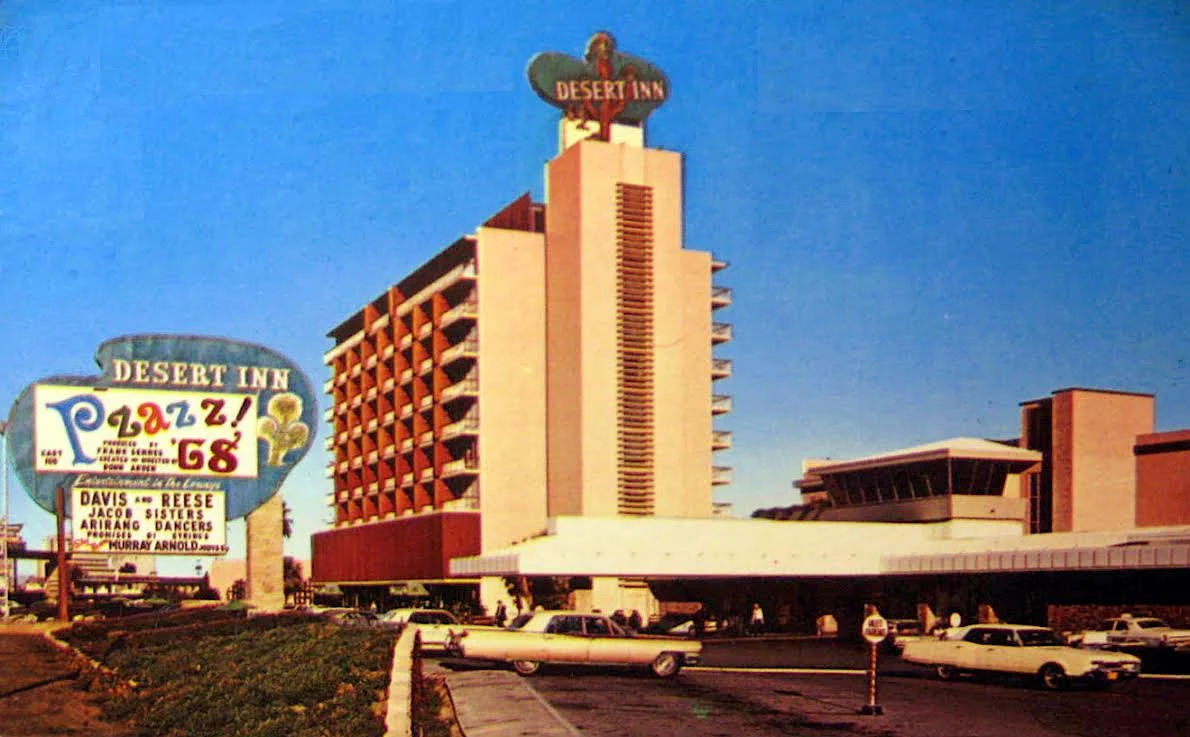

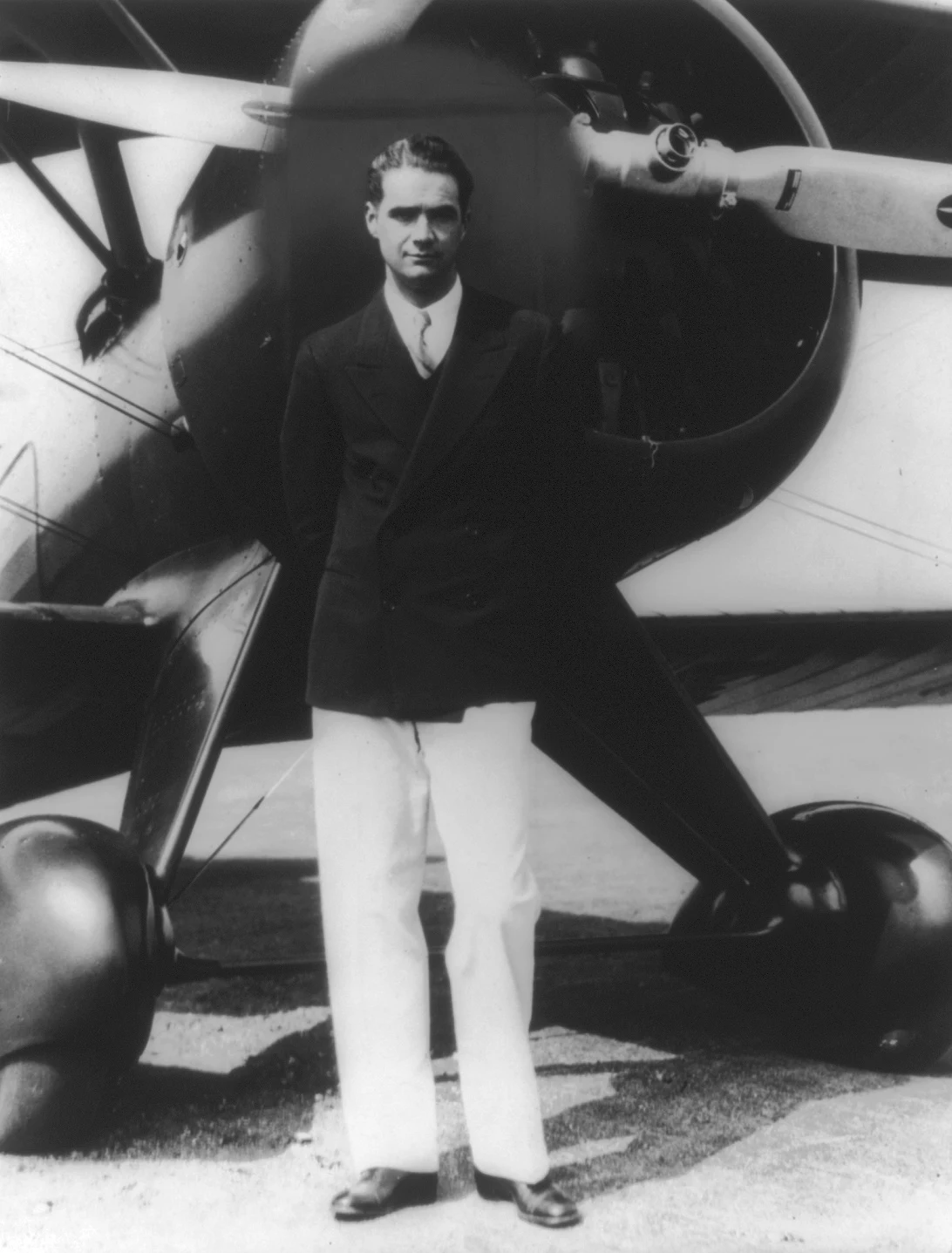
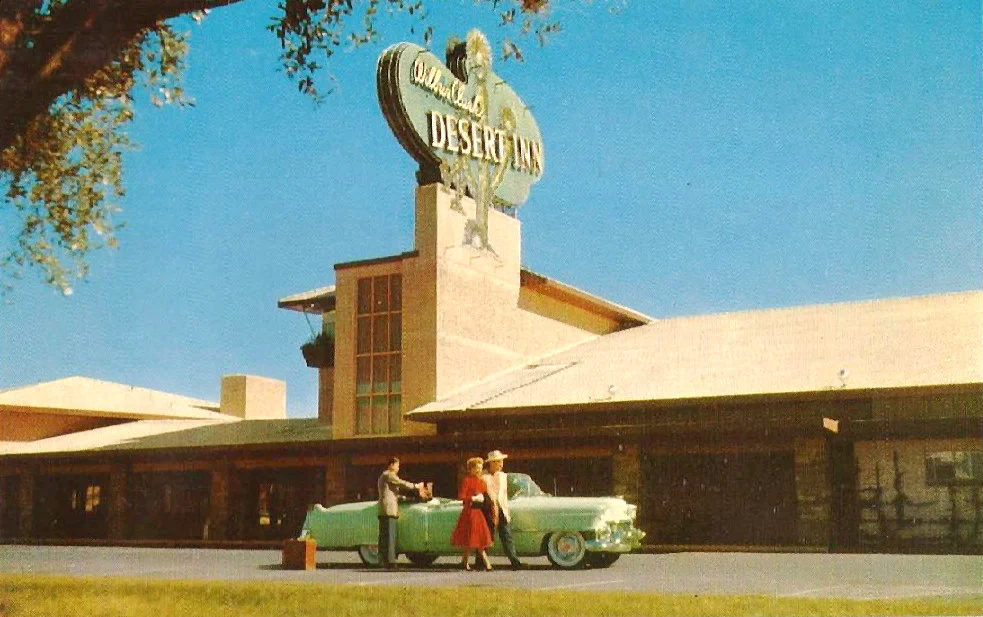
In November 1966, Howard Hughes checked into the top floor of the Desert Inn and booked the penthouse for ten days. He was the richest man in America, an aviator and film producer worth more than any casino owner on the Strip, and he wanted a quiet place to disappear. The hotel gave him its best suites. Then the ten days ran out.
What happened next is one of the strangest power moves in the history of Las Vegas. The owners wanted their high-roller floor back for New Year’s. Hughes did not want to move. Most guests, told to vacate, pack a bag. Hughes wrote a check for the building instead — and then never walked out the front door again.
It is the rare origin story that is both a comedy and a turning point. The comedy is a billionaire who would rather buy a hotel than find a new room. The turning point is everything that came after: from a single sealed penthouse, Hughes bought up the Strip and dragged Las Vegas out of the mob era and into the corporate one. Here is how it actually happened.
TL;DR: In 1966 Howard Hughes checked into the Desert Inn for ten days. When the hotel asked him to leave so it could rent his suites to New Year’s high rollers, he bought the place instead — for $13.2 million, around $125 million today. He then stayed four years without leaving, and bought five more Las Vegas casinos from the same room.
Why did Howard Hughes buy the Desert Inn?
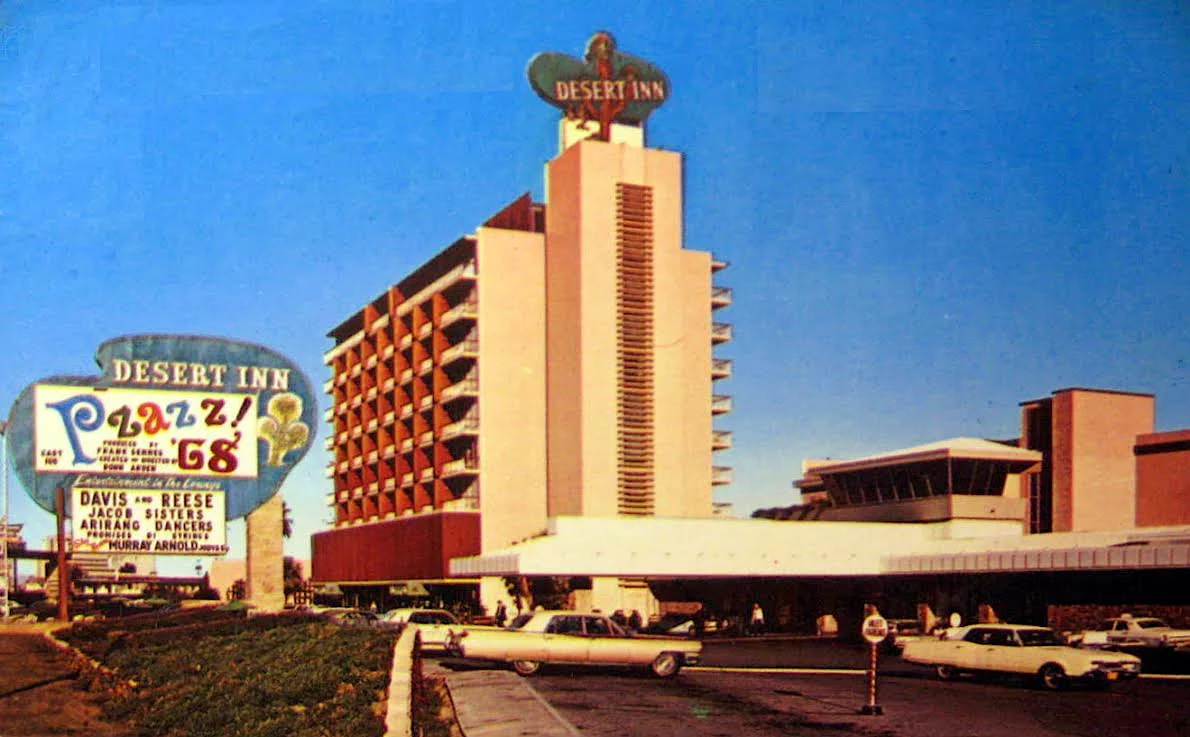
Because checking out was less appealing than buying the building. Hughes arrived on Thanksgiving Day 1966 and took over the Desert Inn’s top two floors — the high-roller suites — on what was meant to be a ten-day arrangement. The ten days passed. Hughes stayed. By December, the owners, Moe Dalitz and his partners, wanted those rooms back for the gamblers who would fill them over New Year’s, the most profitable week of the year.
The standoff dragged into 1967. Hughes’s right-hand man, Robert Maheu, finally delivered the line that decided it: “If you want a place to sleep, you’d damned well better buy the hotel.” So Hughes did. On March 27, 1967, he closed on the Desert Inn for $13.2 million — $6.2 million in cash and $7 million in loans, far more than the property was worth. In today’s money, roughly $125 million to avoid a checkout.
It was, on its face, an absurd way to solve a hotel dispute. It was also the most consequential real estate decision in the modern history of the city.
What happened inside the penthouse?
This is the part that turns from business story into something stranger. Having bought the hotel so he would not have to leave, Hughes proceeded not to leave for four years. He stayed in a darkened bedroom of roughly 250 square feet, the curtains drawn, the windows and doors sealed shut with tape. He ran his affairs on handwritten memos passed through a tiny circle of aides.
The detail that says the most: Maheu, the man who ran Hughes’s entire Nevada operation and spoke for him across the state, never once met him face to face. Their relationship existed entirely in memos and phone calls. Hughes’s connection to the outside world was a television, a stack of newspapers, and notes slipped under a door — while, three floors below, the casino he owned ran around the clock.
He left the way he arrived: without warning, in the dead of night. On Thanksgiving Eve 1970 — almost exactly four years after he checked in — Hughes was, by the accepted account, carried out of the Desert Inn on a stretcher and down nine flights of the fire escape, loaded into an unmarked van, driven to Nellis Air Force Base, and flown by private jet to the Bahamas. He never set foot in Las Vegas again.
Why a stretcher? Because after four years barely moving from a darkened room, he was too frail to walk out. At well over six feet, he reportedly weighed barely 120 pounds, his body worn down by years of poor diet and a decades-long dependence on painkillers that traced back to a 1946 plane crash that had broken nearly every bone in his body. There was a second reason, too, and it is the one that turned the exit into a mystery: the move came in the middle of a power struggle over control of his empire, and Robert Maheu — fired soon after — would insist it was less a departure than a kidnapping. Hughes left so quietly that, for a while, no one could prove he was still alive.
How much of Las Vegas did Hughes end up owning?
From that one sealed room, Hughes went on a buying spree the Strip had never seen. After the Desert Inn he took the Sands — the Rat Pack’s casino — for around $23 million, then the New Frontier for a similar sum. He added the Castaways, the Silver Slipper, and the Landmark, and in 1970 reached up to Reno for Harold’s Club. Six casinos in Las Vegas, one more in Reno, most of them bought in rapid succession by a man who never toured a single one.
The numbers made him the largest private employer in Nevada, with some 8,000 people on his payroll. The deeper effect was cultural. Hughes’s arrival gave Las Vegas something it had never had: a buyer with a clean reputation and limitless cash, willing to take casinos off the hands of operators with ties to organized crime. His spree helped pull the Strip out of the mob era and set the template for the publicly traded, corporate Las Vegas that exists today.
It is worth holding both facts at once. The man who modernized Las Vegas did it while refusing to be seen, eat in its restaurants, or set foot in his own casinos. As Maheu put it, “Hughes never intended to buy a hotel — he just wanted a place to sleep.”
What You Actually Want to Know
How much did Howard Hughes pay for the Desert Inn? $13.2 million — $6.2 million in cash and $7 million in loans — in a deal that closed on March 27, 1967. Adjusted for inflation, that is roughly $125 million today.
How long did Hughes stay at the Desert Inn? About four years, from Thanksgiving 1966 to Thanksgiving Eve 1970, reportedly without ever leaving his suite. By the accepted account he was carried out on a stretcher — too frail to walk after four years in that room — and flown to the Bahamas in the dead of night.
Which Las Vegas casinos did Hughes own? The Desert Inn, the Sands, the New Frontier, the Castaways, the Silver Slipper, and the Landmark in Las Vegas, plus Harold’s Club in Reno — making him the state’s largest private employer.
Is the Desert Inn still there? No. It closed in 2000 after Steve Wynn bought it, was imploded in phases in 2001 and 2004, and Wynn Las Vegas opened on the site in 2005. The old golf course was kept and redesigned as the Wynn’s.
Las Vegas has always rewarded people who understood it as theater — and the city Hughes quietly assembled by memo is the one travelers still fly into today. If you read these stories for the history as much as the glamour, our pieces on the Chateau Marmont and the Ritz Paris are cut from the same cloth. And when you want a trip built around the places where the stories actually happened, that is the kind of thing Noon’s advisors do best — just tell us where you want to go.
By Amelia Ingram | May 31, 2026
Plan Your Next Journey
Work with a Noon Travel advisor for a trip that exceeds every expectation.
Get Started