The short version
In the 1860s a nearly bankrupt Monaco bet its survival on a casino. Once gambler-turned-impresario François Blanc made Monte-Carlo the richest gaming room in Europe, the principality scrapped income tax and never brought it back. The catch the royals built in from the start: the casino would take its fortune from foreigners, and Monégasque citizens would be barred from playing.
There is a rule inside the most famous casino on Earth that almost no visitor notices. The croupiers spin for Russian oligarchs, Gulf royalty, and hedge-fund weekenders — but never for a single citizen of the country the casino built. Monaco’s own people are forbidden from gambling here, by law, to this day.
It sounds like a quirk. It is actually the whole strategy. The Casino de Monte-Carlo was a survival plan dreamed up by a broke royal family, and the rule that keeps locals out is the reason Monaco became the richest little country on Earth — a place where residents still pay no personal income tax.
Here is how one desperate bet, placed above the sea in the 1860s, turned two square kilometres of rock into a byword for money — and a few things the short version always leaves out.

Where did Monaco even come from?
Long before the casino, there was a heist. On the night of 8 January 1297, a Genoese exile named François Grimaldi — nicknamed il Malizia, the Cunning — talked his way through the gates of the fortress on this rock dressed as a Franciscan monk, then drew a blade from under the robes and seized it. The Grimaldis would lose the Rock and win it back more than once over the centuries, but the family that pulled that trick is still on the throne more than 700 years later, one of the oldest ruling dynasties on Earth. Monaco’s coat of arms still shows two sword-wielding monks, and the national motto reads Deo Juvante — “with the help of God.”
What they rule is almost comically small: approximately two square kilometres, which makes Monaco the second-smallest country in the world after the Vatican, and the most densely populated state anywhere. Stranger still, the locals are outnumbered in their own country — only around a fifth of residents are actually Monégasque citizens. Hold those two ideas together, tiny and tax-free, and the rest of the story starts to make sense.
Why was Monaco going broke?
Because it had just lost almost everything it owned. In 1861, under pressure from France, Prince Charles III signed away the towns of Menton and Roquebrune — roughly 95% of his territory and the citrus farms that paid the bills — in exchange for four million francs and France’s formal recognition of Monaco’s independence.
The cash was a one-time payment. The lost tax base was forever. The Grimaldis were a ruling family with a throne, a rock, and almost no income. Charles III needed a new economy, and he reached for the one business that was illegal almost everywhere else in Europe at the time: gambling.
He legalized it and built a gaming house on the barren Spélugues plateau, on the cliffs above the Mediterranean. The early casino was close to a disaster. There was no proper road, no railway, and barely a hotel; the well-heeled gamblers it was built for simply could not get there. For its first few years, the great gamble of Monaco lost.
How did one man turn a failing casino into Monte-Carlo?
The turnaround came down to a single hire. In 1863, Charles III handed a fifty-year concession to operate the casino to François Blanc, the gambling impresario who had already built the wildly successful spa-casino at Bad Homburg in Germany. Blanc was so good at the business that the press called him the Magician — or the Wizard — of Monte-Carlo.
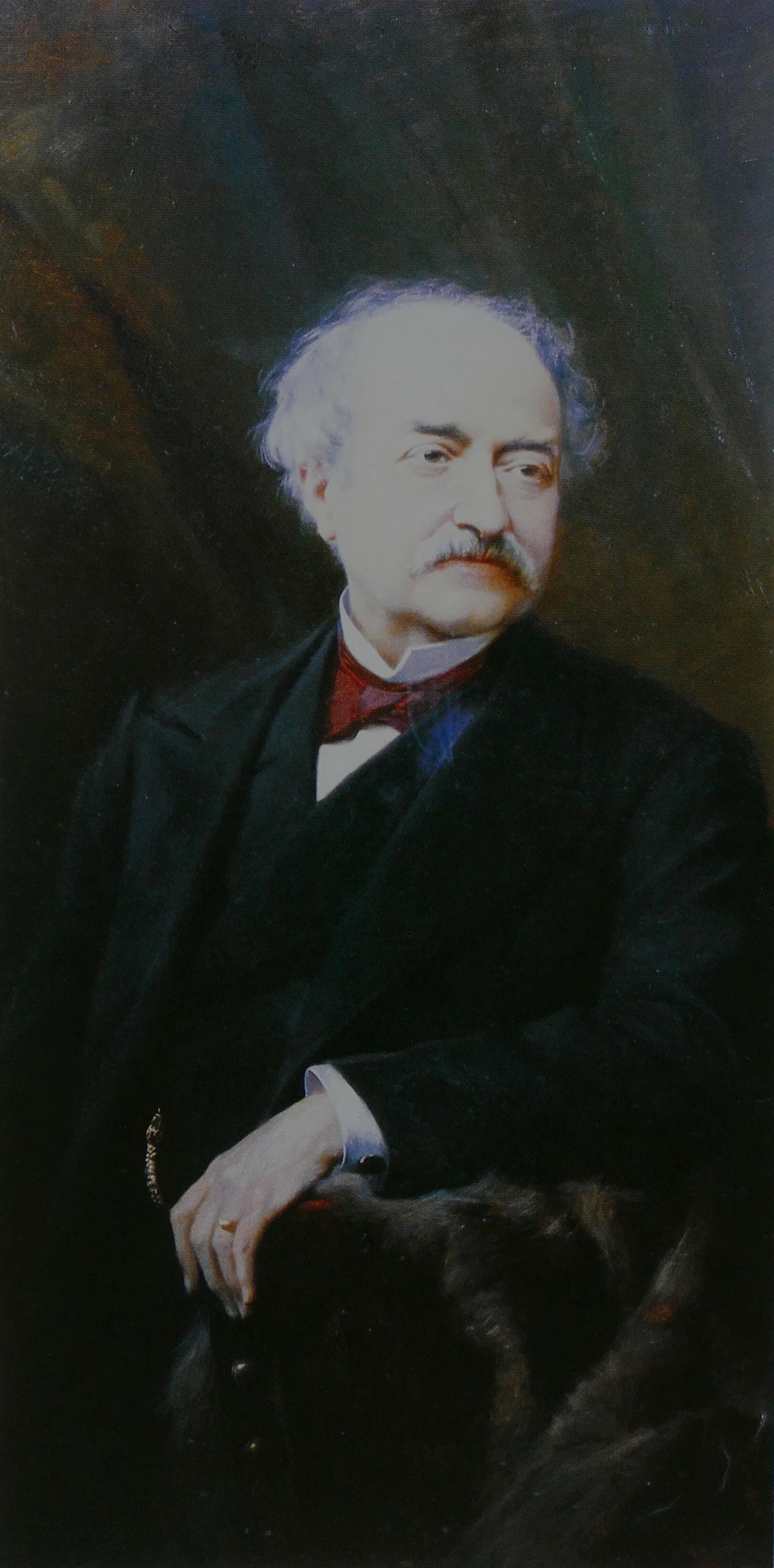
Blanc treated the casino as the anchor of an entire resort, not a room full of tables. He created the Société des Bains de Mer to run it, opened the Hôtel de Paris next door in 1864, pushed for the road and rail links that finally brought Europe to the door, and marketed Monte-Carlo relentlessly across the continent’s newspapers. In 1866 the new district was named Monte-Carlo — “Mount Charles” — in the prince’s honour. A few years later, the casino added an opera house, the Salle Garnier, designed by Charles Garnier, the architect of the Paris Opéra, and opened in 1879.
The money came in so fast that in 1869 Charles III abolished personal income tax on residents altogether. Monaco has never reinstated it. The casino was now paying for the country.

Who really broke the bank at Monte-Carlo?
Blanc’s edge was partly mathematical. His tables ran a roulette wheel with a single zero rather than the double zero used elsewhere, which quietly improved the player’s odds and gave his marketers a real boast to sell across Europe. Gamblers noticed something else, too: the numbers on a roulette wheel add up to 666, which earned it the nickname “the Devil’s game” and fed a long-running legend that Blanc had struck a deal with the devil for his luck.
Every so often a player won more than a table held in reserve — “breaking the bank,” after which the croupiers would drape that table in black cloth until the cash was refilled. Two Englishmen turned the phrase into legend. In the early 1880s, Joseph Jagger, a textile engineer from Bradford, hired clerks to secretly log every spin, found a wheel whose tiny imbalance favoured nine numbers, and bet them into a fortune. A decade later, in 1891, a swindler named Charles Wells broke the bank again and again in a single trip, won more than a million francs, and inspired the music-hall hit “The Man Who Broke the Bank at Monte-Carlo.” Neither trick works today — the wheels are balanced and watched — but the stories did precisely what Blanc wanted. They sold Monte-Carlo.
Why can’t Monaco’s own citizens gamble?
This was built into the plan from the beginning, and it is the most revealing detail of the whole story. The principle traces to Princess Caroline, Charles III’s mother and the driving force behind the casino: the house would extract its fortune from wealthy foreigners, for the direct benefit of Monaco’s subjects — who would be spared the table entirely.
The idea was part moral cover and part economics. Keep your own people out of the casino, and gambling never becomes a domestic problem; let the rest of Europe lose its money there, and the proceeds fund a state with no income tax. The rule still stands, now written into Monégasque law — a 1987 statute bars Monégasque nationals from gambling, and even from working in, the gaming rooms. Today it is enforced with biometric ID checks at the door. A Monégasque passport is the one credential that cannot buy a seat at these tables.
The Grace Kelly effect
By the mid-twentieth century Monaco was rich. What made it legendary was a wedding. In 1956 the Hollywood star Grace Kelly married Prince Rainier III, and the principality acquired something money had not been able to buy on its own: glamour with a global audience. The images of an American film actress turned princess fixed Monaco in the popular imagination as the natural home of the beautiful and the wealthy — a reputation the Grand Prix, the yacht-choked harbour, and the grand hotels have traded on ever since.

Not every Grimaldi was chasing glamour, though. Rainier’s great-grandfather, Prince Albert I, was a serious scientist — the “Explorer Prince” — who led more than two dozen oceanographic expeditions and, in 1910, built the cliff-top Oceanographic Museum that still anchors the old town. It was directed for three decades, from 1957 to 1988, by Jacques Cousteau. The same dynasty that legalized roulette also helped fund the birth of modern ocean science.
The arrangement nearly came undone in 1962. Furious that wealthy French citizens were using Monaco to sidestep French tax, President Charles de Gaulle threw customs posts up around the principality and threatened to choke it off entirely. The standoff ended with a 1963 treaty under which French nationals living in Monaco would, from then on, pay French income tax — the one major exception to Monaco’s no-tax rule. Everyone else kept the deal. The economy has long since broadened well beyond the tables — banking, real estate, and tax residency now do the heavy lifting — but the founding logic never changed. The wealth comes in from outside. The locals keep it.

Can you visit the Casino de Monte-Carlo today?
Yes — and you should, whether or not you intend to place a bet. In the morning, the casino opens as a historic monument: from 10am, with last entry around 12:15pm, you can tour the gilded atrium, the Garnier opera room, and the original gaming salons before a single chip is in play. It is the best time to see the architecture without the crowds or the tension.
The gaming rooms open at 2pm. Entry runs around €20, you must be at least 18, and you will need a passport at the door — an ID card is not always accepted. The dress code is smart: leave the shorts, ripped jeans, trainers, and beachwear at the hotel, and note that t-shirts are off the table in the evening. Private rooms carry a small additional fee.
The smartest move is to make the casino one act of a Monte-Carlo evening rather than the whole night. Stay or at least drink at the Hôtel de Paris on the same square, time a visit around a performance at the Salle Garnier, and treat the gaming floor as theatre. Save a morning for Prince Albert I’s Oceanographic Museum over on the old-town rock, too. For how to structure a couple of days here, see our 48 hours in Monaco insider guide; if you are coming for the race, our Monaco Grand Prix guide covers where to stay and watch. Pairing Monaco with the wider coast? Read our take on the French Riviera beyond Saint-Tropez.
Five things even Monaco regulars get wrong
- Monaco and Monte-Carlo aren’t the same thing. Monte-Carlo is one district — the one built around the casino. Monaco is the whole country.
- The locals can’t gamble. Monégasque citizens are barred by law from the casino’s gaming rooms, and have been by design since the 1860s.
- “Tax-free” has a big exception. French nationals living in Monaco still pay French income tax, under a 1963 treaty.
- Most residents aren’t Monégasque. Only about a fifth of the people who live here actually hold Monégasque citizenship.
- You don’t need to be a high roller to go in. The casino opens as a monument each morning from 10am — no bet, and no black tie, required.
What You Actually Want to Know
Why are Monaco citizens not allowed to gamble?
It was the founding principle of the casino, attributed to Princess Caroline: the house should take its money from foreigners, not from Monaco’s own subjects. The ban is now enshrined in Monégasque law, which prohibits Monégasque nationals from gambling in, or working in, the principality’s gaming rooms.
How old is the Grimaldi dynasty?
The Grimaldis first seized the Rock of Monaco in 1297, when François Grimaldi entered the fortress disguised as a monk. Despite losing and regaining control over the centuries, the family has ruled for more than 700 years — one of the world’s oldest reigning dynasties.
Do people in Monaco really pay no income tax?
Residents have paid no personal income tax since 1869, when casino revenue let Charles III abolish it. The main exception is French nationals, who under a 1963 agreement — which ended a tax standoff with Charles de Gaulle — generally remain liable for French income tax.
What does it mean to “break the bank” at Monte-Carlo?
It means winning more than the cash a particular table holds in reserve. When it happened, the table was closed and covered with a black cloth until it could be refilled. Two Englishmen, Joseph Jagger and Charles Wells, famously did it in the late 1800s.
How did Monaco get so rich?
It started with the casino, which funded the state and let Monaco drop income tax. That tax status, combined with the glamour cemented by Grace Kelly’s 1956 marriage, drew in wealthy residents and businesses, and the economy broadened into banking, real estate, and tax residency.
Can tourists go inside the Casino de Monte-Carlo?
Yes. Morning hours from 10am are a cultural visit open to all ages; the gaming rooms open at 2pm for visitors 18 and over, with an entry fee of around €20, a passport required, and a smart dress code.
Monaco is a masterclass in turning a story into an asset — and the best trips here are built by people who know which door, which table, and which room actually matters. Noon’s advisors know Monte-Carlo cold. Tell us where you want to go.
Plan Your Next Journey
Work with a Noon Travel advisor for a trip that exceeds every expectation.
Get Started