
The short version
July is the Hamptons at full tilt. The move is Gurney's Montauk for the beach, Topping Rose in Bridgehampton for Jean-Georges, The Pridwin on Shelter Island for old-money calm, and The Maidstone in East Hampton to walk everywhere. Fly Blade in about forty minutes; never drive out on a Friday.
By the first week of July, the South Fork of Long Island is running at a pace it keeps for exactly ten weeks a year. Farm stands are stacked with corn that was in the ground that morning, the ocean is finally warm enough to matter, and every reservation worth having is being fought over by people who booked in March.
The mistake first-timers make is treating the Hamptons as one place. It isn't. It's a string of villages along the eastern tip of Long Island, each running at a different temperature, and the one you choose decides the entire character of your week. Southampton is old-guard and hedged. Montauk, an hour further east, still smells faintly of a surf town. Between them sits everything from working farmland to a whaling harbor to a ferry-only island where nothing happens on purpose.
This is the summer trip Americans keep close to home for a reason. Get the geography and the logistics right and it rivals anything in the Mediterranean — with a fraction of the flight. Here's how to actually do it.
Which Hamptons Are You Actually Going To?
The Hamptons sit on the South Fork, roughly 90 miles east of Manhattan at Southampton and closer to 120 by the time you reach Montauk at the island's end. That distance is the whole game: the towns feel nothing alike.
Southampton is the oldest and most formal — big hedges, older money, a tidy village. Bridgehampton and neighboring Water Mill are the farm-country crossroads, all fields and vineyards. East Hampton has the prettiest Main Street and the galleries. Sag Harbor, a former whaling port on the bay side, is the harbor-town charmer with the best walk-around dinner scene. Amagansett is quieter and cooler. Montauk, at the very end, is the beach-and-surf outpost that turned glamorous. And Shelter Island, reachable only by a short ferry, is where people go when they want the Hamptons to leave them alone.
How Do You Get to the Hamptons Without Losing Your Mind?
Fly if you possibly can. Blade runs seasonal by-the-seat helicopter and seaplane service from Manhattan to six Hamptons landing points — Westhampton, Southampton, Sag Harbor, Shelter Island, East Hampton, and Montauk — and the flight takes about 35 to 40 minutes. It runs Memorial Day through Labor Day, which covers the entire season worth flying for.
The alternative is the road, and the road is the reason people leave Thursday night. In clear conditions the drive is about two hours; on a summer Friday afternoon it can stretch to four or five. The Long Island Rail Road's "Cannonball" express is the sane middle option at roughly two hours and 45 minutes. If you are weighing a helicopter seat against a charter, our guide to private jet and charter travel lays out when the upgrade is worth it. The rule that never fails: arrive Thursday or midday, never in the Friday crush.
Where Should You Stay in the Hamptons Right Now?
There are more houses than hotels out here, but the handful of real properties are very good — and they are the difference between a weekend and a stay.
Gurney's Montauk is the one full-service oceanfront resort on the East End. All 158 rooms, suites, and cottages face the Atlantic, there's a 2,000-foot private beach, and the 30,000-square-foot Seawater Spa is built around an ocean-fed saltwater pool. It is the choice when you want to check in and not move the car again.
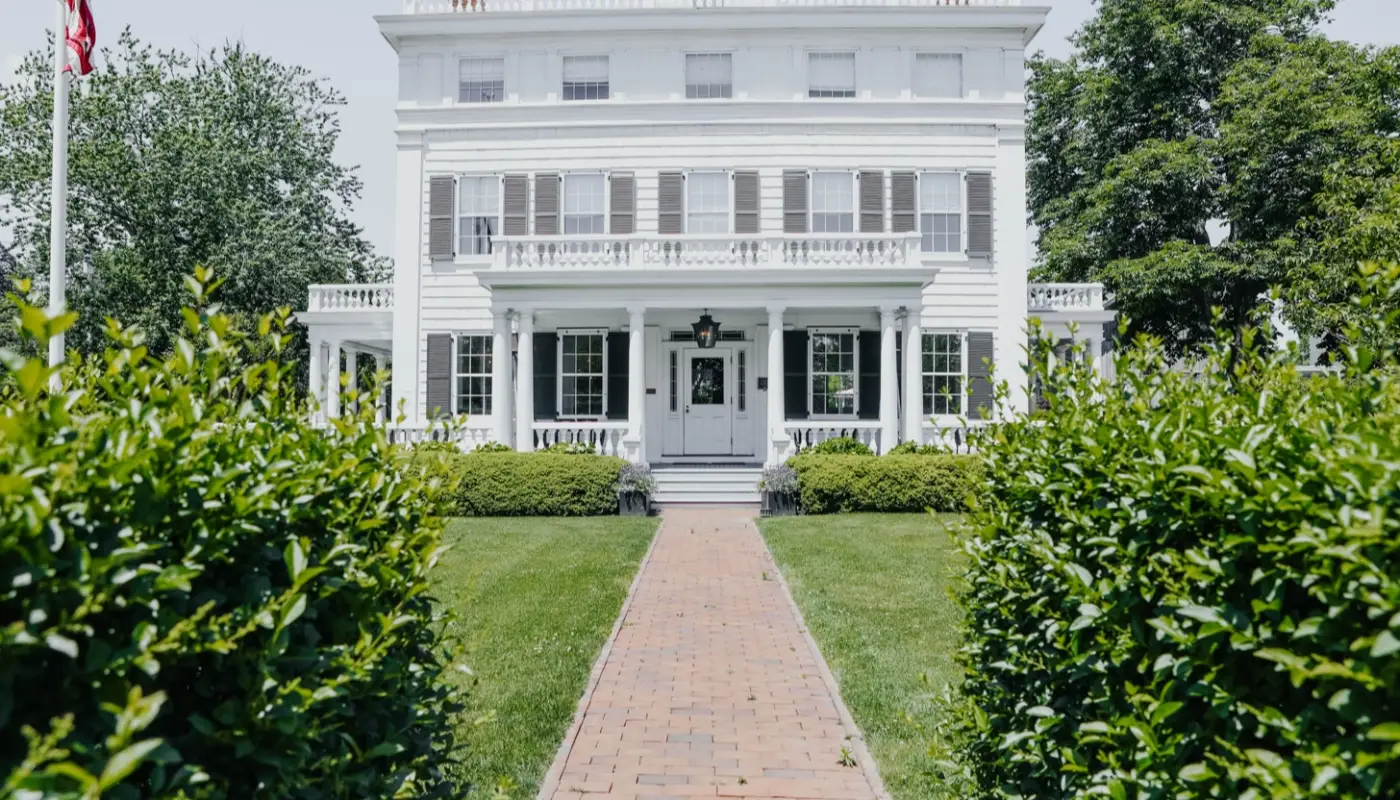
Topping Rose House in Bridgehampton is the polished play — a restored 19th-century mansion turned into one of the few true full-service hotels in the Hamptons, with a Jean-Georges restaurant on site, a heated pool, and a shuttle to the beach. The Maidstone, in the center of East Hampton, is the walk-everywhere boutique: 19 rooms, a heavy dose of Italian dolce vita under LDV Hospitality since its 2024 reopening, and the best Main Street address out here.

For quiet, cross the water. The Pridwin on Shelter Island has welcomed guests since 1927 and reopened under Cape Resorts as a beautifully restored beach resort on ten waterfront acres along Crescent Beach — rooms, cottages, a spa, and the kind of unhurried afternoons the rest of the Hamptons forgot how to have. The reborn Montauk Yacht Club on Star Island, dating to 1927 and now run by Proper Hospitality, is the marina-side option. And if the point of the trip is to reset, Shou Sugi Ban House in Water Mill is the East End's only true wellness retreat — a gated, 12-room spa compound with a plant-forward kitchen from Noma co-founder Mads Refslund.
Where Does the Hamptons Actually Eat and Drink?
The dining is better than the Hamptons' beach-town reputation suggests, and in July it books out fast. Reserve before you leave the city.
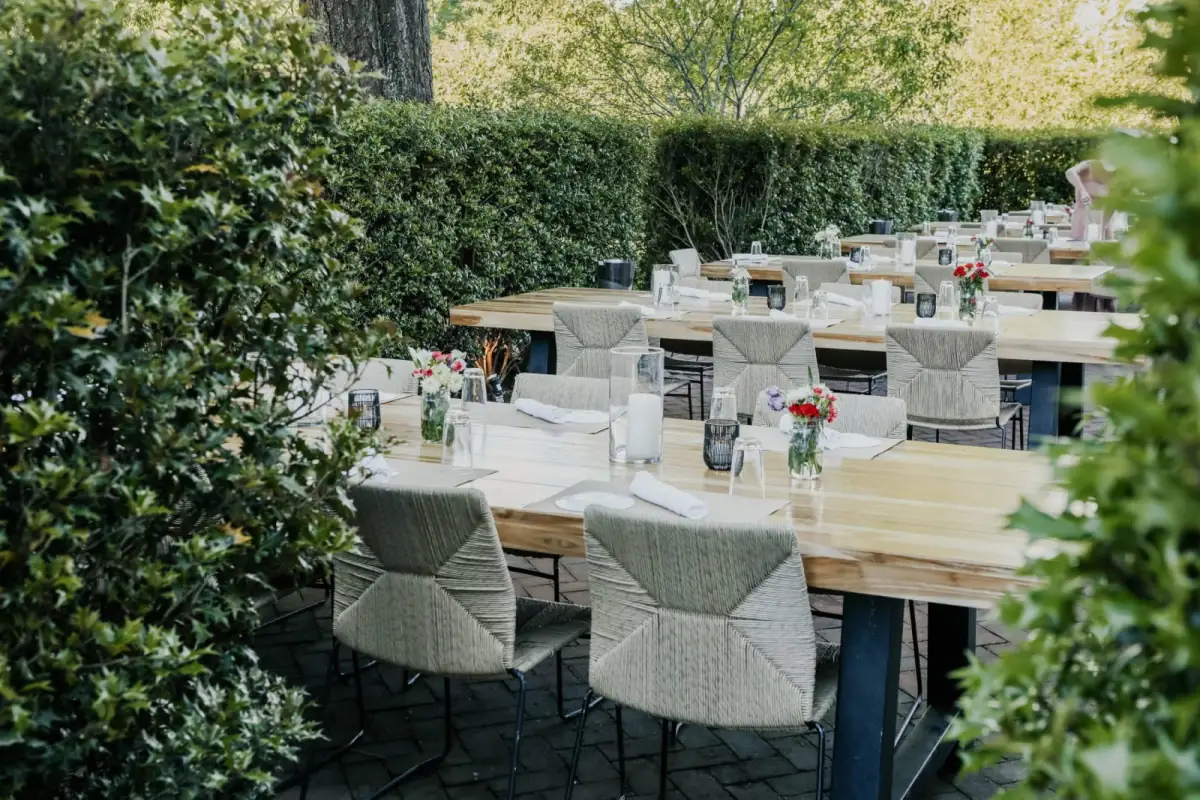
Jean-Georges at Topping Rose House is the anchor — open year-round, farm-to-table in the most literal sense, with much of the produce grown on the property's own farm. In East Hampton, the restaurant at The Maidstone is run by Scarpetta's Jorge Espinoza and turns out proper Italian; order the spaghetti alla Nerano. And no first July is complete without the rosé-and-lobster ritual at Duryea's in Montauk, where the view does half the work.

Beyond the tables, the real Hamptons ritual is the farm stand — corn, tomatoes, and just-picked peaches from the roadside markets around Bridgehampton and Sagaponack are the reason locals stay put in August. Build a lunch out of them once and you'll understand the whole place.
What You Actually Want to Know
Is July a good time to visit the Hamptons? Yes — it's peak. The ocean is warm, everything is open, and the light is at its best. The trade-off is crowds and prices; the Fourth of July week and every weekend run hot. For slightly calmer air and the same weather, aim for a weekday stay or wait for September.
How many days do you need? Three to four nights is the sweet spot — enough to settle into one town, take a day for another, and not spend the trip driving. Longer stays reward you here; there's a reason the longer-stay approach has taken over luxury summers.
Do you need a car in the Hamptons? For most trips, yes — the towns are spread out and taxis are scarce in season. The exceptions are staying in the heart of East Hampton or Sag Harbor, where you can walk to dinner, or on Shelter Island, where the scale is small. Many hotels lend bikes, and Blade drops you close enough that a car service can handle the rest.
Which is the most exclusive place to stay? For beachfront, Gurney's Montauk. For quiet privacy, Shelter Island. For being able to walk out your door into the scene, East Hampton. There is no single "best" — there's the one that matches the week you want.
Is the Hamptons good for families? Very. The resorts are set up for it, the beaches are calm, and Shelter Island and Montauk are made for kids. If you're traveling with several generations, our multigenerational trip guide covers how to make one house or hotel work for everyone.
The Hamptons look effortless from the outside, which is exactly why they're hard to book well — the right room, the right town, and the right table all move months ahead of the season. That's the part Noon's advisors handle every summer. Tell us the week you have in mind, and we'll build the version of the Hamptons you actually want.
By Amelia Ingram | July 7, 2026
Plan Your Next Journey
Work with a Noon Travel advisor for a trip that exceeds every expectation.
Get Started