The short version
In 2026, chartering a private jet runs from roughly $2,500 an hour for a light jet to $20,000-plus for an ultra-long-range cabin. Fly under 25 hours a year? Charter on demand or buy a jet card. Fly more, on a pattern? That's when fractional programs like NetJets and Flexjet start to make sense.
The first time most people fly private, the revelation isn't the cabin. It's the clock. You drive to a quiet terminal fifteen minutes before departure, the car pulls up to the aircraft, and you're climbing out of the airport before a commercial passenger would have cleared security. For a Miami–New York meeting day, that's not a flex — it's four recovered hours.
The industry, though, does itself no favors. Charter brokers, jet cards, memberships, fractional shares, empty legs — the buying options are layered in jargon, and the wrong structure can cost six figures of access you'll never use. The good news: the decision comes down to two questions. How many hours a year do you fly, and how predictable are those hours?
Here's the working knowledge — the version we walk clients through before their first booking.
What Does It Cost to Charter a Private Jet in 2026?
On-demand charter is the simplest entry point: you pay per trip, no commitment. In 2026, light jets run roughly $2,500–$4,000 per flight hour, midsize and super-midsize jets $4,000–$8,000, and heavy or ultra-long-range jets from about $8,500 to $20,000-plus, depending on the aircraft and route.
The hourly rate isn't the whole bill. Domestic U.S. charters add a 7.5% federal excise tax, per-passenger segment fees, and — with jet fuel volatile this year — fuel surcharges that can add 10–15% to the base rate. A realistic budget for a New York–Miami one-way on a midsize jet sits in the low-to-mid five figures, all in.

Charter, Jet Card, or Fractional — Which One Fits How You Fly?
Hours flown per year is the deciding variable. Under about 25 hours annually, on-demand charter or a jet card wins — fractional minimums and program floors will have you paying for access you won't use.
On-demand charter is pay-as-you-go through a broker or operator. Maximum flexibility, zero capital committed, but pricing floats with the market and peak-day availability is never guaranteed.
Jet cards and memberships prepay a block of hours at locked or semi-locked rates with guaranteed availability windows. VistaJet's VJ25, for example, is built around 25 hours a year on its uniform Bombardier fleet — the same silver-and-red aircraft, crewed to the same standard, operating across 187 countries. Its full Program membership adds guaranteed availability with as little as 24 hours' notice, and because the fleet is positioned globally, there are no repositioning fees — a real advantage on intercontinental itineraries.
Fractional ownership means buying an actual share of an aircraft — typically a five-year commitment, with a 1/16 share translating to roughly 50 hours a year. NetJets, the Berkshire Hathaway–owned giant with a fleet of more than 800 aircraft, is the category's deepest bench; Flexjet, its closest rival, flies a smaller fleet of roughly 300 but assigns dedicated crews to owners — the same pilots, trip after trip. Shares run well into six figures upfront, plus monthly management fees and an occupied hourly rate, and unlike a jet card, you recover a meaningful portion of your capital when the term ends.
The honest summary: charter for flexibility, cards for predictability, fractional for frequency. If you're flying 100-plus hours a year on the same routes, fractional math starts beating everything else.
The Aircraft Ladder, Decoded
You don't need to know forty aircraft types. You need to know three rungs.
Light jets — think Embraer's Phenom 300E, the best-selling light jet of the past decade — seat up to ten (six to eight, comfortably) with about 2,000 nautical miles of range. Perfect for Miami–New York, Aspen hops, island runs to the Bahamas.
Super-midsize jets like Bombardier's Challenger 3500 stretch to 3,400 nautical miles — coast-to-coast nonstop, or Miami to São Paulo with a stop — with a stand-up cabin and flat-floor comfort that makes a five-hour leg feel short.
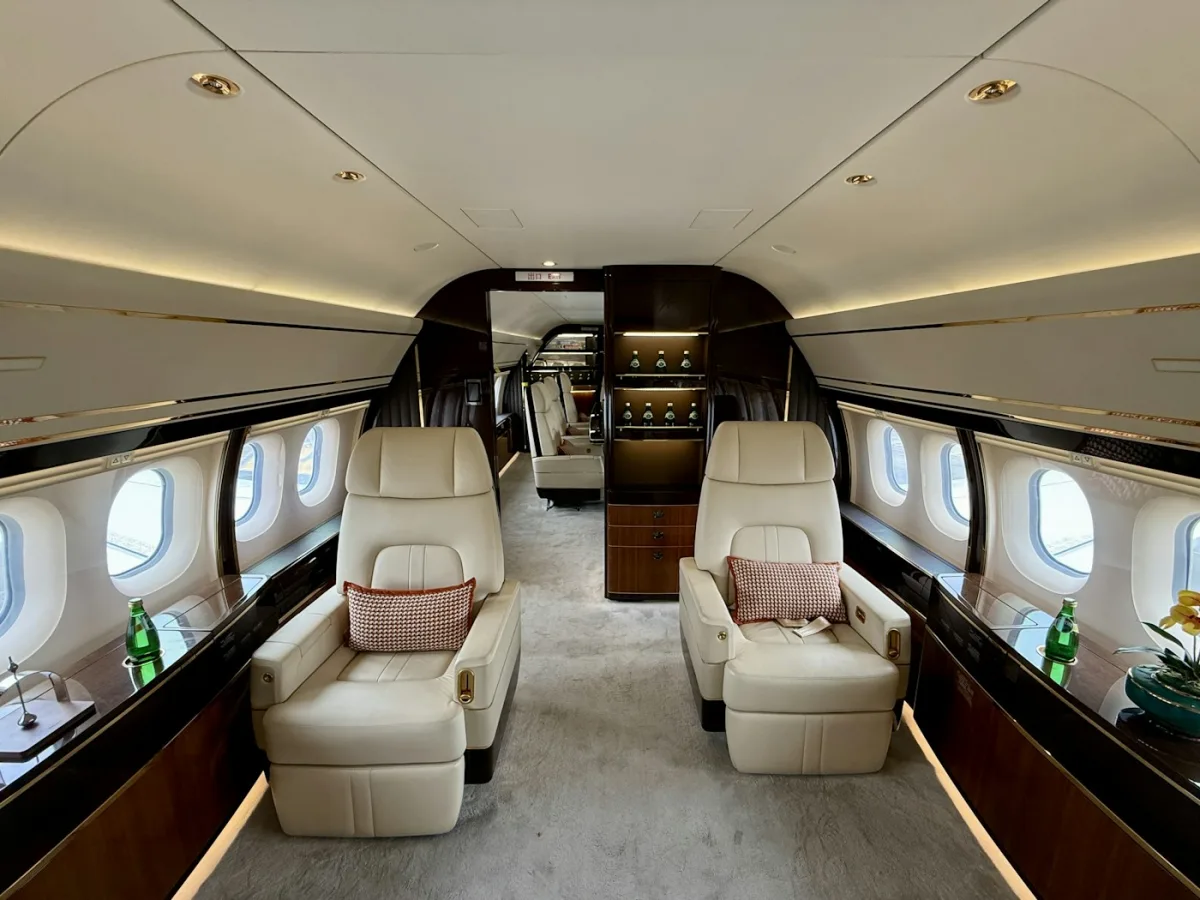
Ultra-long-range jets are the intercontinental class. Gulfstream's G700 flies 7,750 nautical miles and seats up to 19; VistaJet's Global 7500s stay airborne up to 17 hours nonstop. New York to Tokyo, no fuel stop, full bed. This is the category that replaces first class on the routes where first class is the competition.

How Do You Know an Operator Is Safe?
Two third-party audits matter, and you should ask for them by name: ARGUS Platinum and Wyvern Wingman. ARGUS Platinum is the highest tier of the ARGUS standard — an annual on-site audit covering crew experience minimums, a documented safety management system, and maintenance records. Wyvern Wingman goes a step further on crews, independently verifying individual pilot credentials in its own database rather than auditing only the company.
Any reputable broker will disclose an operator's rating before you book. If they hesitate, that's your answer. This is also where a layer of representation earns its keep — the same logic behind why a luxury travel advisor is worth it on the ground applies at 45,000 feet: someone whose job is to know which operators, which tails, and which crews are worth your family's trust.
Flying private also changes what's possible around the flight. Multi-stop itineraries that would be brutal commercially — three generations, two cities, one week — become simple, which is why jets pair so naturally with multi-generational trip planning. And if the appeal is the private-travel ethos at sea level too, Four Seasons' new yacht is the same idea with a hull.
What You Actually Want to Know
Is flying private worth it over first class?
On long-haul routes with great first-class products, often no — commercially, $10,000 buys a superb seat. Where private wins decisively: routes with no premium service, multi-city days, groups of six-plus (where per-seat math converges), and any trip where schedule control is the point.
What's an empty leg, and should I book one?
An empty leg is a repositioning flight — a jet flying without passengers to its next pickup — sold at 30–75% off standard charter rates. The catch: you fly the operator's route on the operator's schedule, and if the primary client cancels, your flight can vanish with theirs. Great for flexible travelers; wrong for a wedding.
How far in advance should I book a charter?
A week is comfortable for most domestic routes; 24–72 hours is routinely doable outside peak periods. For holiday weeks, major events, and school-break corridors, book as early as you can — peak-day availability is the first thing to disappear.
Can my dog fly with me?
Yes — in the cabin, no crate, no cargo hold. Pets flying beside their owners remains one of the most common reasons people charter in the first place.
Every itinerary Noon builds starts with one conversation — not a template. Start yours.
Further reading
- How to Book a Private Villa in the South of France
- How to Charter a Yacht in the Mediterranean
- Sailing Indonesia on Rascal: Komodo and Beyond
- A Private Island on the Côte d'Azur Just Got a Wellness Programme Worth Flying For
- Le Logis, Cognac: The Private Estate That Books Through Relationships
- How to Plan a Luxury Antarctica Expedition
- Business Class vs. First Class: When It's Worth It
Plan Your Next Journey
Work with a Noon Travel advisor for a trip that exceeds every expectation.
Get Started