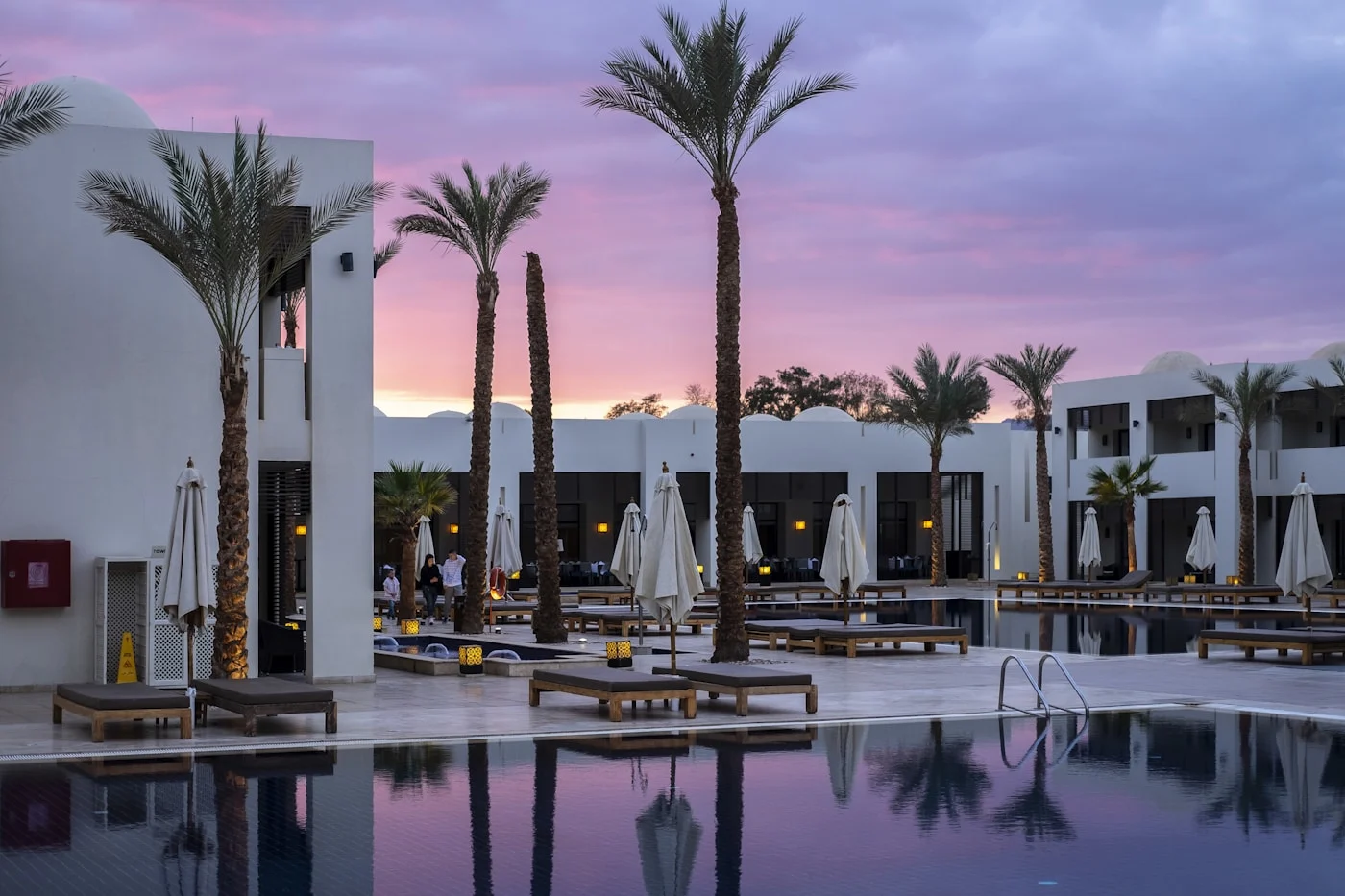

You are planning the trip. The budget is real. You have narrowed the destination down to somewhere with a coastline, a good food scene, and weather you don't have to apologize for — and now you are stuck on the same question every traveler with this kind of money eventually asks: Aman or Four Seasons.
The Google rabbit hole does not help. Both are at the top of the market. Both will charge you a number that makes you pause. Both will appear on the same list of the world's best hotels, often in the same paragraph. So which one is actually right for the trip you are trying to take?
The honest answer is that they are not really competing for the same trip. Once you understand what each brand is built to do, the choice gets easier — and so does the post-trip review you are going to give yourself.
TL;DR: Aman and Four Seasons both sit at the top of the luxury market, but chase different objectives. Aman is a small-scale retreat brand — typically 30 to 50 rooms in remote or culturally significant locations, built around space, silence, and a sense of place. Four Seasons is a polished, full-service hotel brand of more than 130 properties, with a consistent service standard across cities, resorts, and now yachts.
How are the two brands actually different?
The clearest way to read the difference is by size and intention. Aman opened in 1988 when Adrian Zecha built Amanpuri in Phuket — a 40-room resort named with the Sanskrit word for peace. Almost every Aman that has opened since holds that scale: small, low-density, often tucked into a national park, a UNESCO site, or a stretch of coast nobody else has built on. The portfolio now runs to roughly 36 properties across about 20 countries. By design, you will not find an Aman in every city you visit.
Four Seasons started a generation earlier, in 1961, when Isadore Sharp opened a 125-room motor hotel on Jarvis Street in Toronto. The brand grew on a single operating idea — Sharp's Golden Rule service code — applied at scale, now across more than 130 hotels and resorts in 47 countries. Four Seasons resorts can run several hundred rooms. The point is consistency: a Four Seasons in Bangkok, Cabo, and Paris should feel like the same standard of service in three different climates.
That is the headline difference. Aman is built around the rarity of the location. Four Seasons is built around the predictability of the service.
Is Aman more luxurious than Four Seasons?
This is the question everyone Googles, and the answer depends on what you mean by luxurious.
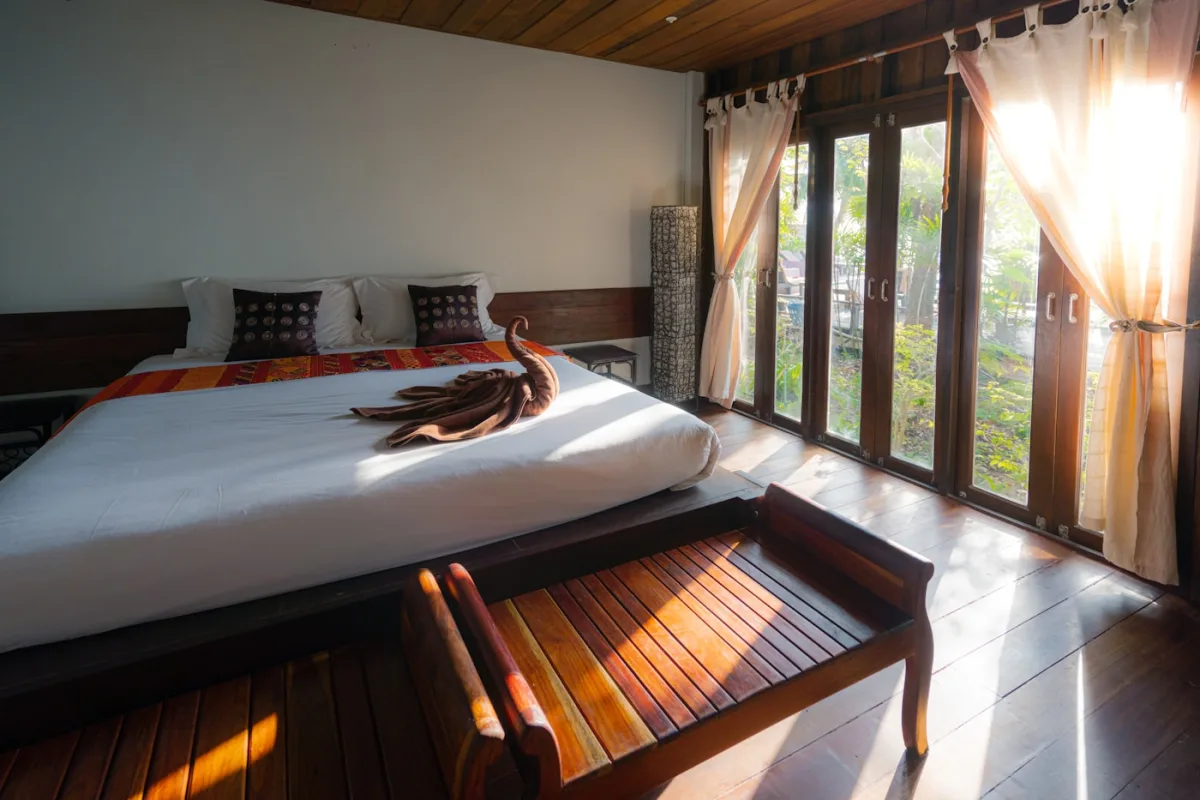
If luxurious means quiet, space, and being one of forty guests in a place you flew a long way to get to, Aman wins almost every time. Properties like Amanvari on the East Cape of Baja and Amansanu in the Texas Hill Country are built around very small key counts, large spas, deep food programs, and a guest-to-staff ratio that runs closer to four employees per guest than the industry norm. The rooms are larger than the city standard, the bathrooms are larger than that, and very little signals hotel once you are inside the gates.
If luxurious means recognized excellence — full-service spa, multiple restaurants, marquee architecture, a kids program, a concierge who can move mountains because Four Seasons does this in 47 countries — Four Seasons matches Aman tier for tier and often exceeds it on amenities. Properties like Four Seasons Mykonos and the Naples Beach Club in Florida bring a polish to the resort experience that Aman does not try to replicate.
Both are at the top of the market. But top of the market is doing a lot of work in that sentence. They are aiming at different definitions of it.
What about the price tag?
There is no clean generalization, but a directional one: Aman is typically more expensive on a like-for-like basis. Entry rates at Aman New York in the Crown Building run roughly $2,400 to $3,200 a night, with larger suites priced higher still. A flagship Four Seasons in a comparable market — Bangkok, Bali, Maui, Cap-Ferrat — will usually open lower, with more rate tiers and broader inventory.
The reason is mechanical. Aman owns the scarcity. With 30 to 50 rooms in most properties, demand outruns supply by a wide margin, and the brand prices for it. Four Seasons has more keys to fill, more brand-driven distribution, and more rate flexibility — and the floor price is usually below Aman's, even on identical dates.
If price is the variable you are optimizing for, neither brand will hand you a deal. If value is the variable, the answer changes with the trip type, which is where the real choice lives.

Which brand wins for which trip?
Here is the simple version we tell clients.
Honeymoons and milestone anniversaries. Either, but for very different reasons. Aman if you want to disappear with one other person for ten days — Amanyara in the Turks and Caicos, Amanjiwo near Borobudur, Amanjena outside Marrakech. Four Seasons if you want resort programming, multiple dining venues, and the ability to host a small wedding on property without anyone breaking a sweat.
Multi-generational and family trips. Four Seasons, almost every time. The kids' clubs, the room configurations, the pool footprint, the ability to book six rooms at once and connect three of them — that is a Four Seasons strength. Aman runs lean on inventory and is not built for groups of nine.
Cultural immersion trips. Aman. Amankora across five Bhutanese lodges, Amangani above Jackson Hole, Amanjena outside Marrakech. Four Seasons can do cities beautifully, but Aman is the brand that drops you next to the temple, the rice terrace, or the ranch.
City stays. Four Seasons has the deeper bench — Paris, Hong Kong, Istanbul, Madrid, Milan, Mexico City, Tokyo, Seoul. Aman has a handful of urban properties. The exception is when you specifically want the smaller, quieter, all-suite Aman experience in a global capital. Aman Tokyo's 84 keys and Aman New York's 83 suites do something Four Seasons does not do in the same cities.
Movement and sailing. Four Seasons. The new Four Seasons Yachts brings the brand's service standard to sea, and Aman does not have a like-for-like product on the water yet.
What You Actually Want to Know
Is Aman or Four Seasons better for a first-time luxury traveler?
Start with Four Seasons. The product is more familiar to most travelers — recognizable resort layouts, a full-service spa, a dining program built for variety. Aman is for the second or third luxury trip, when you already know what you want a hotel to do, and what you would rather it didn't.
Are Aman's prices actually worth it?
For the right trip, yes. Aman builds for low density and a high staff ratio, and that is what you are paying for. The math only stops working if you do not actually want low density. If you want a buzzy resort with a busy beach club, an Aman will feel quiet to the point of empty.
Do Aman and Four Seasons compete for the same guest?
Sometimes, but less often than the rate cards suggest. Aman's traveler is usually choosing between an Aman and a private villa. Four Seasons' traveler is usually choosing between a Four Seasons and a Rosewood, Mandarin Oriental, or Ritz-Carlton Reserve. The two brands overlap in price, but rarely on the same shortlist.
Which brand is in better form in 2026?
Both are in strong form. Aman has a heavy 2026 calendar that includes Amanvari in Mexico's East Cape and Amansanu in the Texas Hill Country. Four Seasons has the Mykonos opening, the Naples Beach Club, the Red Sea at Shura Island, and the second Four Seasons Yacht in active build. Neither brand is slowing down.
Is there a third brand worth considering?
Yes. Rosewood, Mandarin Oriental, Belmond, Capella, Six Senses, Cheval Blanc, and Bulgari Hotels each own a different corner of the ultra-luxury market. A good travel advisor will not assume the answer is Aman or Four Seasons until they understand what kind of trip you are actually trying to take.
Planning a trip where the choice between Aman and Four Seasons actually matters? That is what a Noon advisor does for you — the right brand, the right property, the right room, the right rate. One conversation, one itinerary, no compromises.
Further reading
Plan Your Next Journey
Work with a Noon Travel advisor for a trip that exceeds every expectation.
Get Started