
The short version
The aurora is at the strong end of its cycle this winter. The best window runs from late September 2026 through late March 2027, with the equinoxes and the new-moon weeks around September 11 and March 8 the sharpest bets. Base yourself in Finnish Lapland, Swedish Lapland, or Alta, Norway, give it three clear nights, and sleep under glass.
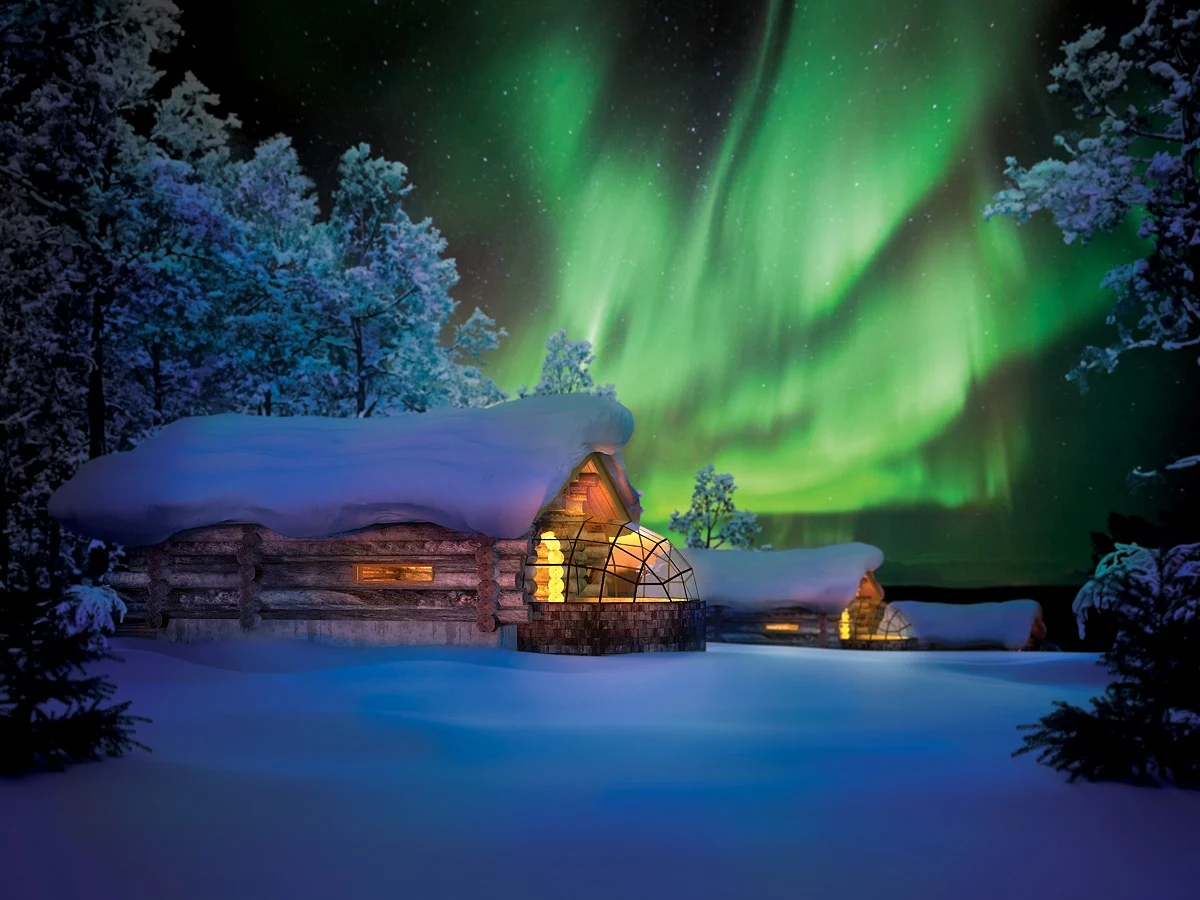
There is a version of chasing the northern lights that involves a rented car, a thermos, and four hours parked on a frozen roadside hoping the clouds break. It works, sometimes. It is also the opposite of how anyone should spend a winter holiday. The better version is a heated glass roof over your bed, a guide who knows which lake to drive to when the forecast turns, and a chef who has dinner waiting whether the sky performs or not.
This winter is the one to do it. We are still inside the elevated stretch that follows the October 2024 solar maximum, and auroral activity often peaks in the two or three years after the sun does. Translation: 2026-27 should be one of the strongest aurora seasons in over a decade. The lights are there for the taking. The only real decision is where to stand when they arrive.
Here is how we route it for clients who want the aurora without the roadside part — when to go, how to actually improve your odds, and the five Arctic bases worth booking.
When should you go?
Late September 2026 through late March 2027. You need two things at once: a sky dark enough to see the lights and a sun active enough to produce them. That combination doesn't exist in the bright Arctic summer, which is why the season is a winter one.
Within that window, two things sharpen your odds. The equinoxes — late September and again in March — correlate with stronger geomagnetic activity, a quirk of how Earth's field lines up with the solar wind. And the darker the sky, the better the contrast, so aim for the new-moon weeks rather than a full moon washing out the show. This season, the new moons around September 11, 2026 and March 8, 2027 fall squarely in the two best windows. The lights themselves are most active between roughly 10 p.m. and 2 a.m., so this is not an early night.
How likely are you actually to see them?
Likelier than the internet's horror stories suggest — if you do one thing: stay at least three nights. The aurora is reliable over a season but unpredictable on any single evening, and the real enemy is rarely a quiet sun. It's cloud. Give yourself three or four nights in the right place and the odds of one clear, active night climb sharply.
Where you stand matters as much as when. The single most useful piece of aurora geography is Abisko, in Swedish Lapland: Lake Torneträsk and the surrounding peaks create a rain shadow that tears a reliable patch of clear sky — locals call it the “blue hole” — above the village even when the coast is socked in. Its Aurora Sky Station, reached by chairlift up Mount Nuolja, is built around exactly this. Alta, in Norway, earned the same reputation a century ago; it hosted one of the world's first permanent aurora observatories for the same reason — dependably clear inland skies.
Finland: glass igloos at Kakslauttanen
If the image in your head is a warm bed under a transparent dome with the aurora directly overhead, that image is Finnish Lapland, and it is largely Kakslauttanen Arctic Resort's doing. Set in the Saariselkä fell region, about 250 kilometres north of the Arctic Circle, the resort more or less invented the glass-igloo genre. The pick is the Kelo-Glass Igloo: a traditional log chalet built from Lapland's dense kelo pine fused to a glass-domed bedroom, with its own fireplace, private sauna, and kitchenette. You get the practical comforts of a cabin and the ceiling of an observatory.
The glass-igloo season here runs from late August to the end of April, which makes Saariselkä one of the longest-window bases in the Arctic. Book the West Village if you want more space and the newer kelo units; the East Village smaller igloos are the value play if it's just the two of you.
Sweden: Treehotel, ICEHOTEL, and the clearest skies going
Swedish Lapland gives you the widest spread of ways to sleep under the aurora. In the riverside village of Harads, Treehotel hangs eight architect-designed rooms in the pines above the Lule River — the Mirrorcube, the UFO, the Bird's Nest, the Blue Cone, and the newest, Biosphere, wrapped in 340 bird nests by the Danish studio BIG. The 7th Room, the largest, puts two bedrooms and a suspended net terrace at treetop height, which is a fine place to watch the sky.

An hour and a half north, near Kiruna, ICEHOTEL is the original ice hotel — rebuilt every winter in Jukkasjärvi from roughly 2,500 tonnes of ice harvested from the Torne River, its art suites carved by a rotating cast of international artists. A night in a below-freezing ice room is a one-time thing, not a week's plan, so pair it with a warm room; ICEHOTEL 365, the solar-cooled permanent wing that opened in 2016, lets you do the ice experience year-round. Then, for the actual sky-watching, point yourself at Abisko and its blue hole — the most bankable clear skies in the region.
Norway: Sorrisniva and the Alta advantage
Norway's coast is dramatic but cloudy; the trick is to go inland, and Alta is the classic choice. Sorrisniva sits on the Alta River and runs two properties that pair perfectly. The Arctic Wilderness Lodge is the year-round base — 24 heated rooms and suites with floor-to-ceiling glass and private balconies over the river, sleeping up to 50. Next to it, from around December 20 to early April, the Sorrisniva Igloo Hotel — the world's northernmost — is carved fresh each winter, its suites lit and sculpted to a new theme every season and held at a steady -4°C to -7°C.

The move here is simple: sleep warm in the lodge, spend an hour or two in the igloo hotel as an experience rather than a full night, and let Alta's dependable inland skies do the heavy lifting. If you'd rather be near Tromsø for the restaurants and the airport, that works too — just build in the extra nights, because the coast clouds over more often.
Iceland: the lights, plus everything else
Iceland is the pick when you want the aurora to be one act in a bigger show. You're farther south than Lapland, so the lights sit lower and less overhead, but the trade is a landscape of glaciers, black-sand coast, and geothermal water that no Nordic rival matches. Deplar Farm, on the remote Troll Peninsula in the north, is the standout base — a former sheep farm turned all-inclusive lodge with a geothermal indoor-outdoor pool you can float in while the sky works above you. We lay out the full route, including a design-hotel start in Reykjavík, in our Iceland itinerary. If your instinct for winter travel is warmer light and longer days, our cool-weather summer guide and our Norwegian fjords guide cover the other side of the Nordic year.
What You Actually Want to Know
What is the best month to see the northern lights? There isn't a single best month, but the equinox stretches — late September into October, and February into March — tend to bring stronger activity, while the deep-winter months of December and January give you the longest, darkest nights. Aim for a new-moon week in any of them.
How many nights do I need? Plan a minimum of three, ideally four. The aurora is a near-certainty over a season and a coin toss on any one night, mostly because of cloud. More nights is the only real insurance.
Finland, Sweden, or Norway for the best odds? For the most reliably clear skies, Abisko in Sweden and Alta in Norway are the standouts. For the glass-igloo-over-your-bed experience, Finnish Lapland. Many of our clients do two bases in one trip to hedge the weather.
Is 2026-27 a good year to go? Yes. Auroral activity often peaks in the years just after a solar maximum, and the last one was in October 2024, so this season should be unusually strong.
Will I definitely see them from a glass igloo? Only if the sky is clear and active that night. The glass roof is a comfort upgrade, not a guarantee — which is why the right base, enough nights, and a guide who will drive you to clearer skies still matter.
The difference between a good aurora trip and a wasted one usually comes down to two calls: the right week and the right base. Noon's advisors book these Arctic lodges every winter and know which nights, which rooms, and which backup plan to have ready. Tell us where you want to go.
Plan Your Next Journey
Work with a Noon Travel advisor for a trip that exceeds every expectation.
Get Started