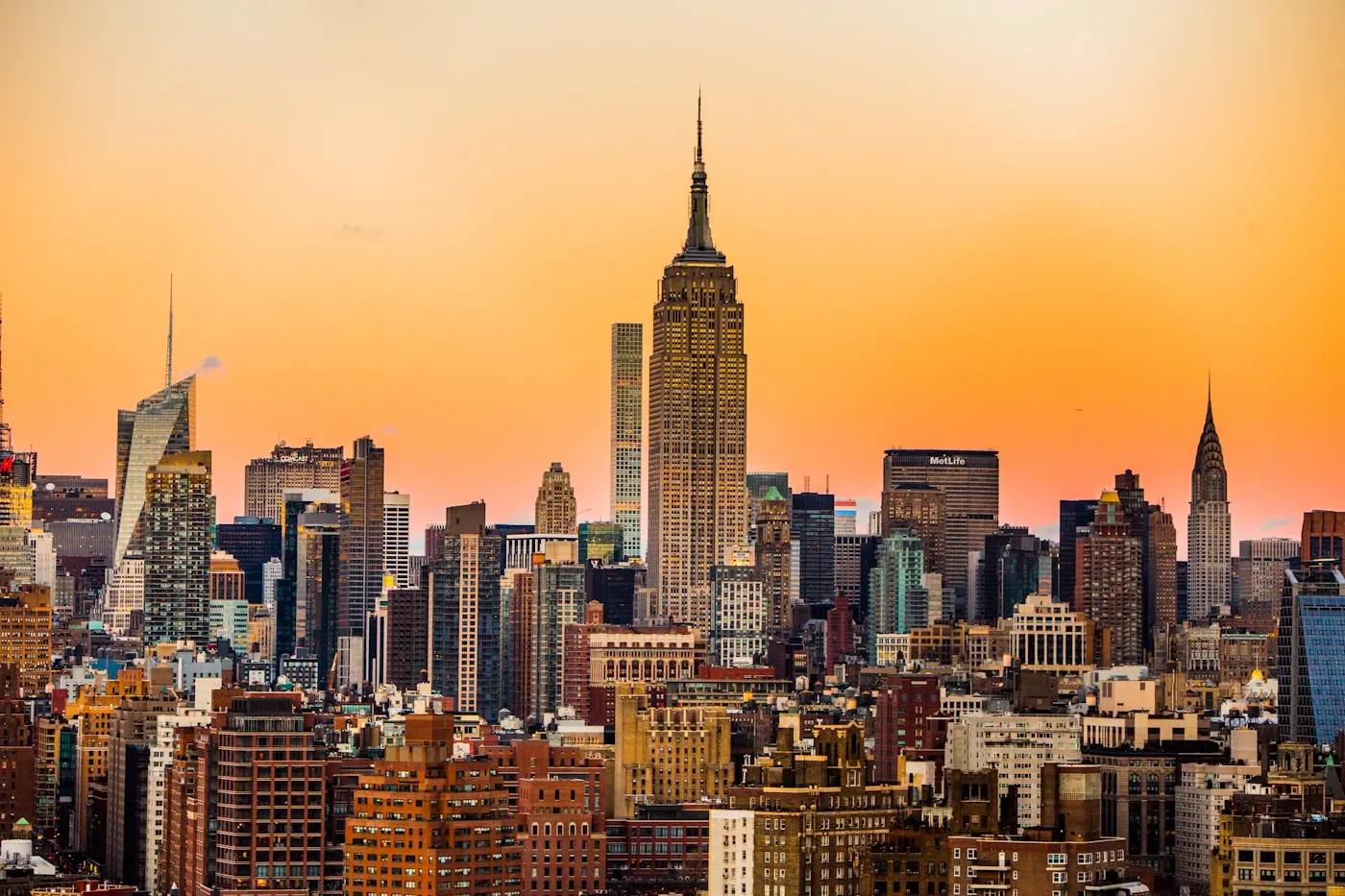

The Waldorf Astoria New York closed in May 2017. Everyone in the hotel industry knew it would reopen eventually — the building is a Designated New York City Landmark, a National Historic Landmark, and one of the most architecturally significant Art Deco towers on Park Avenue. The question was what it would become when it came back.
The answer arrived in stages. The hotel began its opening season on July 15, 2025. The Grand Ballroom reopened on November 6, 2025. What Anbang Insurance and Hilton created over eight years and billions of dollars of investment is a hotel with 375 rooms and suites — down from the original 1,400 — and 372 private residences above. The rooms that remain are among the largest in Manhattan. The Art Deco bones are intact. And the address, 301 Park Avenue between 49th and 50th Streets, is still the address.
TL;DR: Waldorf Astoria New York reopened in 2025 after an eight-year restoration — 375 hotel rooms and suites (most exceeding 570 sq ft), Lex Yard by Chef Michael Anthony, Peacock Alley revived as a cocktail destination, Guerlain Wellness Spa at 20,000 sq ft, and the Grand Ballroom restored. The most consequential New York hotel reopening in a generation.
What the Restoration Actually Did
The original Waldorf Astoria had 1,400 rooms. The restored property has 375 hotel rooms and suites, with 372 private residences occupying the upper floors. That math tells you what the renovation prioritised: space over volume. The majority of hotel rooms now exceed 570 square feet — a standard that puts them among the largest in Manhattan at any price point, not just at the luxury tier.
The Art Deco architecture that made the building a landmark has been preserved and restored. The original 1931 tower by Schultze & Weaver — which took the design vocabulary of the Chrysler Building and applied it to a hotel — retains its defining features: the bronze entrance doors, the mosaic tile floors, the ornamental plasterwork in the public spaces, the proportions of rooms that were built when New York hotels still believed in grandeur as a function of hospitality rather than a cost to be minimised.
The private residences on the upper floors were designed by Jean-Louis Deniot — one of the most celebrated interior designers in France. Hotel guests and residents share 50,000 square feet of building amenities. The hotel and residences operate as separate but physically integrated entities, which is the structure that made the economics of the restoration viable. It is also the reason the room count is what it is.
Lex Yard, Peacock Alley, and Yoshoku
The culinary programme is led by three concepts, each with a specific identity.
Lex Yard is the signature restaurant, led by Chef Michael Anthony — the James Beard Award–winning chef who spent fifteen years running Gramercy Tavern, one of New York's defining American restaurants. The concept draws on the same philosophy: seasonal American cooking, local sourcing, rigorous technique applied with restraint. It is a serious restaurant, not a hotel restaurant pretending to be serious.
Peacock Alley is the revival of the Waldorf's most famous social space — the corridor where society moved between the two original hotel buildings and where the cocktail culture of the 1930s was, in meaningful ways, invented. The revived Peacock Alley is a cocktail destination in its own right, developed in partnership with Jeff Bell, one of the most respected American bartenders of his generation. It operates as the Waldorf's all-day lobby bar and evening cocktail programme.
Yoshoku is the third concept — a Japanese dining experience that draws on the yoshoku tradition: Western techniques absorbed and reimagined through Japanese sensibility. It rounds out a dining programme that covers morning through late evening without repetition.
The Grand Ballroom and the Event Spaces
The Grand Ballroom is the reason the Waldorf Astoria has always been what it is in New York's civic imagination. State dinners. Presidential inaugurations. The annual charity galas that define the city's social calendar. When it reopened on November 6, 2025, it did so as an opera-inspired space — the restoration took the original ballroom and gave it acoustic properties and visual grandeur that the original version approached but never fully achieved.
The 43,000 square feet of events and meetings space that surrounds the Grand Ballroom — the Basildon, Jade, and Astor Rooms — reopened on September 1, 2025. These are the spaces where the Waldorf's function as a civic institution gets expressed, and their scale and finish position the property as the premier event venue in midtown Manhattan by a significant margin.

The Guerlain Wellness Spa
The Guerlain Wellness Spa spans 20,000 square feet and operates as one of the more seriously programmed hotel spa facilities in New York. Guerlain's spa division — which operates globally in properties including the Hôtel de Crillon in Paris and the Waldorf Astoria on the Palm in Dubai — brings its proprietary Orchidée Impériale treatment protocols and its approach to longevity-focused wellness to 301 Park Avenue. The spa includes a fitness centre and is available to both hotel guests and, separately, to residents of the private residences above.
What to Know Before You Book
A few practical notes for guests planning around the reopening. The hotel opened in phases: rooms from July 2025, event spaces from September 2025, Grand Ballroom from November 2025. All phases are now fully operational.
Room rates reflect the new positioning — this is not the Waldorf at 1,400-room volume pricing. The expanded room sizes, the quality of the restoration, and the address command rates that are competitive with the finest hotels in midtown. Book directly through the Waldorf Astoria website or through a Hilton Honors–affiliated advisory relationship to access Hilton for Luxury preferred partner benefits.
If New York is part of a broader US trip, our guide to the best luxury hotels in New York covers the full competitive set — including The Mark, Four Seasons, and the Ty Warner Penthouse — and how the Waldorf's reopening changes the conversation.
What You Actually Want to Know
When did Waldorf Astoria New York reopen?
The hotel began its opening season on July 15, 2025. The 43,000 sq ft event spaces including the Basildon, Jade, and Astor Rooms opened September 1, 2025. The Grand Ballroom reopened November 6, 2025. All facilities are now fully operational.
How many rooms does the restored Waldorf Astoria New York have?
375 hotel rooms and suites — down from the original 1,400 — with 372 private residences above. The majority of hotel rooms exceed 570 square feet, making them among the largest standard rooms in Manhattan.
What restaurants are at Waldorf Astoria New York?
Lex Yard, led by Chef Michael Anthony (formerly of Gramercy Tavern), for signature American dining. Peacock Alley, the revived cocktail destination developed with bartender Jeff Bell. Yoshoku, a Japanese dining concept. Plus in-room dining available 24 hours, a continuation of the Waldorf's claim to have invented room service in 1931.
What is the spa at the new Waldorf Astoria New York?
The Guerlain Wellness Spa at 20,000 square feet, operated by Guerlain's global spa division. It includes treatment rooms, a fitness centre, and Guerlain's Orchidée Impériale and longevity-focused protocols.
How does the restored Waldorf Astoria compare to other luxury hotels in New York?
The Waldorf's restored room sizes and the quality of its event spaces put it in a distinct category. No other New York hotel has its combination of architectural significance, ballroom scale, and address. The Four Seasons on 57th Street, The Mark on the Upper East Side, and the Baccarat Hotel each occupy their own tier — the Waldorf's reopening does not displace any of them but adds something to Manhattan's luxury landscape that has been missing for eight years.
Noon's advisors know which rooms at the restored Waldorf are worth requesting and which ones to avoid. Tell us where you want to go.
By Amelia Ingram | May 18, 2026
Further reading
- Waldorf Astoria London — Admiralty Arch: What to Know Before It Opens
- The Best Hotel Bars in New York City Right Now
- Park Hyatt Tokyo Is Back — and the Renovation Was Worth the Wait
- The Vineta Hotel Is Now Open in Palm Beach — Oetker Collection’s U.S. Debut
- Inside Naples Beach Club — Four Seasons’ Most Anticipated Florida Debut
Plan Your Next Journey
Work with a Noon Travel advisor for a trip that exceeds every expectation.
Get Started