
The short version
Summer empties the Swiss Alps of skiers and fills them with hikers, lake swimmers and spa-goers — and the grand hotels trade winter prices for warm light and open trails. Go between late June and mid-September. July and August run warmest; early July is the quietest. Base yourself in the Engadin, on Lake Lucerne, or under the Matterhorn at Zermatt.
Switzerland has a second season, and most people book the wrong one. The Alps you see on a postcard — the snow, the lifts, the après crowd — is the winter version, and it is the one everyone pays a premium for. The summer version is greener, longer, often sunnier, and routinely cheaper at the same addresses. The skiers leave. The valleys turn the deep, improbable green of an alpine July. The same Belle Epoque hotels that charge winter rates in February quietly open their terraces and their outdoor pools.
This is the case for going in summer, and for going soon. Wildflowers and high passes peak from late June. Lake water is warm enough to swim by July. And the hotels that define Swiss hospitality — the family-run palaces of St. Moritz, Gstaad and Zermatt — are open, unhurried, and running their best wellness programmes while the snow is gone.
Here is where to base yourself, when to go, and whether the famous train is worth a day of your trip.
Why go to the Swiss Alps in summer?
Because it is the better season for almost everything except skiing. Summer in the high Alps runs roughly June through September, and the trade-off is simple: you give up the snow and gain the trails, the lakes, the long light and a calmer hotel.
The weather rewards it. The Engadin valley around St. Moritz claims more than 300 days of sunshine a year and sits near 1,800 metres, which keeps July and August daytime temperatures in a comfortable high-teens-to-low-20s Celsius range — warm in the sun, cool enough to hike, and cold enough at night to need a sweater. Afternoon showers are common rather than constant; mornings are usually the clear window. The one thing to plan around is the crowd: August is the busiest month, driven by Italian holidaymakers around mid-month Ferragosto. Late June and early July are the calmest stretch of the season.
It is also the value window. Outside the ski months, the same suites cost less, the dining rooms are easier to book, and the staff have time. If you have read our case for staying longer in fewer places, the Alps in summer is the argument made physical — one valley, a week, and no rush.
The summer hotels worth the altitude
Switzerland's grand hotels are not interchangeable. Each sits in a different valley with a different reason to be there in summer. These are the bases worth building a trip around.
St. Moritz and the Engadin — Badrutt's Palace
St. Moritz invented alpine tourism, and its lakes are the summer draw the brochures forget. The chain of Engadin lakes — St. Moritz, Silvaplana, Sils — turns into a watersports valley once the ice goes: Silvaplana is one of Europe's best windsurfing and kitesurfing lakes, fed by the reliable afternoon Maloja wind. Above them run hundreds of kilometres of marked hiking and biking trails.

The address is Badrutt's Palace, the turreted landmark above the lake that has run since 1896 and keeps around 130 rooms and suites open in summer. Ask for a lake-facing room on a high floor; the morning view down the valley is the reason to be here.
Gstaad — Gstaad Palace
Gstaad is the discreet one — a car-light village of chalets in the Bernese Oberland that trades flash for privacy, which is exactly why it works in summer. The Gstaad Palace has crowned the hillside since 1913 and is still run by the same family, the Scherzes, three generations on. It opens for the summer season from June, with roughly 90 rooms and suites after years of combining smaller rooms into larger ones. The pull here is hiking and quiet: trail networks out the door, a 30-metre pool, and a tennis-and-spa rhythm that suits a longer stay.
Andermatt — The Chedi Andermatt
Andermatt is the newcomer that changed the map. A once-sleepy garrison town at the centre of the Swiss passes, it now holds The Chedi Andermatt, the Jean-Michel Gathy-designed hotel that pairs alpine timber with Asian restraint across 123 rooms and suites. It is one of the most decorated hotels in the country, and in summer it is a base for the high passes — Furka, Susten, Gotthard — that ribbon out in every direction for drivers and cyclists.
Lake Lucerne — Bürgenstock Resort
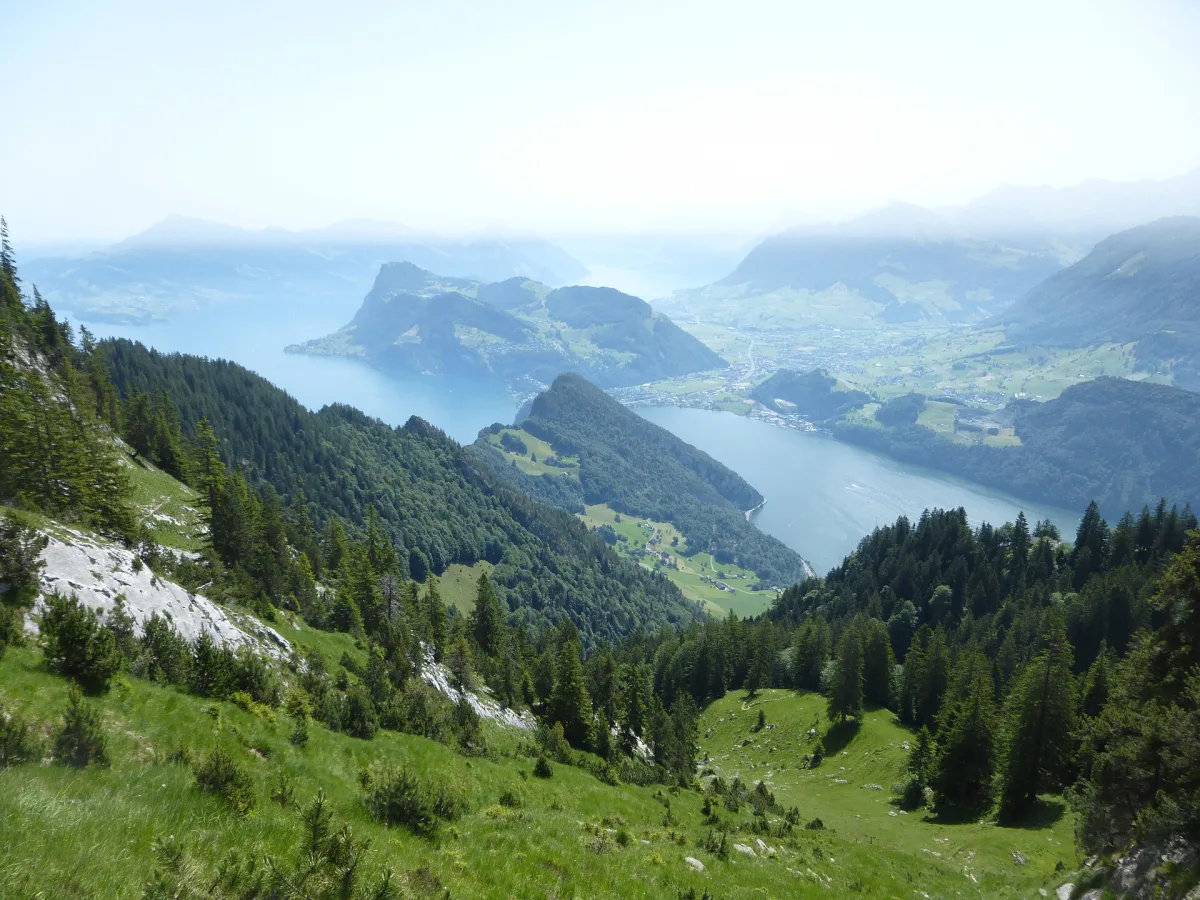
For water and wellness over altitude, go to the Bürgenstock. The 60-hectare estate sits on a ridge some 500 metres above Lake Lucerne, and its centrepiece is a 10,000-square-metre Alpine Spa whose heated outdoor infinity pool appears to spill straight off the cliff into the lake below. It is one of the most photographed pools in Europe and earns a place on any list of the best hotel pools in the world. Add a nine-hole golf course, a cliff walk, and a short boat ride to Lucerne itself, and it makes a strong case for a stay built around doing very little.
Interlaken and the Jungfrau — Victoria-Jungfrau
Interlaken sits between two lakes with the Jungfrau massif filling the skyline, and it is the launch point for the region's headline summer scenery: the Lauterbrunnen valley, the cliff villages, and the high railways up toward the glaciers. The Victoria-Jungfrau Grand Hotel & Spa has anchored the town for more than 150 years, with 216 rooms and suites and a 5,500-square-metre spa that adds an outdoor pool area for the summer. It is the wellness base of the region — and if a restorative trip is the whole point, it belongs in the same conversation as the best longevity retreats in Europe.

Zermatt — Mont Cervin Palace
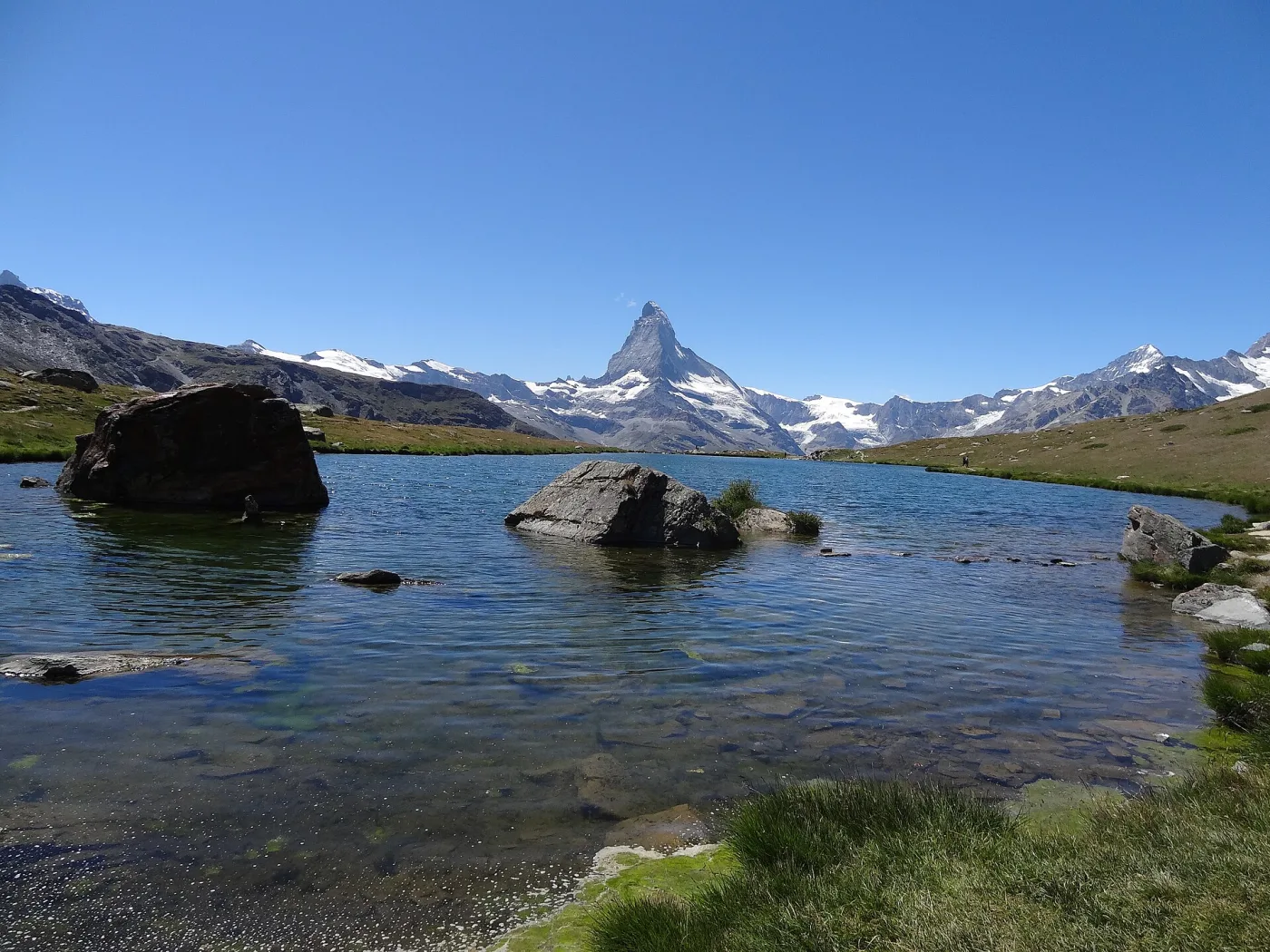
And then there is the Matterhorn. Zermatt is car-free, reached by train, and built entirely around the most recognisable mountain in the Alps — which in summer means 400 kilometres of marked hiking trails fanning out from the village, including the lake-and-mountain walks where the peak doubles in the still morning water. The Mont Cervin Palace has been run by the Seiler family since 1857, the dynasty that effectively built Zermatt tourism, and pairs its old-guard service with a 1,700-square-metre spa and an outdoor pool facing the mountains.
Is the Glacier Express worth it?
Yes — once, and only if you book the right seat. The Glacier Express links two of the bases above, St. Moritz and Zermatt, on a roughly 290-kilometre, seven-and-a-half-hour run across 291 bridges and through 91 tunnels. It is marketed, accurately, as the slowest express train in the world, and the point is the window, not the speed: glaciers, gorges, high passes and the Oberalp summit, all under a panoramic glass roof.
The seat that makes it worth a full travel day is Excellence Class, introduced in 2019. It buys a single deluxe car with one-plus-one seating so everyone gets a window, a five-course regional menu with wine, a dedicated host and a cocktail bar at the end of the carriage. It runs around CHF 800 per person and books out well ahead — reserve it the moment your dates are set. If you would rather have a half-day than a full one, the Bernina Express from St. Moritz south to Tirano in Italy delivers arguably the most dramatic scenery of any Swiss line in a shorter sitting, with open-air panorama cars in summer.
What You Actually Want to Know
When is the best time to visit the Swiss Alps in summer?
Late June through mid-September. July and August are the warmest and best for high trails and lake swimming, but August is also the busiest. For the same scenery with fewer people, aim for the last week of June or the first half of July.
Is summer cheaper than ski season in Switzerland?
At most of the grand alpine hotels, yes. Winter is peak for ski resorts like St. Moritz, Gstaad and Zermatt, so summer rates at those same properties are generally lower and availability is better — one of the season's quiet advantages.
Do you need a car?
Often not. Switzerland's train network reaches nearly every village, Zermatt is car-free by design, and the scenic lines are part of the experience. A car earns its keep only if you want to drive the high passes around Andermatt or move between several valleys on your own schedule.
How many days should you plan?
Five to seven is the sweet spot. Pair two bases — say the Engadin and Zermatt, linked by the Glacier Express — and give each enough time to hike, swim and use the spa without packing every day. The Alps reward a slower trip.
What should you pack for an alpine summer?
Layers. Daytime can be warm in direct sun, but evenings at altitude drop sharply, and mountain weather shifts fast. Bring real walking shoes, a light shell for afternoon showers, and something warmer than you think you will need for dinner on the terrace.
The difference between a good Swiss summer and a great one is knowing which valley fits the trip you actually want — water and wellness, high passes, or the Matterhorn at first light — and securing the right room and the right train seat before they go. Noon's advisors have worked with these properties and know how the season really plays. Tell us where you want to go.
By Amelia Ingram | June 23, 2026
Further reading
- The Best Ski-In, Ski-Out Hotels in the Alps
- Why Ski Season Gets Booked in July
- Aspen vs. St. Moritz vs. Courchevel: Which One?
- White Elephant Aspen Is Open — and It's Already the Best New Hotel in the Rockies
- Morocco in March — Prime Time, Properly Done
- The Best Luxury Turkey Itinerary: Cappadocia, Pamukkale, and Bodrum
- Provence in Lavender Season: The 2026 Luxury Guide
Plan Your Next Journey
Work with a Noon Travel advisor for a trip that exceeds every expectation.
Get Started