The richest travelers used to chase the best beach, the best suite, the best table. A growing number now book a week somewhere they will eat under 1,000 calories a day, hand over a vial of blood on arrival, and leave with a printout of their biological age. This is the longevity retreat, and it has become the fastest-moving corner of high-end travel.
It is not a spa weekend with a green juice and a facial. The serious European clinics run on diagnostics — blood panels, genetic testing, MRI and metabolic screening, gut analysis — wrapped around real medical supervision. The lake views and the massages are there, but they sit on top of a clinical core. And the clientele is shifting younger: people in their late thirties and forties are now booking alongside the traditional older guest, treating prevention as something you schedule rather than something you react to.
The money has noticed. Analysts put the longevity-clinic market near $18 billion today, on track for roughly $48 billion by the early 2030s. Europe is its heartland, and a short list of clinics sets the standard everyone else measures against. These are the five worth building a trip around — and how to tell which one is right for you.
TL;DR: Europe's best longevity retreats pair serious medical diagnostics with restorative settings. Clinique La Prairie in Switzerland pioneered the field in 1931; SHA in Spain blends Eastern and Western medicine; Lanserhof Tegernsee leads on gut health; Chenot Palace Weggis owns detox; and Palazzo Fiuggi brings the science to Italy. Budget €4,000 to €15,000 for a week.
What is a longevity retreat, and why now?
A longevity retreat is a residential medical program built around extending healthspan — the number of years you stay genuinely well — rather than just relaxing for a few days. You arrive, you are tested, and a physician builds a week around what the results show: detox, nutrition, sleep, stress, hormones, cardiovascular health. The setting is a five-star hotel; the engine room is a clinic.
The timing is not an accident. Wearables made people fluent in their own data, the science of aging went mainstream, and a generation that can afford it decided that prevention is the smartest money in the room. The result is a category that barely existed twenty years ago and now anchors entire travel itineraries. If you want the broader shift, our take on where wellness travel is actually heading covers the ground.
Clinique La Prairie: the one that started it all
On the shores of Lake Geneva in Montreux, Clinique La Prairie has been in the longevity business since 1931, when Dr. Paul Niehans pioneered cellular therapy here. That makes it the oldest name in a field everyone now claims to have invented. The campus pairs a 38-room five-star hotel with buildings dedicated entirely to medical care, and more than 50 specialists on site.
The signature is the week-long Revitalisation program, honed over nine decades to target the immune system, sleep, metabolism and cellular regeneration in one structured stay. It is the most established, most medically serious option on this list, and the brand is expanding fast — with outposts open or underway from China to the Red Sea — but Montreux remains the original and the benchmark.

SHA Wellness Clinic: East meets West on the Spanish coast
SHA sits on a hillside above the Bay of L'Albir near Altea, on Spain's Alicante coast, and it is the clinic that made integrative medicine glamorous. Founded in 2008 by Alfredo Bataller Parietti, it blends Western diagnostics with Eastern disciplines — nutrition, acupuncture, energy work — across 93 suites and a program menu that runs from detox to a dedicated Advanced Longevity track with genetic testing.
It is also the most beach-adjacent option here, which matters if you want Mediterranean light and sea air alongside the bloodwork. SHA's reputation has been strong enough to spawn sister clinics in Mexico and Abu Dhabi, but the Spanish original remains the one to book.

Lanserhof Tegernsee: the gut is where it starts
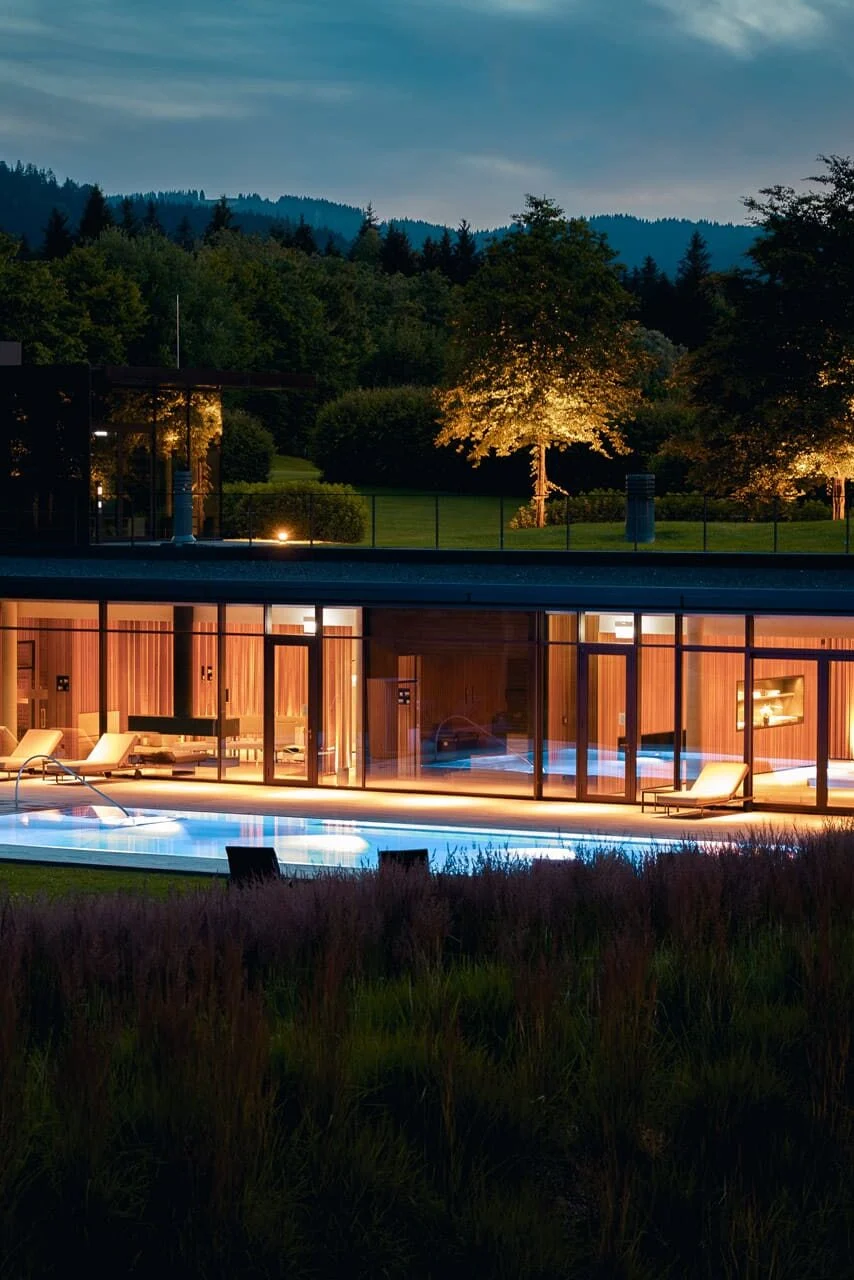
If there is a cult clinic in this category, it is Lanserhof. The Tegernsee flagship opened in 2014 in a striking Christoph Ingenhoven building on a Bavarian lake, with 70 rooms and a medical philosophy derived from the century-old F.X. Mayr method — the conviction that health begins in the gut. Expect modified fasting, careful chewing drills, and a diagnostic depth that extends to a dedicated brain-health center.
It is rigorous, quiet, and not for anyone hoping to sneak a glass of wine. Named World's Best Medical Spa at the 2025 World Spa Awards, Lanserhof is the place serious converts return to year after year. The original, smaller Lanserhof Lans in Austria has run the same method since 1984 if you want the quieter Alpine version.
Chenot Palace Weggis: detox with a Swiss accent
On Lake Lucerne, facing Mount Rigi, Chenot Palace Weggis opened in 2020 as the home of the Chenot Method — a half-century-old detox protocol built on the Chenot Diet, hydrotherapy and bioenergetic treatments. Behind the calm is a 5,000-square-meter medical spa with advanced diagnostics, epigenetic profiling and a whole-body cryochamber that drops to minus 110 degrees Celsius.
The 97 rooms are split between a turn-of-the-century palace and a contemporary wing, all facing the lake. Guests describe a week here as a full reset, often on a sub-1,000-calorie plan — and they come back. Chenot's detox program has been named the world's best in its category five years running.
Palazzo Fiuggi: Italy's answer to the Alpine clinics
The newest force on this list, Palazzo Fiuggi reopened in 2021 inside an Art Deco palazzo about an hour from Rome, on the hilltop spa town's famous mineral springs. With 102 rooms across private grounds, it brought serious medical wellness — blood work, genetic testing, metabolic and posture assessment — to a part of Italy that already knew something about healing water.
What sets it apart is the food: a longevity-focused menu designed by chef Heinz Beck that proves a calorie-controlled medical program does not have to taste like punishment. The programs run from short detox stays to a full longevity track that pairs lab testing with guided hikes in the surrounding Apennines.

Which longevity retreat is right for you?
The short version: match the clinic to the goal. Want the deepest medical pedigree and a true diagnostic work-up? Clinique La Prairie. Want sun, sea and an East-West approach? SHA. Convinced the gut runs the show, and willing to be disciplined about it? Lanserhof. After a pure, science-led detox on a Swiss lake? Chenot Palace Weggis. Want the rigor with Italian warmth and a chef who can cook? Palazzo Fiuggi.
Across all of them, plan on a minimum of seven nights — these programs are designed to work over a week, not a weekend — and budget roughly €4,000 to €15,000 depending on the depth of testing and the room. Book early; the best weeks at the marquee clinics go months out. And if you are chasing better sleep specifically, it is worth reading how hotels are turning rest into the whole point of a stay before you choose.
What You Actually Want to Know
How long do I need to stay at a longevity retreat? Most serious programs are built around a minimum of seven nights, because the diagnostics, detox and recovery phases are sequenced across a week. Some clinics offer shorter three- to five-day options, but the full benefit assumes a longer stay.
How much does a week cost? Expect roughly €4,000 to €15,000 for a seven-day program, depending on the clinic, the room category and how much medical testing you add. Advanced diagnostic and genetic packages sit at the top of that range.
Is this medicine or a vacation? Both, deliberately. You stay in a five-star hotel, but a physician oversees your week and the program is built on real diagnostics. The point is to leave with measurable results, not just a tan.
Do I have to fast the whole time? Often you eat on a reduced-calorie, nutrient-dense plan rather than fasting outright, and clinics like Lanserhof and Chenot make the food part of the therapy. Palazzo Fiuggi is the one to choose if dining matters most to you.
A longevity week is one of the few trips where the right clinic is a genuinely consequential decision — the wrong fit is an expensive, hungry mistake. Noon's advisors know these properties, their physicians and which weeks are worth holding. Tell us what you want to get out of it.
Plan Your Next Journey
Work with a Noon Travel advisor for a trip that exceeds every expectation.
Get Started