
The short version
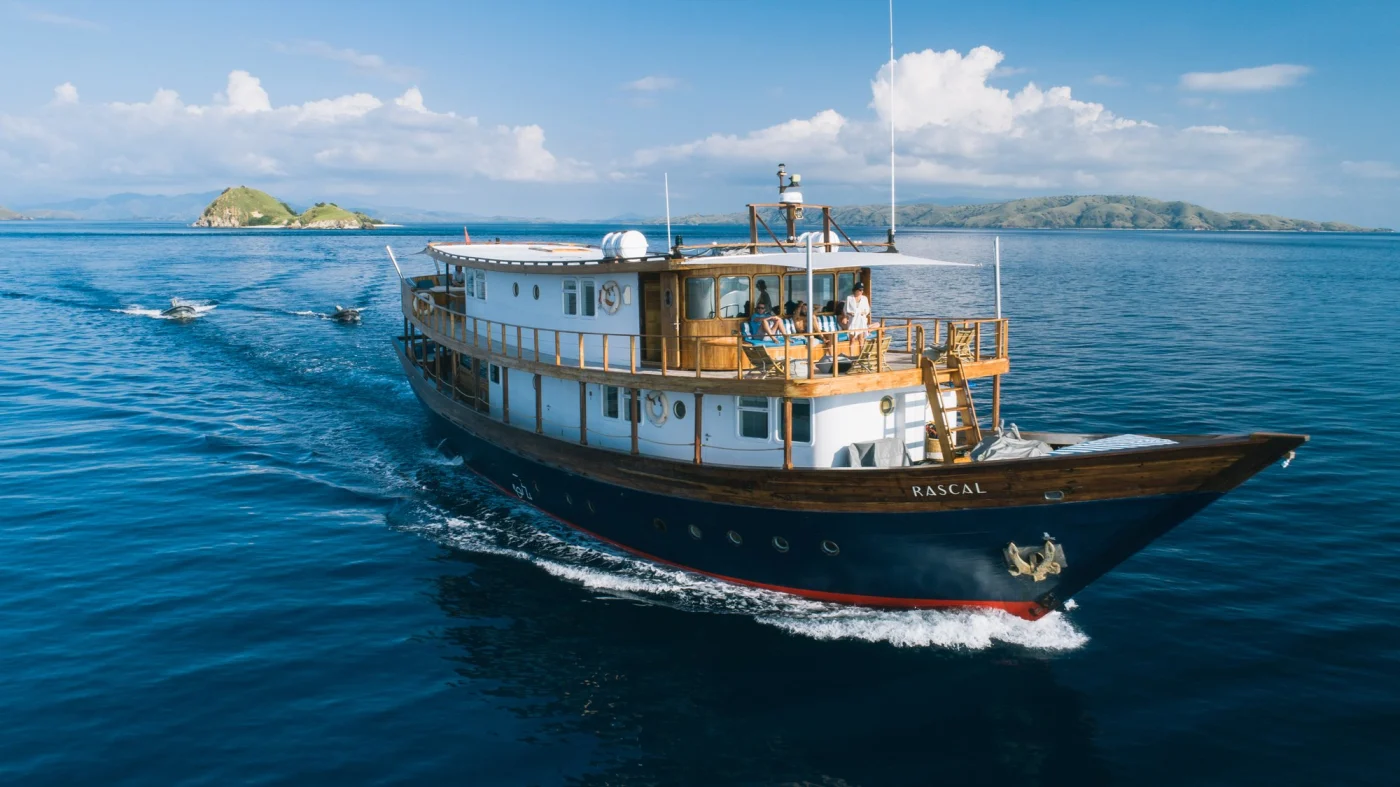
Rascal is a 30-metre handmade phinisi that sails Indonesia’s Komodo and Raja Ampat with five above-deck cabins, ten guests, and a crew of twelve. Charter the whole boat from about $12,000 a night, or book a single cabin from $2,500. Sail Komodo May to October, Raja Ampat October to April.
The first morning is the one that converts people. You wake up anchored in water so still it mirrors the hull, there is not another boat in sight, and breakfast is already waiting on a teak deck that is entirely yours. No lobby, no buffet, no resort. Just a hand-built wooden ship and a stretch of Indonesia most people never reach.
That is the pitch for Rascal, and it is the private-boat trip I recommend most often when a client wants somewhere genuinely remote without giving up comfort. Rascal Voyages runs a small fleet of phinisi — the traditional Indonesian sailing yacht — through Komodo, Raja Ampat, and a handful of routes almost no one else covers. Here is how it works, and how I’d book it.
What is a Rascal voyage really like on board?
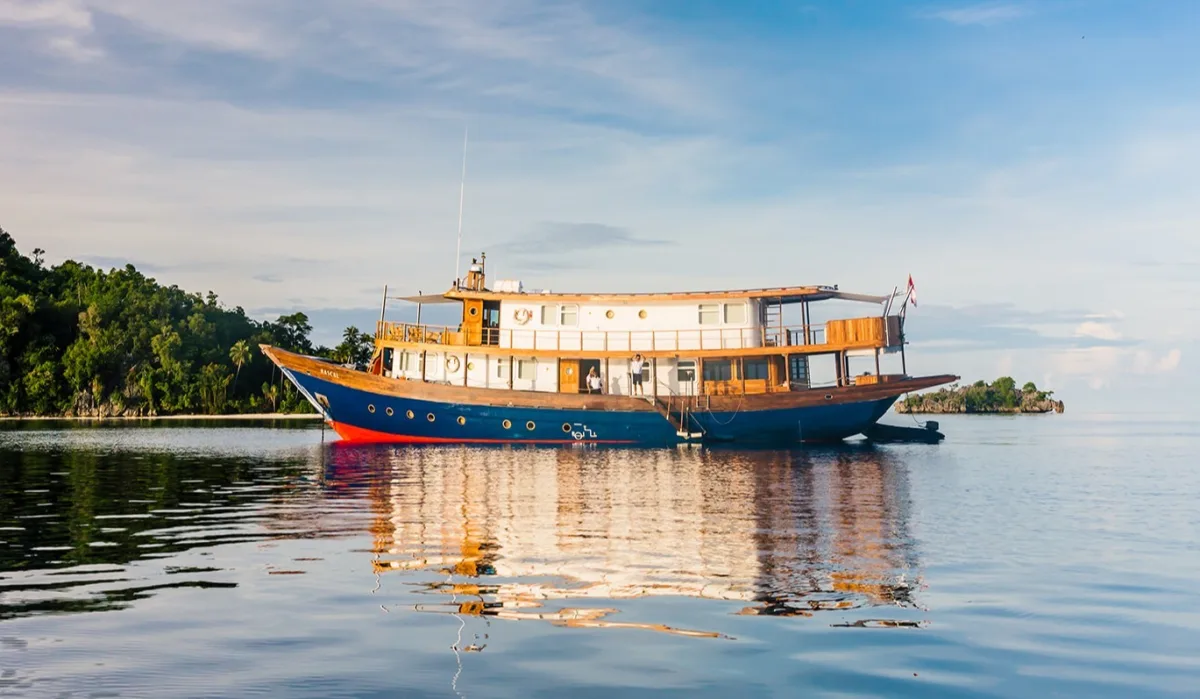
Rascal herself is a 30-metre phinisi, handmade in Sulawesi in 2015, with five cabins that hold up to ten guests and a crew of twelve. The detail that matters: all five cabins sit above deck, each with its own bathroom, air conditioning, and a window onto the water. On most boats this size the cabins are buried below the waterline. On Rascal you wake up looking at the sea.
The interior reads more Hamptons beach house than dive boat — pale wood, linen, an open salon, and a roof deck built for the sundowner hour. The crew includes a cruise director, a dedicated dive guide, and a private chef, which is the real luxury: someone is planning the reefs, the beach picnics, and dinner around what you want to do that day. One of the signatures is a pop-up dinner set up on an empty beach, candles in the sand, the Milky Way overhead, the tender running you home through water lit up with bioluminescence.
You can take Rascal two ways. Charter the whole boat privately from around $12,000 a night plus taxes, which is what I’d do for a family or a group of friends who want the ship to themselves. Or book a single cabin from about $2,500 a night and join other travellers — the smart move for a couple who wants the experience without the whole-yacht cost. If you need more room, her sister ship Rebel runs the same routes with a wine cellar and an outdoor cinema, and the larger 39-metre El Aleph takes eleven guests. It is not, to be clear, a cheap way to see Indonesia. It is the good way.
Komodo or Raja Ampat — which should you sail?
This is the question I get first, and the honest answer is that they are two completely different trips. Rascal spends the summer in Komodo and the winter in Raja Ampat, so in practice the season often decides for you — but here is how they differ.

Komodo is the dramatic one. You sail through the national park in search of the dragons — the largest lizard on earth, up to three metres and 70 kilos, which you track on foot with a ranger on Komodo and Rinca islands. Add the Pink Beach, manta rays up to five metres across feeding at Manta Point, and the Padar viewpoint over its three coves at dawn. It is the easier trip to reach, flying into Labuan Bajo, and the better first Indonesia voyage.
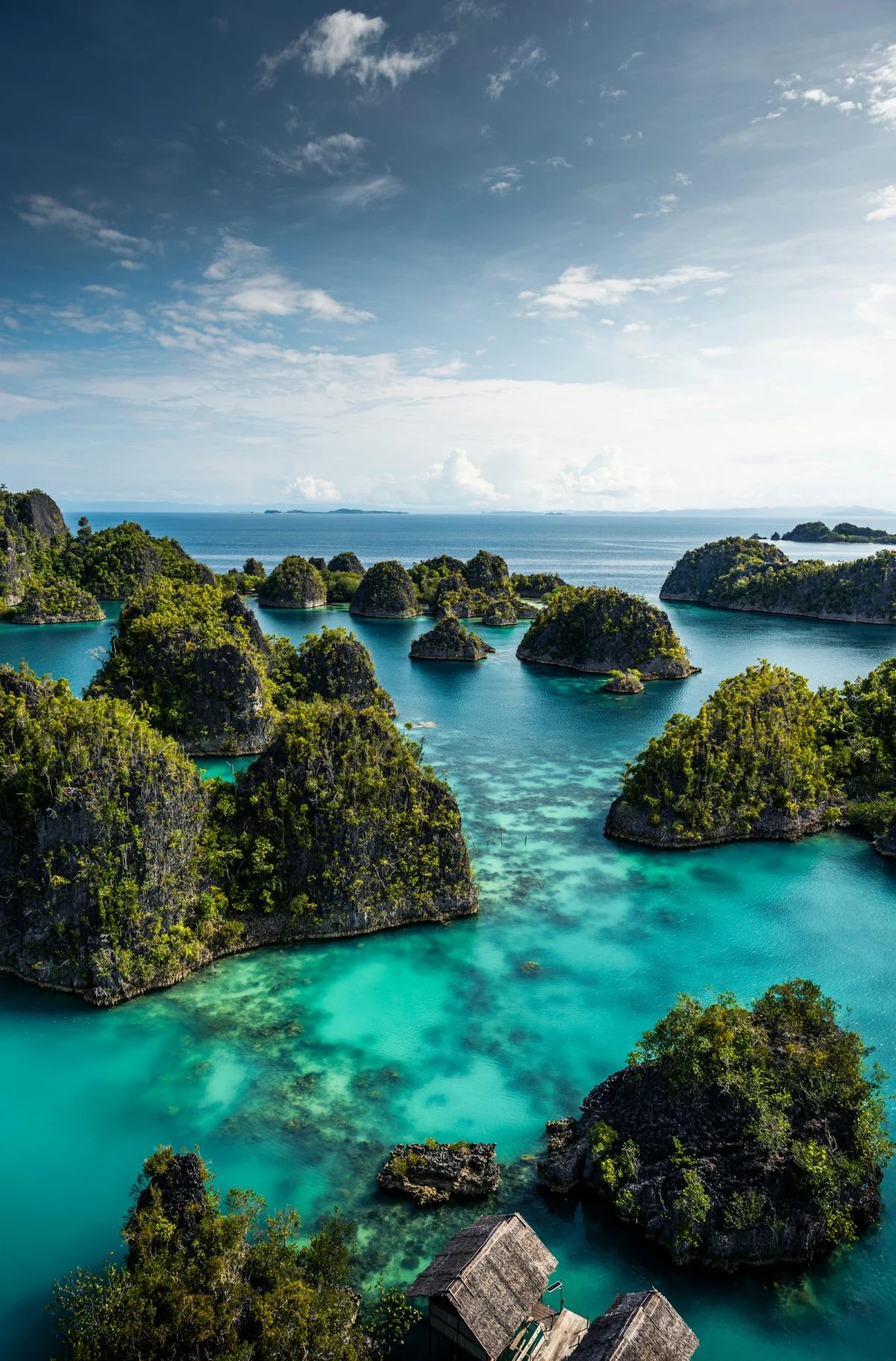
Raja Ampat is the one divers cross the planet for. This is the most biodiverse marine environment on earth — roughly three-quarters of all known coral species and more than 1,600 species of fish, threaded through jungle-topped limestone karst that rises straight out of turquoise water. Above the surface there are birds of paradise at dawn and the walking epaulette shark in the shallows; there is even a sacred jungle river you float down by tender. It is further — you fly into Sorong — and it rewards the effort. If you dive seriously, this is the one.
When should you go, and who is it for?
Timing is simple once you know the pattern. Komodo sails best from May to October, the dry season, which is also peak manta season. Raja Ampat is at its best from October to April, when the seas are calmest and visibility is sharpest; January and February are the glassy, high-season peak. The two grounds essentially hand the year off to each other, which is why the boat repositions.
Who is it for? Couples and families who want privacy and nature over nightlife, and who like the idea of a trip built around water — snorkelling, diving, paddleboarding, empty beaches — rather than a checklist of towns. It is not a party boat and it is not a spa. It is also a genuinely low-impact way to travel: Rascal runs reef-safe products, has cut single-use plastics, treats its own waste water, and is fitting noise-cancelling boxes on the engines so the wildlife barely registers you passing through. If you’ve read our guide to chartering a yacht in the Mediterranean and loved the idea but want somewhere wilder, this is the far end of that spectrum. It also pairs beautifully with a land trip — a few days in Thailand on either side is an easy add. For a sense of what a longer private sailing voyage can be, our story on the Cookson family’s Odyssey is a good companion read.
What You Actually Want to Know
How much does it cost to charter Rascal?
A private, whole-yacht charter of Rascal starts at about $12,000 per night plus taxes for up to ten guests. If you don’t need the whole boat, individual cabins are available from around $2,500 per night. The sister ship Rebel starts a little higher, at roughly $13,500 privately.
How many cabins does Rascal have?
Five, all above deck, each with an ensuite bathroom, air conditioning, and sea views. She sleeps up to ten guests and carries a crew of twelve, including a cruise director, a dive guide, and a private chef.
When is the best time to sail Komodo versus Raja Ampat?
Komodo is best from May to October, its dry season and prime time for manta rays. Raja Ampat is best from October to April, with the calmest seas and clearest visibility in January and February. Rascal moves between the two grounds with the seasons.
Do you need to dive to enjoy it?
No. Diving is a highlight in both regions, especially Raja Ampat, but the snorkelling is excellent and much of the trip happens above the water — dragon treks, beach dinners, island viewpoints, birdwatching, and paddleboarding. Non-divers are well looked after.
How do you get there?
For Komodo, fly into Labuan Bajo on Flores, usually via Bali. For Raja Ampat, fly into Sorong in West Papua, typically via Jakarta or Makassar. The crew coordinates the transfer from the airport to the boat.
Indonesia is one of the trips I love building because there is no single right version of it — the boat, the season, and the route all bend to what you want out of it. Tell me who’s coming and what you want the water to look like, and I’ll build the voyage around it.
Plan Your Next Journey
Work with a Noon Travel advisor for a trip that exceeds every expectation.
Get Started

