
The short version
Base yourself in Alta Badia or Val Gardena, not Cortina, for a summer Dolomites trip. Book Aman Rosa Alpina, La Perla, Gardena Grödnerhof or COMO Alpina Dolomites for five to seven nights, ride the lifts to lunch at a rifugio, and go in late June or the first half of September. Summer 2027 fills from now.
Every summer I get the same message, usually in April, usually from someone who has just seen a photo of a limestone wall glowing pink over a green meadow. “Where is this, and can we go in July?” The answer is the Dolomites, yes you can, and no, you are already late for the rooms you want. The hotels up here run a short season, roughly June to mid-October, and the rooms worth crossing the Atlantic for go to the people who ask first.
The Dolomites are not one place. They are a cluster of valleys strung across several Italian provinces, each with its own language, its own food and its own idea of what a holiday looks like. Alta Badia and Val Gardena, on the South Tyrol side, speak Ladin and German before Italian and run their hotels the way the Swiss do, only warmer. Cortina, over the Falzarego pass in the Veneto, is Italy’s original mountain resort and just hosted the Winter Olympics. Val di Fassa, to the south, is where Italian families go. Pick the wrong valley and you will spend your week driving passes instead of sitting on a terrace.
So here is the plan I build, with the hotels I book and the huts I send people to for lunch. It is written for summer 2027, because that is the trip you should be planning right now.
Which valley should you base yourself in?
Alta Badia if you want the best hotels and the best food, Val Gardena or the Alpe di Siusi if you want the biggest views from your window, Cortina if you want a town. For a first trip I put most clients in Alta Badia and add Cortina only if they need shopping and an evening passeggiata.
Alta Badia is a chain of small Ladin villages, Corvara, La Villa, San Cassiano, sitting at around 1,500 metres with the Sella massif at one end and the Fanes peaks at the other. It has a density of family-run five-star hotels, serious cellars and high-altitude restaurants that no other Alpine valley I know can match. It is also quiet. Nobody comes here to be seen.
Val Gardena is one valley west over the Gardena pass, which tops out at 2,121 metres. Its main town, Ortisei, is bigger and busier, with a pedestrianised centre and the two cable cars that matter: Seceda, up to a lookout at 2,500 metres, and the one over to the Alpe di Siusi, the high meadow plateau that is the single most photographed piece of ground in the range. The plateau itself is closed to private cars between 9am and 5pm, which is exactly why staying up there is worth it.
Cortina d’Ampezzo is the grand one, a proper town at 1,224 metres with a corso, boutiques and a century of glamour behind it. The Milan-Cortina Olympics ran from February 6 to 22 this year and left new lifts and roads behind them. The catch for summer is that Cortina’s hotel stock is mid-renovation: the historic Cristallo is closed and reopens as a Mandarin Oriental in early 2027, and the new openings are aimed squarely at winter. It is a superb two-night add-on. It is not, for now, where I would spend a week.
Val di Fassa I leave for repeat visitors. The scenery is as good as anywhere, the passes are spectacular, but the hotel stock is a tier below the other three and you will feel it. The exception is one rifugio I will get to.
Where to stay in Alta Badia
Three hotels, three completely different moods, all within a fifteen-minute drive of each other.
Aman Rosa Alpina, San Cassiano. This is the one. The Pizzinini family’s old inn reopened on July 24, 2025 as a full Aman after a renovation by Jean-Michel Gathy, and it has changed what a Dolomites hotel can be. There are 51 rooms and suites, a two-level Aman Spa of 1,684 square metres with three pools including a 20-metre heated outdoor infinity pool, and a wine room the hotel says holds more than 25,000 bottles. Dinner is The Grill for Italian cooking or Enju for Japanese shabu-shabu, which sounds wrong at 1,500 metres and is not. The property runs from June to October in summer. I book the Dolomites Suite, 100 square metres with its own sauna and a dedicated lift, for couples who want to disappear, and a Deluxe Room for everyone else.
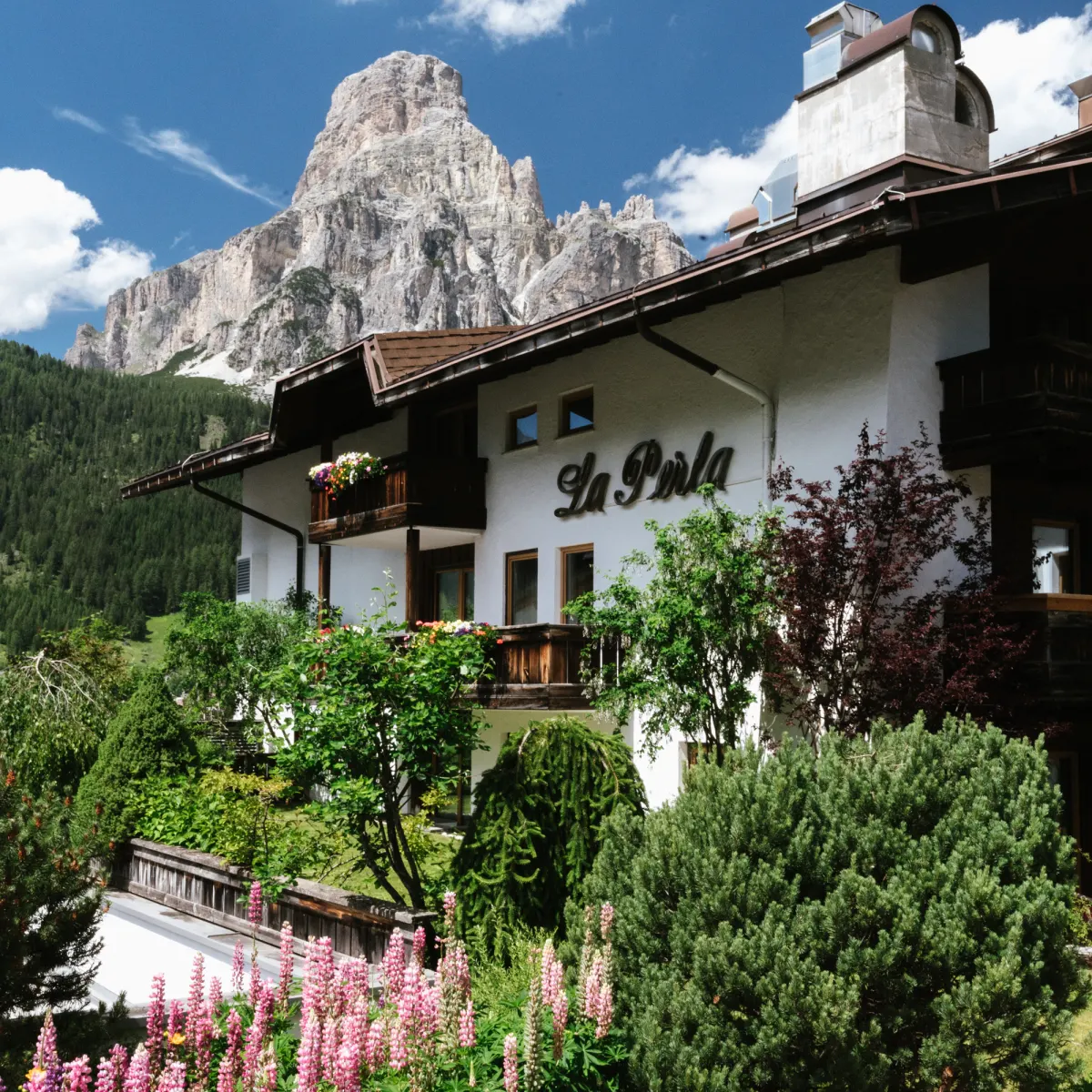
Hotel La Perla, Corvara. Seventy years old in 2026 and still run by the Costa family that opened it in 1956, La Perla is the hotel I send people to when they want the Dolomites as they were before the brands arrived. It is 48 rooms, a member of Leading Hotels of the World, with a wine cellar of more than 30,000 bottles and four places to eat, including La Stüa de Michil under chef Simone Cantafio. The spa is small, the pool is indoor, and none of that matters, because the point of La Perla is the welcome and the dinner. Ask for one of the suites with a private sauna.

Ciasa Salares, Armentarola. Just outside San Cassiano on the road to the Valparola pass, Ciasa Salares has been the Wieser family’s since 1964 and is now run by the third generation, Jan Clemens and Sara. It is the food-and-wine house of the valley: Cocun, the cellar restaurant under chef Paul Halmagean, sits among nearly two thousand labels, and Tiza is an open-fire room where the menu is whatever the embers are doing that night. Jan leads a wine tasting at six in the evening. Rooms are simpler than the two above, prices are gentler, and the loyalty of its guests is total.
Where to stay in Val Gardena and on the Alpe di Siusi
One grand hotel in town, one modern lodge on the plateau, and one outlier that is worth the detour.

Gardena Grödnerhof, Ortisei. A Forbes Travel Guide Five-Star, a Relais & Châteaux member, and the first five-star hotel in Ortisei, owned and run by Hugo and Cinzia Bernardi since 2000. It sits 200 metres from the Alpe di Siusi cable car, which means you can be on the plateau before the day-trippers’ buses arrive. Anna Stuben, the wood-panelled dining room under chef Reimund Brunner, is the best formal dinner in the valley. The Chalet suites, 85 to 110 square metres, are the rooms to ask for. Its 2026 summer offers ran from May 28 to October 18, which tells you how long the season is here.
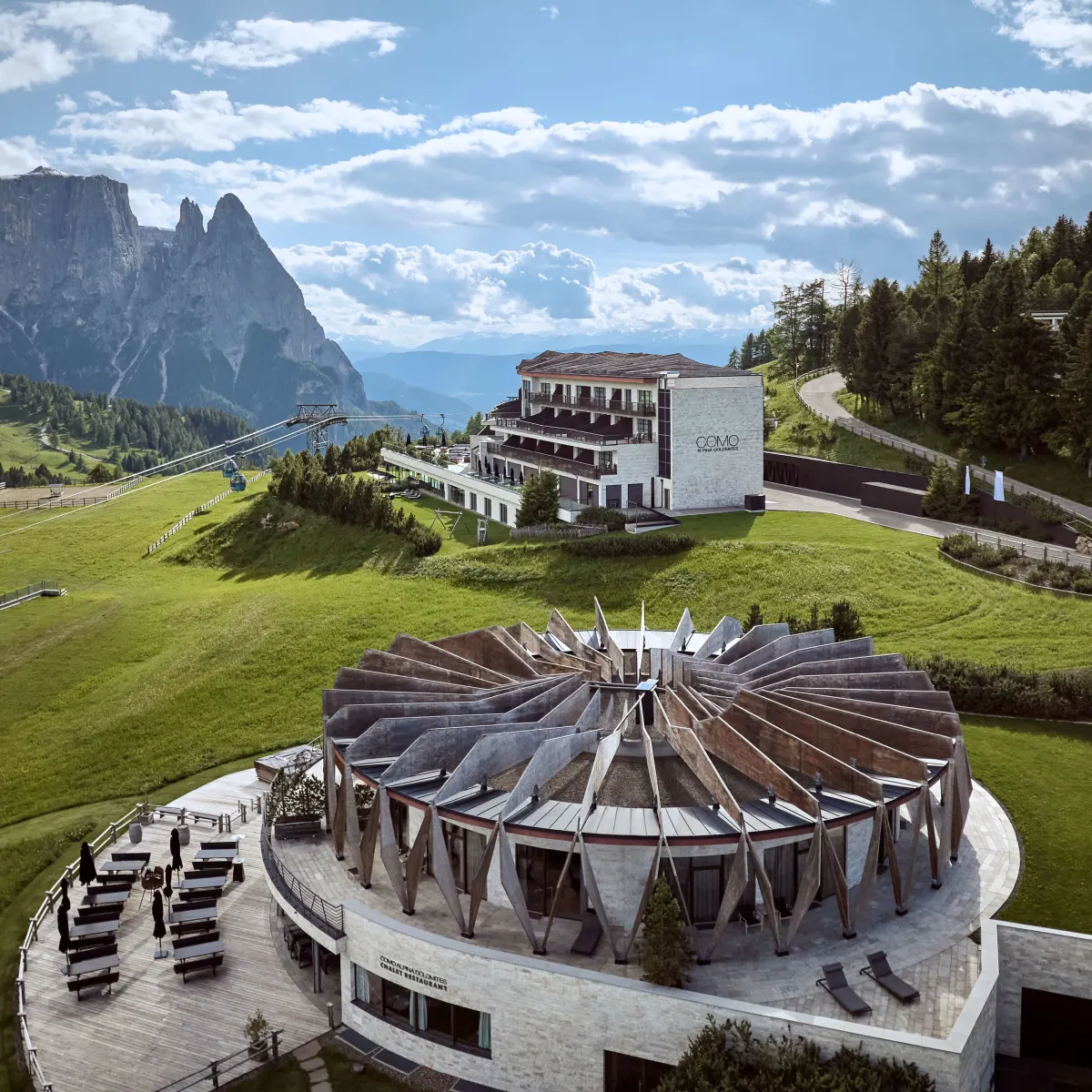
COMO Alpina Dolomites, Alpe di Siusi. The only hotel of this level actually on the plateau, at 1,800 metres, with 60 rooms and suites and a Forbes Travel Guide Four-Star rating. Because the access road is closed to private cars between 9am and 5pm, hotel guests get a permit and the place empties out in the evening. COMO Shambhala runs the spa, with a 22-metre indoor pool and a 7-metre outdoor one, and Thomas Fischnaller cooks at the Chalet Grill. The hotel operates June to October in summer. Take a Chalet Suite facing the Sassolungo and you will not want to leave the balcony.

Forestis, Plose. Not in either valley, but an easy drive from Val Gardena above the cathedral town of Bressanone, and I include it because clients who stay there talk about nothing else. The site was chosen in 1912 for a sanatorium, became a hotel in 2009, and was rebuilt by Teresa and Stefan Hinteregger in 2020 as three slender timber towers by architect Armin Sader. It is adults only from age 14, Roland Lamprecht cooks what he calls forest cuisine, and the Penthouse has its own rooftop pool. The private villa, for up to ten guests, starts at 25,000 euros a night. Three nights here after Alta Badia is the best spa-and-silence combination I know in Italy.
What about Cortina?
Two nights, at the end, for the town. The hotel picture in Cortina is changing fast and the best of it lands after summer 2027.
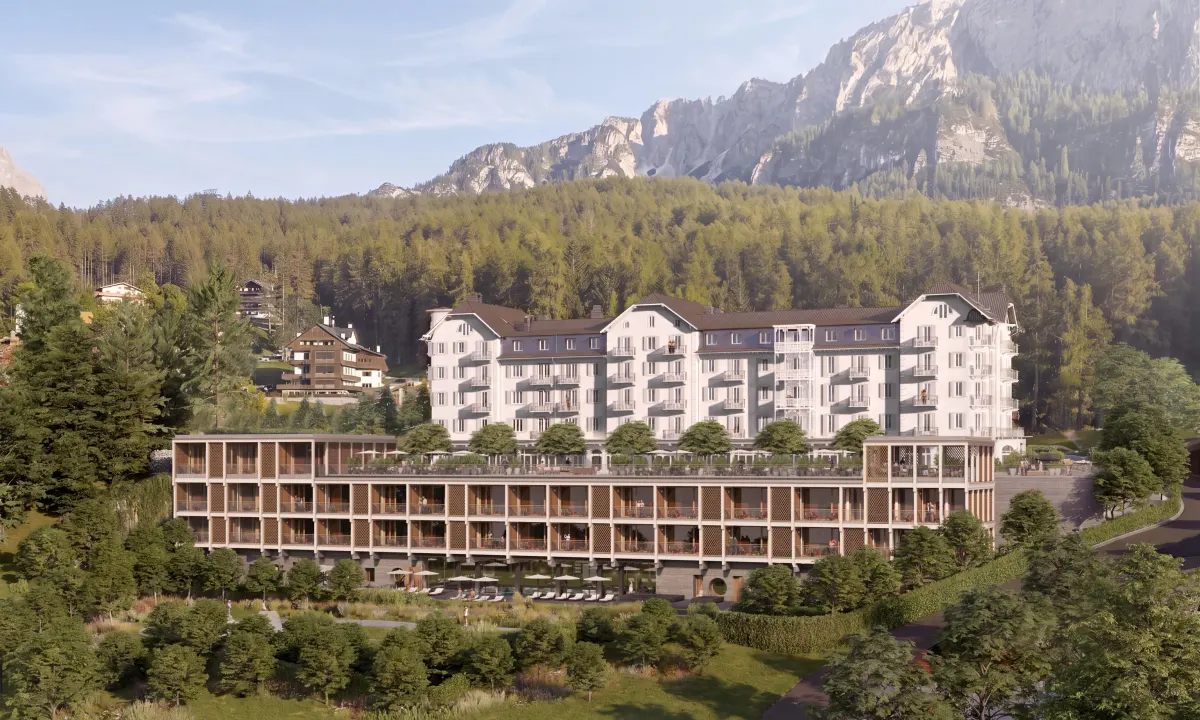
The big one is Mandarin Oriental Cristallo, Cortina, the Menardi family’s 1901 Art Nouveau hotel, bought by Attestor in 2021 and rebuilt with Herzog & de Meuron. The brand’s site says opening early 2027 with 84 rooms and suites and a pool that runs from inside to out, and that bookings open early next year. If it opens on time it becomes Cortina’s summer hotel by default. I am holding client requests for it now and will confirm the moment dates go live.

For now, the room I book in town is at Hotel de Len, 22 rooms and a rooftop spa in a timber-screened building on Via Cesare Battisti, opened in early 2022 in the bones of the old Hotel Impero and designed by GRIS+DAINESE in Venice. It is small, it is in the centre, and the top-floor De Len Suite is the best-value sleep in Cortina.

If you would rather be outside town with meadow around you, Rosapetra Spa Resort at Zuel is a small, quiet house with a 12-metre heated pool, an outdoor black sauna, Fabio Manni in the kitchen and a summer terrace with DJ aperitivi. It runs a shuttle into the centre. And the grand old Grand Hotel Savoia, 1912, 132 rooms, now a Radisson Collection hotel a few minutes’ walk from the Faloria cable car, is worth knowing about with one caveat: its Savoy restaurant closes for the summer.
Two more to watch. Grand Hotel Ampezzo, which reopened in March with 70 rooms and a 1,000-square-metre longevity spa, is the most complete hotel in town right now, and I reviewed it separately. And The First Cortina, by The Pavilions, is slated to open on the Corso Italia later this year with a Zuma restaurant and a spa by REVĪVŌ. Both will have a full summer under their belts by the time you arrive in 2027.
Can you do the Dolomites without turning it into a hiking holiday?
Yes, and most of my clients do. The lifts run all summer, the huts sit at the top of them, and the walking between them is optional. You can have the entire high-altitude experience in loafers, though I would rather you did not.
The Dolomites were inscribed by UNESCO in 2009, and the reason is visible from every cable car: sheer pale walls rising straight out of green pasture, with none of the glacier and scree of the western Alps. The summer lift network is sold as the Dolomiti Supersummer pass, 67 euros a day in 2026, though a single ride is usually all you need. Three lifts do most of the work. Seceda from Ortisei goes up in two stages to the lookout at 2,500 metres, 74 euros return, and puts you on the edge of the most famous ridgeline in the range after a short walk. The Alpe di Siusi cable car from Siusi climbs 800 metres in fifteen minutes and drops you on the plateau. And from the Falzarego pass between Alta Badia and Cortina, the Lagazuoi cable car rises more than 600 metres in under three minutes to 2,732 metres, where the First World War tunnels and a terrace the hut calls the most panoramic in the Dolomites are waiting.
Two rules of the road. Alpe di Siusi is closed to private cars from 9am to 5pm unless you are staying up there. And the Tre Cime di Lavaredo, the three towers on every postcard, are reached by a toll road from Misurina that in 2026 cost 40 euros per car, with an online reservation and your licence plate now mandatory. Reserve it the day you book the hotel. The road generally opens late May and closes late October.
If you want one real walk, the classic is the loop around the Tre Cime from Rifugio Auronzo at 2,333 metres: a few hours, no technical ground, and the view that made the mountains famous. If you want none, the Alpe di Siusi has flat gravel tracks between huts where the hardest decision is which one to have lunch at.
Which rifugios are worth a lunch, and which are worth a night?
A rifugio is a mountain hut, and in the Dolomites the word covers everything from a dormitory with a stove to a cellar-restaurant with a sommelier. These are the ones I send people to.
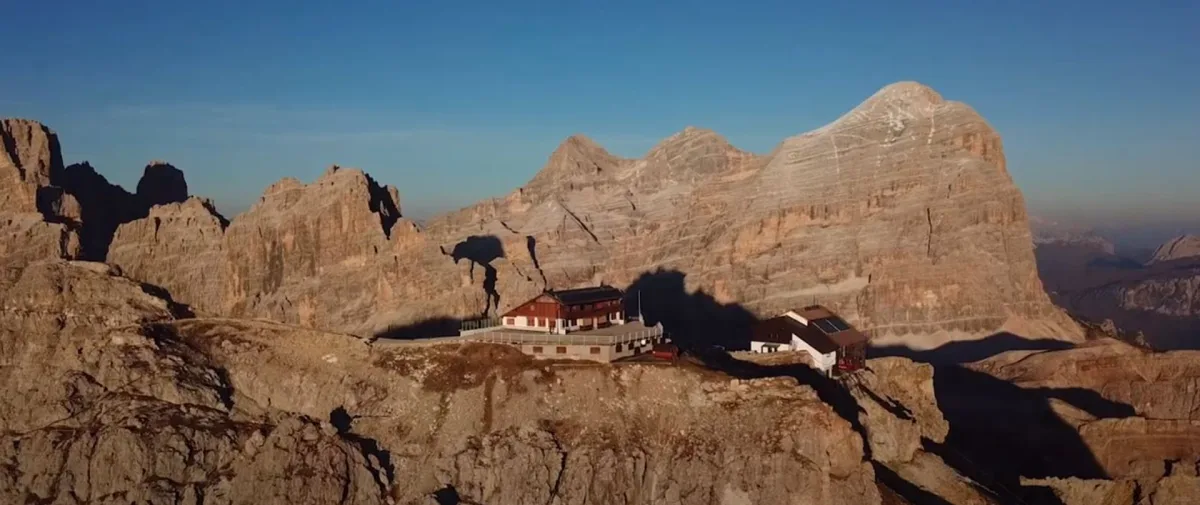
Rifugio Lagazuoi, for the night. The highest hut in Cortina at 2,752 metres, fifty metres from the cable car station, with a terrace the hut bills as the most panoramic in the Dolomites and a sauna at altitude that you can book by the hour. The private rooms were redone in 2024, and a double runs 260 euros a night in the 2026 season with dinner at 35 euros a head. Summer 2026 sold out. Book 2027 the day it opens. Lunch here is fine; the point is dawn.
Rifugio Scotoni, for the grill. At 1,985 metres on the Alta Badia side, run by the Agreiter family for fifty years, with an open barbecue that is the reason people walk fifty minutes up from the Capanna Alpina car park, or an hour and a half down from the top of the Lagazuoi cable car. Twenty-one beds if you stay, plus one called the Barrel with its own outdoor whirlpool. Overnights are summer only, and the hut closes October 4 this year.

Rifugio Averau and Rifugio Nuvolau, for the view. Take the Cinque Torri chairlift and walk up to Averau, 2,413 metres, where the Siorpaes family cook Ampezzo food on a terrace facing the Civetta and the Marmolada and have four suites for those who want to stay. Nuvolau sits above it at 2,575 metres, the oldest hut in the Dolomites with origins in 1883, 24 beds, shared toilets, no showers and the best sunrise you will ever see. Beds for 2027 open on February 1, 2027. Set an alarm.
Rifugio Emilio Comici, for fish at 2,154 metres. Below the Sassolungo on the Val Gardena side, reached on foot from the top of the Ciampinoi gondola, Comici built its name on seafood in the mountains; in summer the kitchen leans on herbs, and the terrace is where Val Gardena goes to lunch for three hours. In Alta Badia the equivalent is Club Moritzino at the top of the Piz La Ila cable car, fish at 2,100 metres with a DJ, and the calmer Ütia de Bioch at 2,079 metres, a Josper grill and a South Tyrol-heavy wine list half an hour’s walk from the same lift.
Rifugio Fuciade, for the reason to visit Val di Fassa. A forty-minute, stroller-friendly walk from the Passo San Pellegrino, on a track cars may use only after seven with a dinner booking, with chef Martino cooking Ladin food, seven rooms upstairs, and half board at 145 to 160 euros a person in summer 2026. It runs June 1 to October 4. This is the most romantic dinner-and-sleep in the range, and almost no foreign visitors know it.
How many nights, and when should you go?
Five to seven nights, two bases at most, and either the last week of June or the first two weeks of September. That is the whole answer; here is the reasoning.
Five nights in one valley is a complete trip. Seven lets you add Cortina or Forestis without packing every other day. Anything with three hotels in a week is a driving holiday, because the passes between valleys are slow, beautiful and clogged with motorbikes in August. The Sella Ronda passes also shut to traffic from 9am to 4pm on two days a summer for the Sellaronda Bike Day, June 6 and September 12 in 2026, which is glorious if you are cycling and a trap if you are transferring.
On timing: the lifts open in stages from mid-May and most rifugios from early June, the Sella Ronda lifts ran June 13 to September 27 this year, and the huts start closing between September 20 and October 4. Late June gives you wildflowers, long light and hotels still settling in. The first half of September gives you the same lifts, warm days, cold nights, the larches beginning to turn and half the people. I avoid August unless a client insists; the mountains are lovely, the passes are not.
Getting there is easier than it looks. Cortina is about two hours from Venice Marco Polo. Ortisei is about 270 kilometres from Venice, under two hours from Innsbruck and under an hour from Bolzano, and Corvara sits between the two. Munich is roughly four hours from any of them, and the autobahn is worth it if you are combining with Bavaria. I always book a driver for the arrival day; the last hour of every one of these routes is a mountain road, and you will want to look out of the window.
And on booking now: the reason I am writing this in September is that Lagazuoi sold out its entire 2026 summer, the Cristallo will open its books for 2027 within months, and the rooms I named above go to whoever asks first. If you are in the summer-in-Europe rotation between the Swiss Alps and Lake Como, this is the year to come here instead, and Como pairs with it beautifully on the way out.
What You Actually Want to Know
Alta Badia or Val Gardena for a first trip? Alta Badia for the hotels and the food, Val Gardena for the cable cars and the views. They are forty minutes apart over the Gardena pass, so a week can hold both: four nights in San Cassiano or Corvara, three in Ortisei or up on the Alpe di Siusi.
Is Cortina worth it in summer? For two nights, yes, for the town and the Cinque Torri and Lagazuoi lifts. For a full week, not until Mandarin Oriental Cristallo opens in early 2027. Grand Hotel Ampezzo and Hotel de Len are the rooms I book there now.
Do you need a car? For a two-valley trip, yes, or a driver. For a single base in Alta Badia or on the Alpe di Siusi you can manage with hotel transfers and lifts, and on the plateau a car is a liability because it cannot be used between 9am and 5pm.
Can you stay overnight in a rifugio with young children? At Lagazuoi and Averau, comfortably, in a private room. Nuvolau has no showers and shared toilets, so I keep that one for adults and teenagers who will find it funny. Fuciade is the family answer: private rooms, real food and a flat walk in.
When do the hotels close? Most of the valley hotels run a summer season from roughly June to mid-October and reopen for skiing in December. Aman Rosa Alpina and COMO Alpina Dolomites both describe their summer as June to October, and Gardena Grödnerhof’s 2026 summer offers ran to October 18. Exact 2027 dates are published property by property over the winter, which is when I confirm them for you.
These are the valleys I plan more than any others in the Alps, and I know which room at each of these hotels faces the right mountain. Tell me where you want to go, and I’ll build it.
Plan Your Next Journey
Work with a Noon Travel advisor for a trip that exceeds every expectation.
Get Started