The destinations that define the next few years of luxury travel rarely come from a list. They come from a narrow window — between discovery and saturation — when the product is at its best and the crowds haven't fully arrived. In 2026, several of those windows are still open, but not for long.
TL;DR: The Faroe Islands, Soča Valley in Slovenia, and The Wave in Arizona are three places that will be on every travel list in three years. They are not on every travel list yet. The infrastructure is still manageable, the permit systems still functional, and the experiences still feel earned. Book them now, not later.
Every destination follows the same arc. A handful of travelers discover it. They post. The algorithm amplifies. Boutique hotels open, then mid-scale chains follow. Permit systems get introduced. Queues form. Within a decade, the thing that made it special — the sense of being somewhere genuinely apart from the world — is replaced by a managed version of itself designed for the volume. Right now, three destinations are sitting in the window just before that arc completes. Noon flagged them in this reel because the advice is simple: visit them while visiting them still means something.
What Are the Most Underrated Luxury Travel Destinations in 2026?
The Faroe Islands, Soča Valley in Slovenia, and The Wave in Arizona. Each operates on a different logic — remote north Atlantic drama, European alpine precision, American desert geometry — but all three share the same quality: they are genuinely hard to forget, and genuinely accessible now in a way they may not be in five years.
The Faroe Islands sit in the North Atlantic between Norway and Iceland, 18 islands of volcanic rock and grass that look like the edge of the world on a clear day and the interior of a cloud on most others. That's the point. The light here shifts every 20 minutes — flat grey that suddenly cracks open into something extraordinary, with waterfalls running off cliff edges directly into the sea and grass so green it reads as artificial in photographs. The village of Gásadalur, where a single waterfall drops from the plateau into the ocean with the island of Mykines visible in the background, is one of the genuinely spectacular geographic moments available to a traveler anywhere. The Faroe Islands have fewer than 60,000 residents and roughly 100,000 annual visitors — a number that is growing, but still low enough that you will not share a viewpoint with 300 other people. The airport in Vágar handles direct connections from Copenhagen and a growing number of European hubs. The island-hopping by ferry is slow, deliberate, and entirely worth it.
The Soča Valley in northwest Slovenia is a different proposition — more accessible, more immediately hospitable, and built around one of the most improbable natural phenomena in Europe. The Soča River runs a color that has no precise name: a turquoise-green so vivid and so consistent that it looks digitally enhanced in every photograph and remains equally implausible in person. It runs through the Triglav National Park for 138 kilometres, passing through gorges, under Napoleon's Bridge (a 300-year-old arch that stands 65 feet above the river), and past the town of Kobarid, which has a remarkable Hemingway connection — *A Farewell to Arms* was set here, during the Battle of Caporetto in 1917. Noon covered it on Instagram because it's the kind of place that stops you mid-scroll. The valley is a base for white water rafting, fly fishing for marble trout, hiking, and cycling — but the main activity is simply being there, near that river, in a landscape that has no obvious equivalent. Accommodation has improved significantly in recent years; the Dobra Vila Bovec is the most accomplished hotel in the valley, a converted barracks building now operating as a stylish boutique property with a strong restaurant.
Is It Worth Traveling to Remote Destinations Without Infrastructure?
Yes — with a specific caveat: infrastructure and experience are not the same thing. The Faroe Islands have reliable guesthouses and a growing collection of genuinely good restaurants (Koks, which returned to the islands after an Antarctic interlude, remains a benchmark). The Soča Valley has boutique hotels and excellent local wine. The Wave has nothing — and that's part of the bargain.
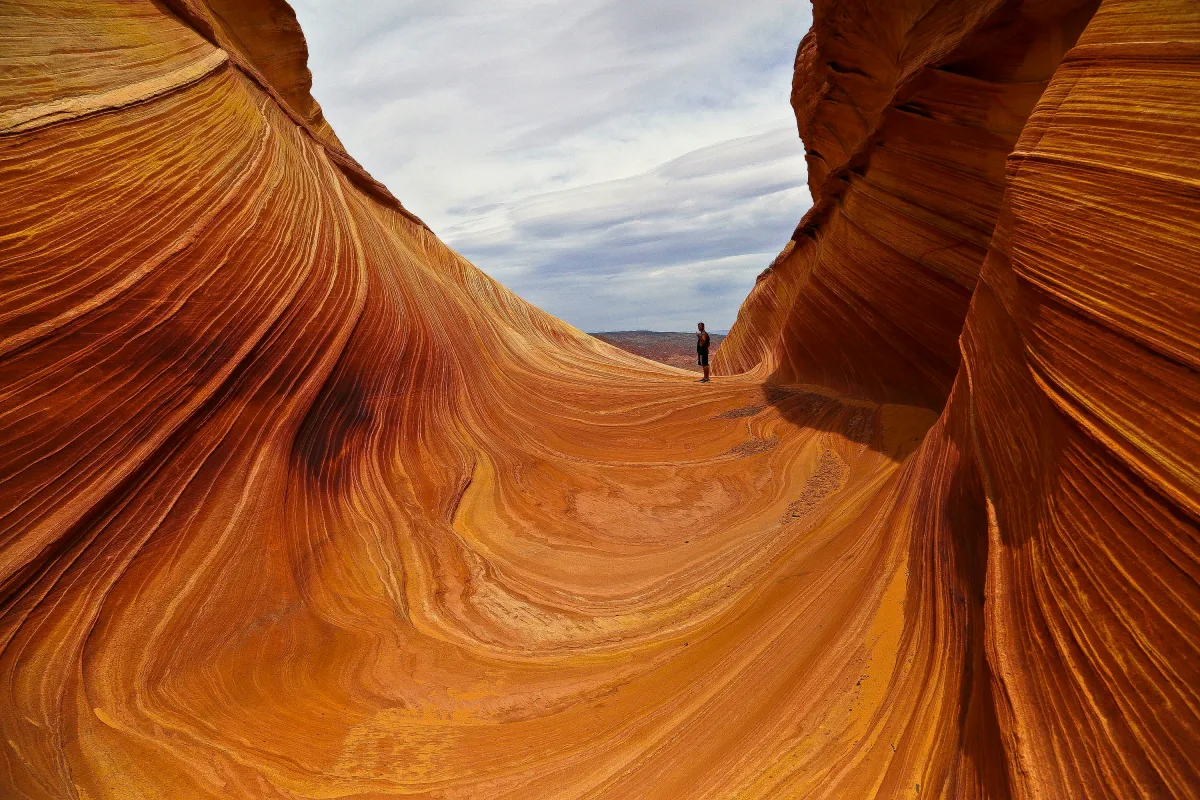
The Wave is a sandstone rock formation in the Coyote Buttes North area of the Paria Canyon-Vermilion Cliffs Wilderness on the Arizona-Utah border. It was formed over 190 million years of erosion and resembles a flowing, frozen wave of layered red-and-orange sandstone approximately 300 feet across. Access is controlled by a daily permit lottery managed by the Bureau of Land Management, which issues 20 permits per day — 16 through an advance online lottery (applications close three months before the date) and 4 through an in-person lottery at the Kanab, Utah visitor center the day before. The odds for the online lottery average around 1-in-80 on popular dates. The hike is 6 miles round-trip with no trail, no shade, and no water source. You navigate by GPS coordinates and printed maps. There is no infrastructure because the BLM has deliberately kept the site permit-only to prevent the kind of erosion that destroyed similar formations elsewhere. The payoff — standing inside that sandstone curve with the striated walls rising around you — justifies every logistical challenge. Apply as far in advance as possible. The lottery fills fast for spring and autumn dates.
The thread connecting all three is deliberateness. These are not destinations you drift into on a spontaneous long weekend. The Faroe Islands require weather flexibility — plan for more days than you think you need, because fog and wind will claim at least one. The Soča Valley requires understanding what season to target (June through September for river conditions; shoulder seasons for solitude). The Wave requires a lottery win and a physical commitment. But travel that requires something of you tends to return more. These three places return a great deal.
For travelers who want to fold an underrated experience into a more established luxury itinerary, Japan's lesser-known destinations offer a similar quality — the Japan cherry blossom season guide covers how to move beyond the standard circuit and find the same kind of depth.
What You Actually Want to Know
Do the Faroe Islands have luxury accommodation?
Not in the conventional sense. The island's best properties lean toward design-forward boutique rather than traditional luxury — Hotel Føroyar in Tórshavn has panoramic views over the harbor and genuinely good food, and the emerging collection of converted farmhouses and heritage properties offers something that larger luxury brands can't replicate. This is a destination where the experience is the luxury; the accommodation is the frame.
When is the best time to visit Soča Valley Slovenia?
June through September for optimal river conditions and hiking weather. August is the peak tourist month and, while still quiet by most European standards, the valley's most popular swimming spots do fill up on hot weekends. Late June and September offer the best balance of good weather and genuine solitude. Spring (April–May) brings higher river flow and dramatic green hillsides; winter closes some mountain passes but keeps the valley accessible and nearly empty.
How do I apply for The Wave permit?
Through Recreation.gov. The advance lottery opens three months before your target date; applications are accepted during a four-day window. The in-person lottery is drawn at 8:45 AM at the Grand Staircase-Escalante National Monument visitor center in Kanab, Utah. Lottery winners receive a map and safety briefing; the trailhead is approximately 45 minutes from Kanab. Bring more water than you think you need.
Are these destinations appropriate for first-time international travelers?
Soča Valley, yes — Slovenia is straightforward, English is widely spoken, and the valley is well-organized for tourism. The Faroe Islands require more weather resilience and a tolerance for remote conditions, but the islands are small and navigable. The Wave is physically demanding and logistically specific; it suits experienced hikers with off-trail navigation confidence.
Will these places be harder to visit in future years?
Almost certainly. The Faroe Islands government has already introduced some visitor management measures and is actively discussing permit systems for peak viewpoints. Soča Valley tourism numbers have grown 40% since 2020. The Wave permit odds worsen annually. The window to visit on your own terms — without significant advance planning driven by scarcity — is narrowing.
These three destinations require planning, not spontaneity. That's exactly where Noon operates — advising on the specifics that make difficult destinations work, from Faroe Islands ferry logistics to Wave permit strategy to the right week in the Soča Valley. The conversation is worth having before these spots require a six-month waitlist.
By Amelia Ingram
Further reading
- Portugal Is the Easter Trip Everyone Is Booking in 2026
- The Celebrity Wedding Venues You Can Actually Book
- Peru, Top to Bottom: Amazon, Sacred Valley, Machu Picchu
- Where the Most Stylish Celebrities Went on Honeymoon
- Bora Bora vs. the Maldives: Which Overwater Escape to Book
- The Best Luxury Lodges in New Zealand Right Now
- The Best Luxury Turkey Itinerary: Cappadocia, Pamukkale, and Bodrum
Plan Your Next Journey
Work with a Noon Travel advisor for a trip that exceeds every expectation.
Get Started